Method
1
Refrigerate and fully rehydrate
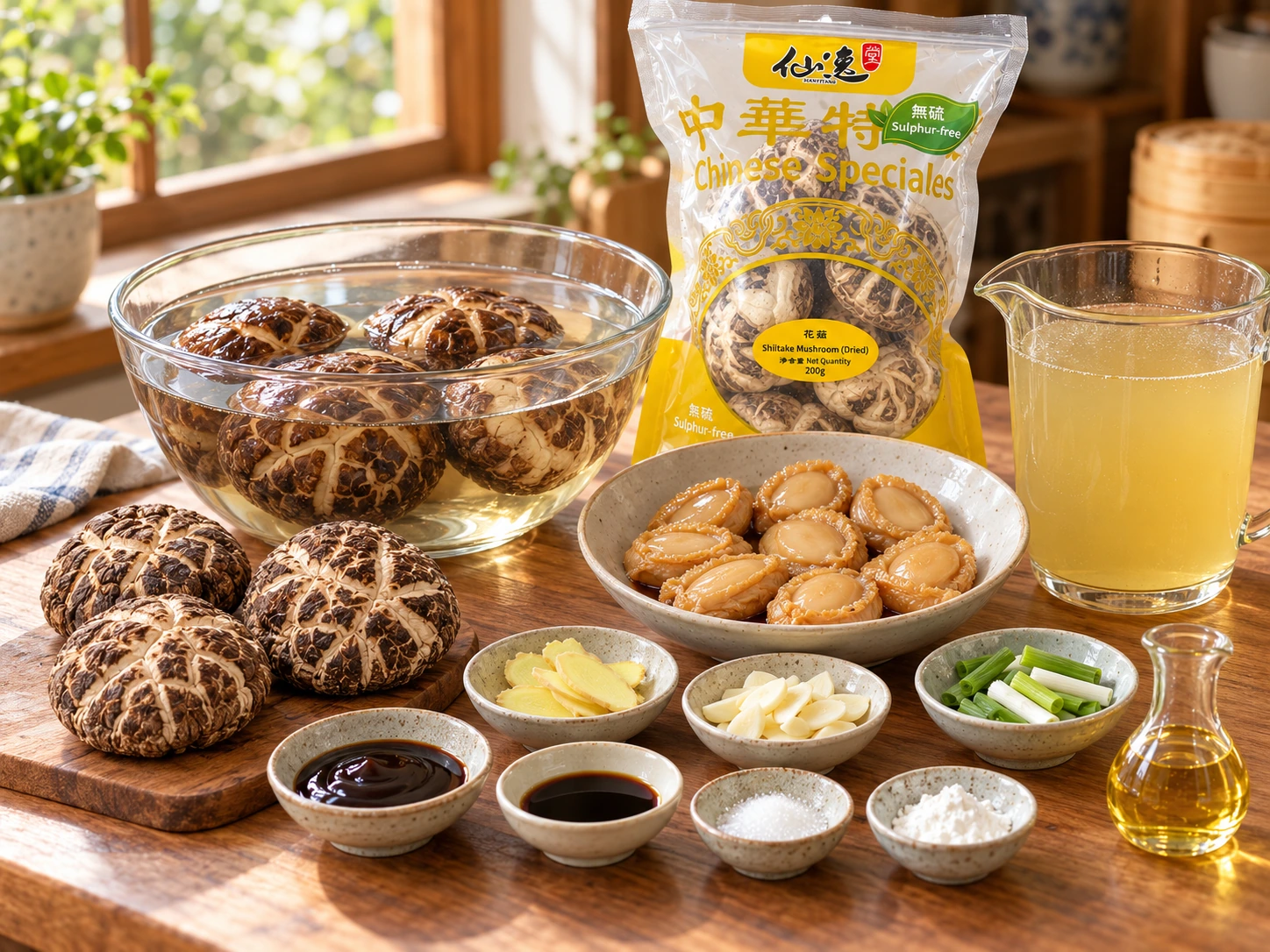
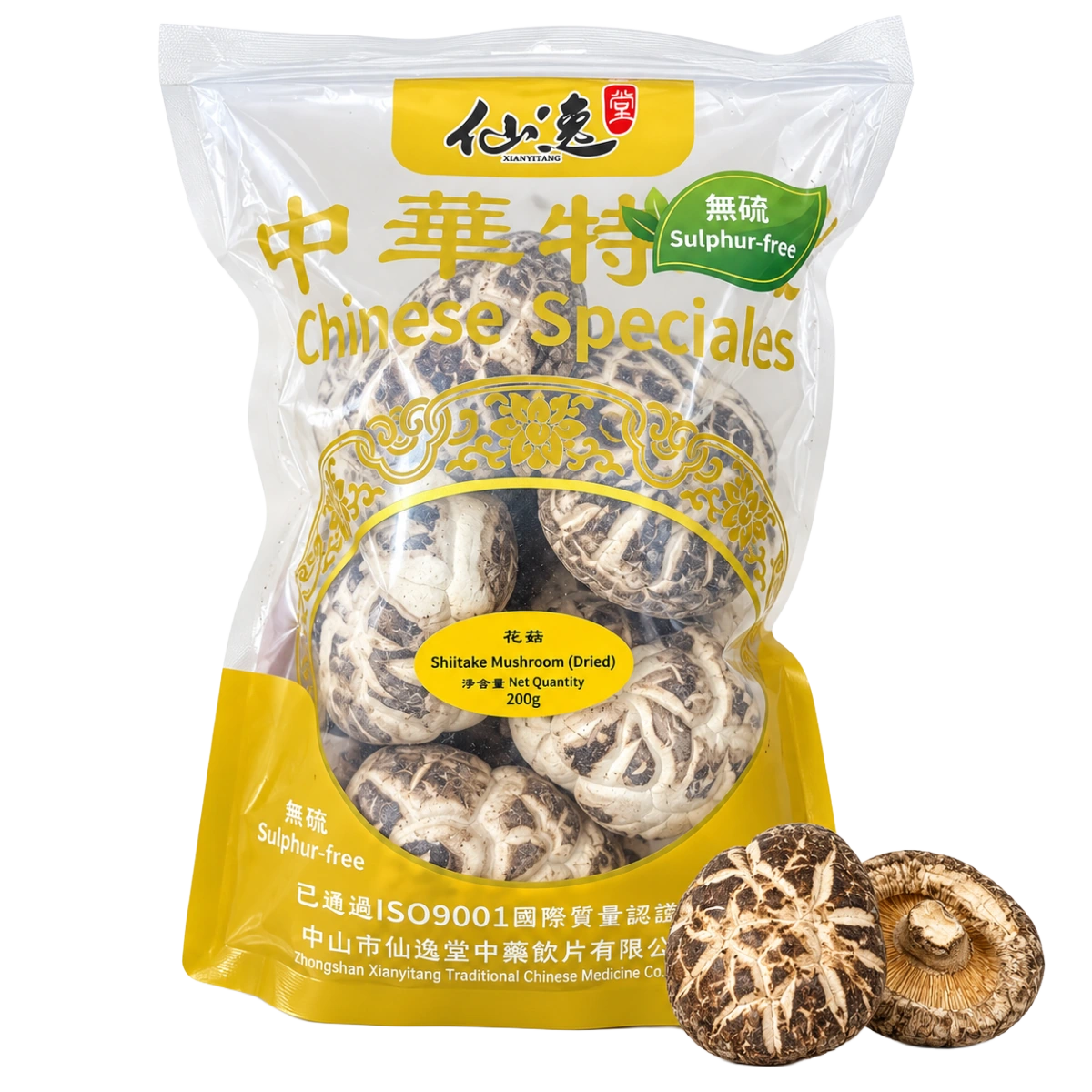
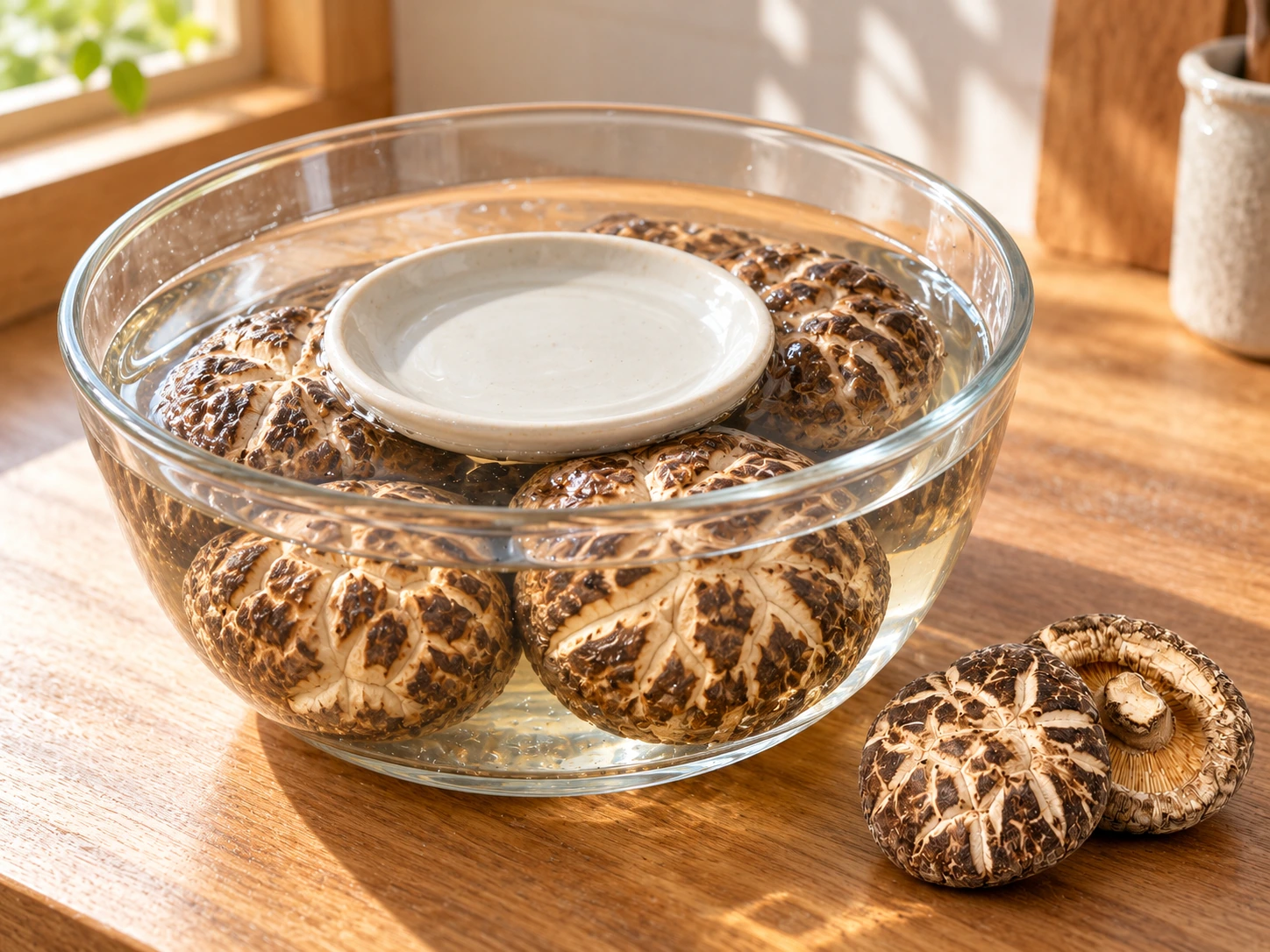
Pick over and briefly rinse four dried mushrooms. Submerge in about 1.5 litres cold drinking water in a wide covered bowl or food container, using a clean small plate to hold them down. Refrigerate at 5°C or below for about 8–12 hours, preferably overnight; thick large caps may take longer. Gently check the thickest centre of each cap for any dry hard core. If firm, change the water and continue soaking in the fridge rather than treating the elapsed time as proof of hydration.
2
Clean and inspect the centres
Lift out the mushrooms and discard the soaking water. Rinse grit from the gills, cap and stem junction. Trim tough stems as needed while keeping the caps whole. Check again that the centres are fully soft. Rehydration does not cook mushrooms; if cooking is delayed, keep covered and refrigerated and use promptly.
3
Braise the mushrooms fully first
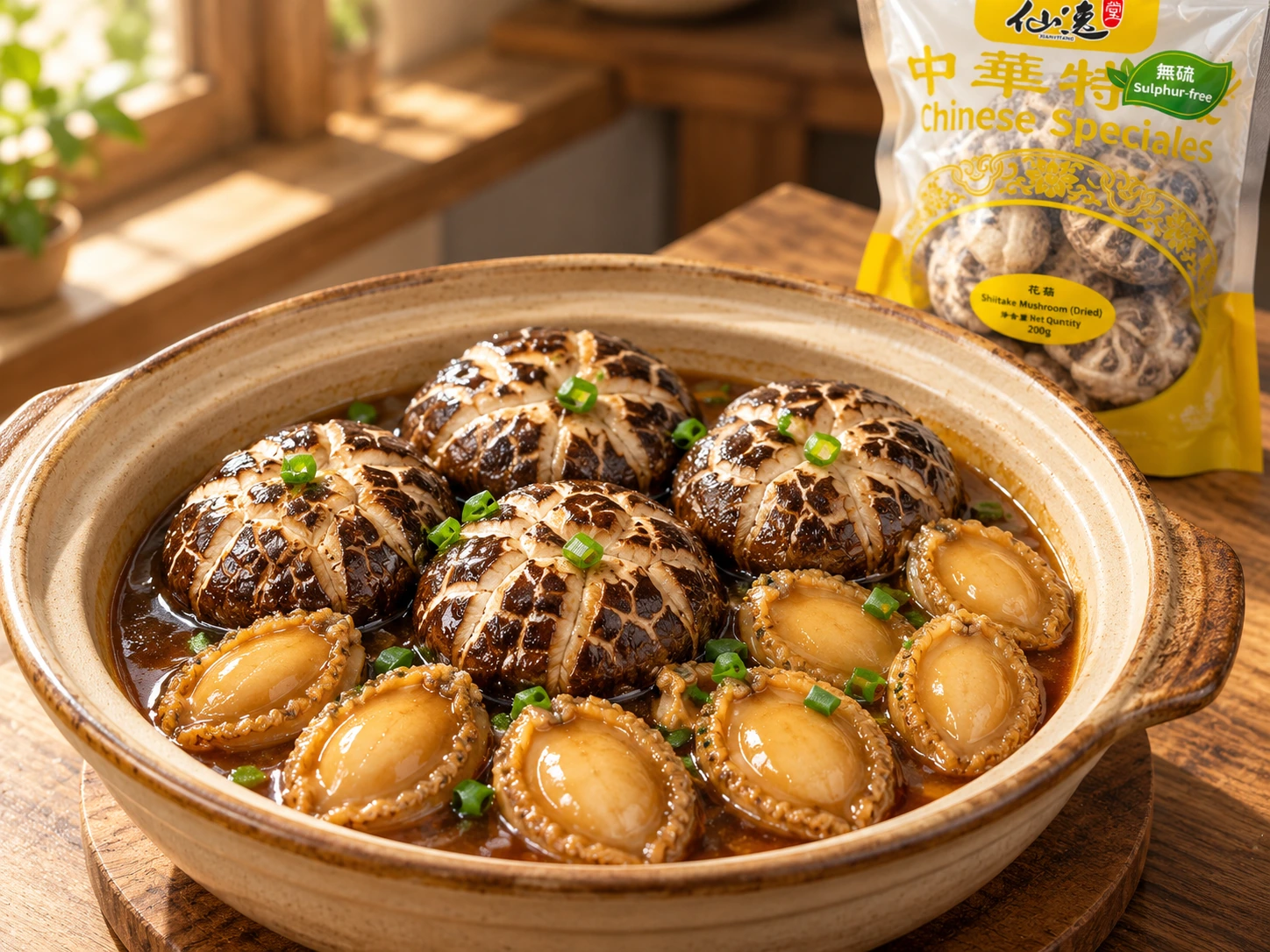
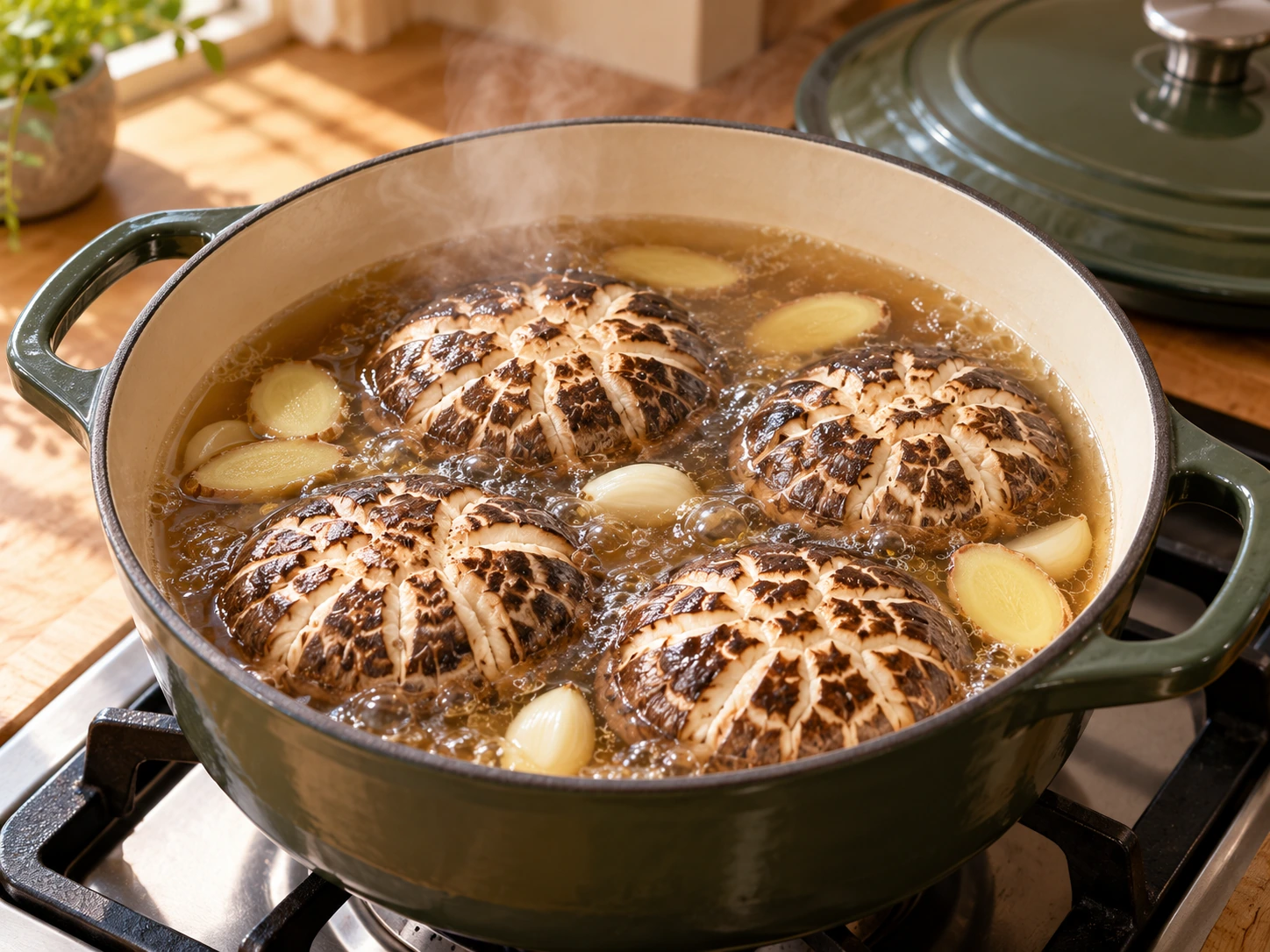
Heat 10 ml oil in a wide heavy-based pan. Gently cook ginger, garlic and spring-onion whites for about 1 minute without scorching. Add mushrooms, 800 ml low-salt chicken stock, light soy and oyster sauces. Bring to the boil, cover with a small gap and maintain a gentle simmer for about 60–90 minutes. Keep the caps mostly in liquid, turn gently and check the level every 15–20 minutes, adding hot drinking water to prevent drying. A chopstick should pass easily through the thickest centre and the whole cap should be cooked and tender. Continue with sufficient liquid if still firm; thick caps can take longer.
4
Check and prepare the ready-to-eat abalone
Open the abalone close to the time the mushrooms become tender. Check that the tin is sound and within its date and explicitly says fully cooked and ready to eat. Drain and take eight small abalones, about 160–200 g. Follow that brand’s serving or heating directions, including any longer heating requirement. Do not apply this stage to raw, raw-frozen or dried abalone, and do not automatically pour an unknown packing liquid into the pan.
5
Combine, lightly glaze and serve
Add the fully cooked ready-to-eat abalone to the cooked mushrooms and heat gently until hot through the centre for the time required by its label. Do not transfer long raw-abalone braising times to canned abalone. Re-stir the cornflour slurry, add half and gently simmer for 1–2 minutes until lightly coating, using more only if needed. Add a little of the sugar, taste and adjust. Add spring-onion greens and heat briefly. Serve as a shared side dish for four. If too salty or thick, add a little hot drinking water and bring back to the boil.
Cooking tips
- Difficulty: Intermediate.
- Dried caps are approximately 8–10 cm across, with natural size variation. Keep them whole in this dish.
- Stock, oyster sauce, soy sauce and canned abalone vary in saltiness; no additional salt is specified.
- Fresh, raw-frozen and dried abalone need different preparation and cooking; they are not direct substitutes here.
Allergens
Contains molluscs: abalone and oysters in oyster sauce. Soy sauce and some oyster sauces or stocks may contain soya and wheat. The Xianyitang dried-ingredient packs state that they are packed in a facility also handling peanuts, tree nuts, sesame and soya. Check the actual labels of every brand used.
Storage and reheating
After opening, refrigerate canned abalone and use it as directed on its label. Divide the cooked dish into shallow containers, cool promptly and refrigerate at 5°C or below within 2 hours of cooking. Eat within 24 hours, or sooner if the abalone label requires. Reheat only once until hot throughout; do not leave the casserole at room temperature overnight.