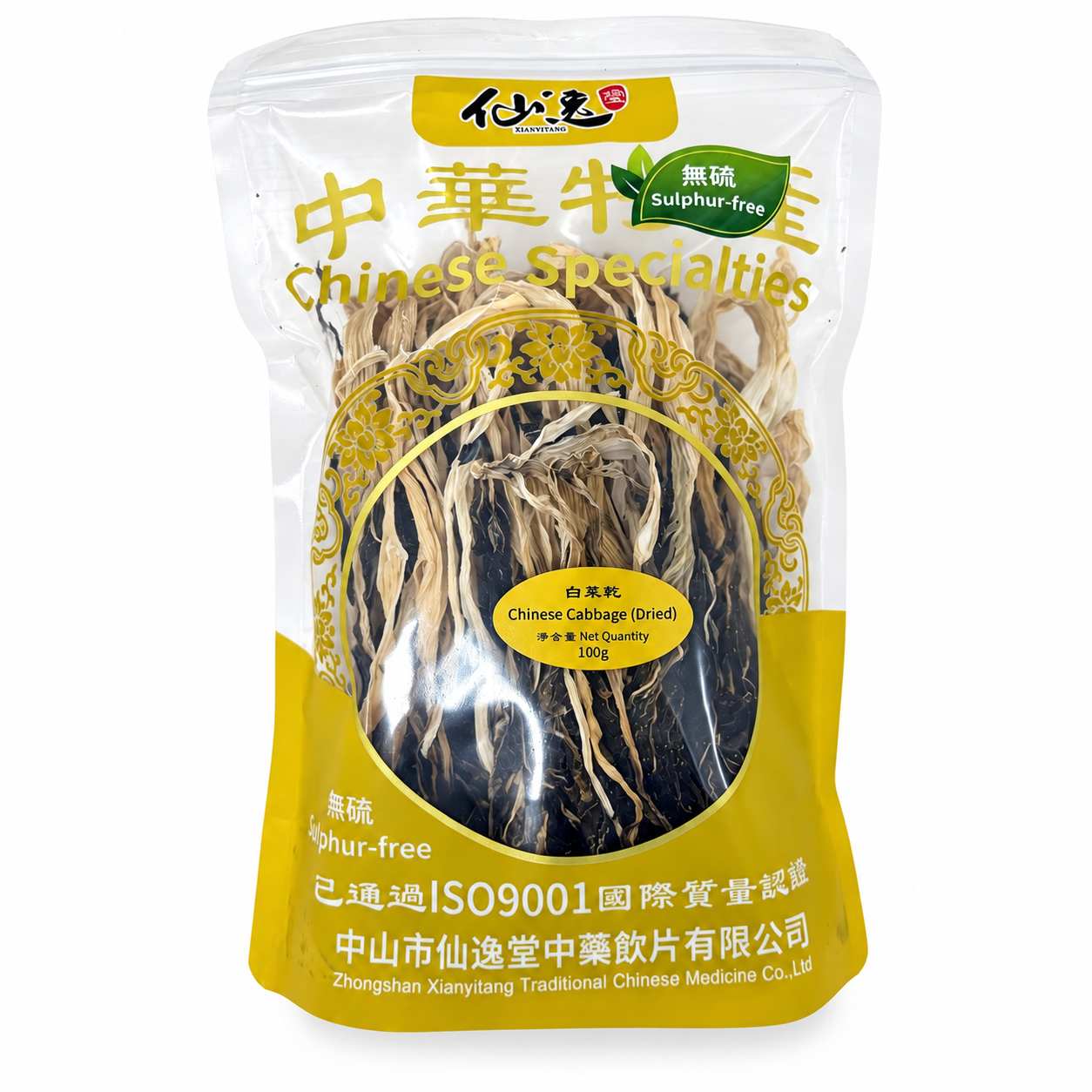
Dried Chinese Cabbage and Pork Rib Soup
Hob / electric pressure cooker · Two methods for one recipe
Hob
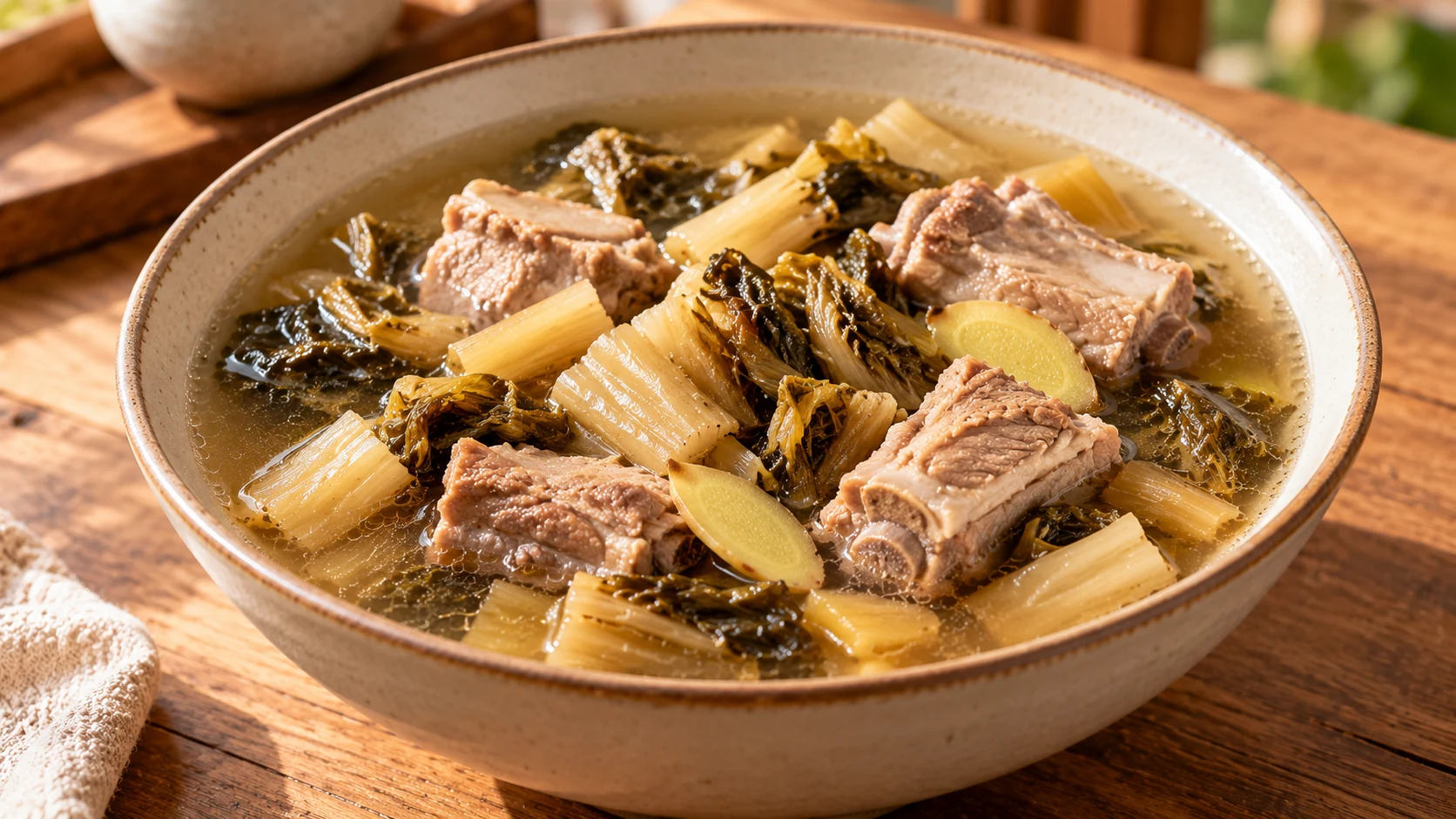
Rehydrated dried Chinese cabbage gives this gently flavoured soup its character. Simmer it with pork ribs and ginger, using 50 g from a Xianyitang 100 g pack. This version has no dried scallops or honey dates.
The estimate includes soaking, preparation and simmering. Allow about 20 minutes for preparation, partly during soaking. Thick stalks may need longer to soften.
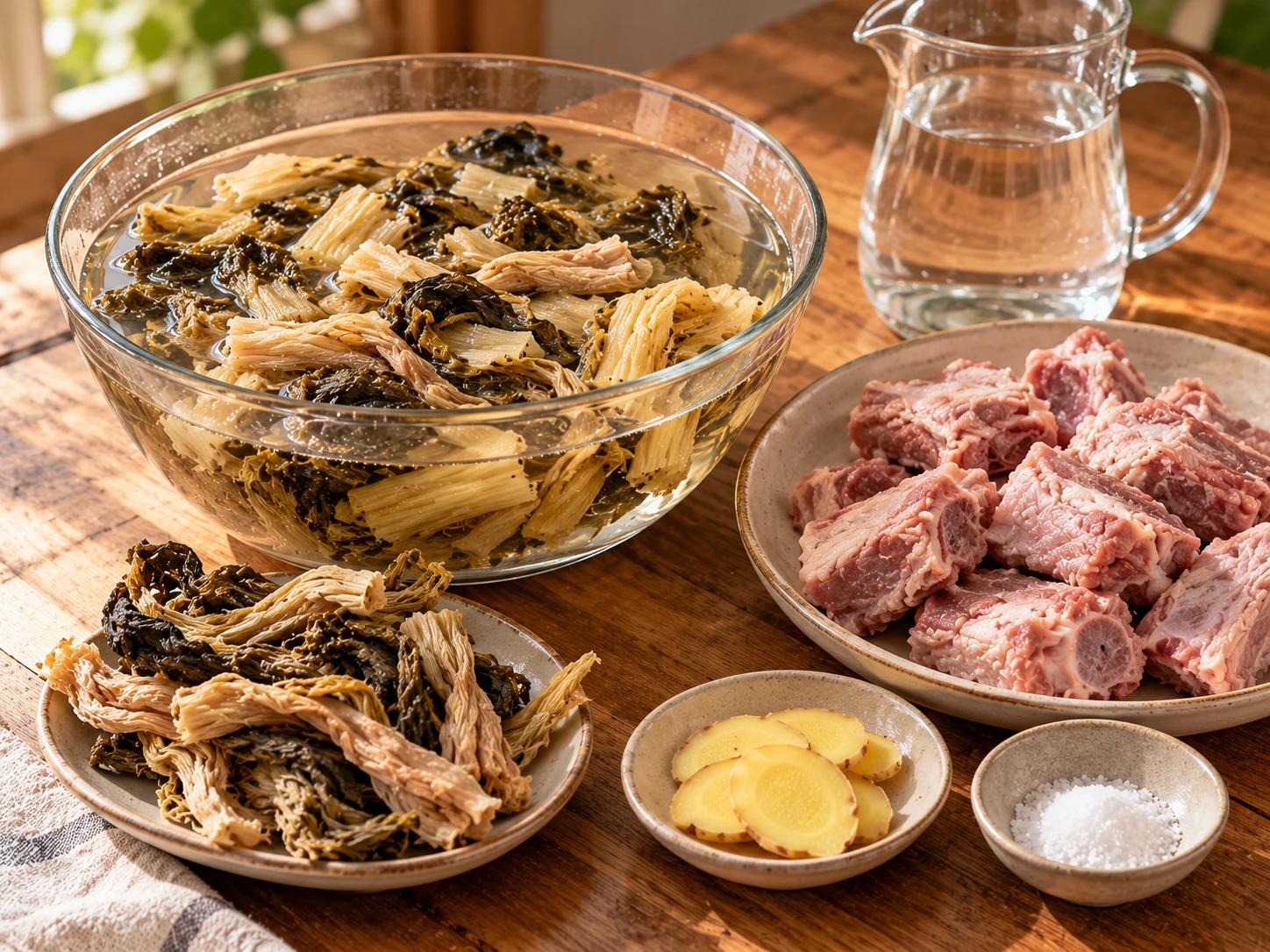
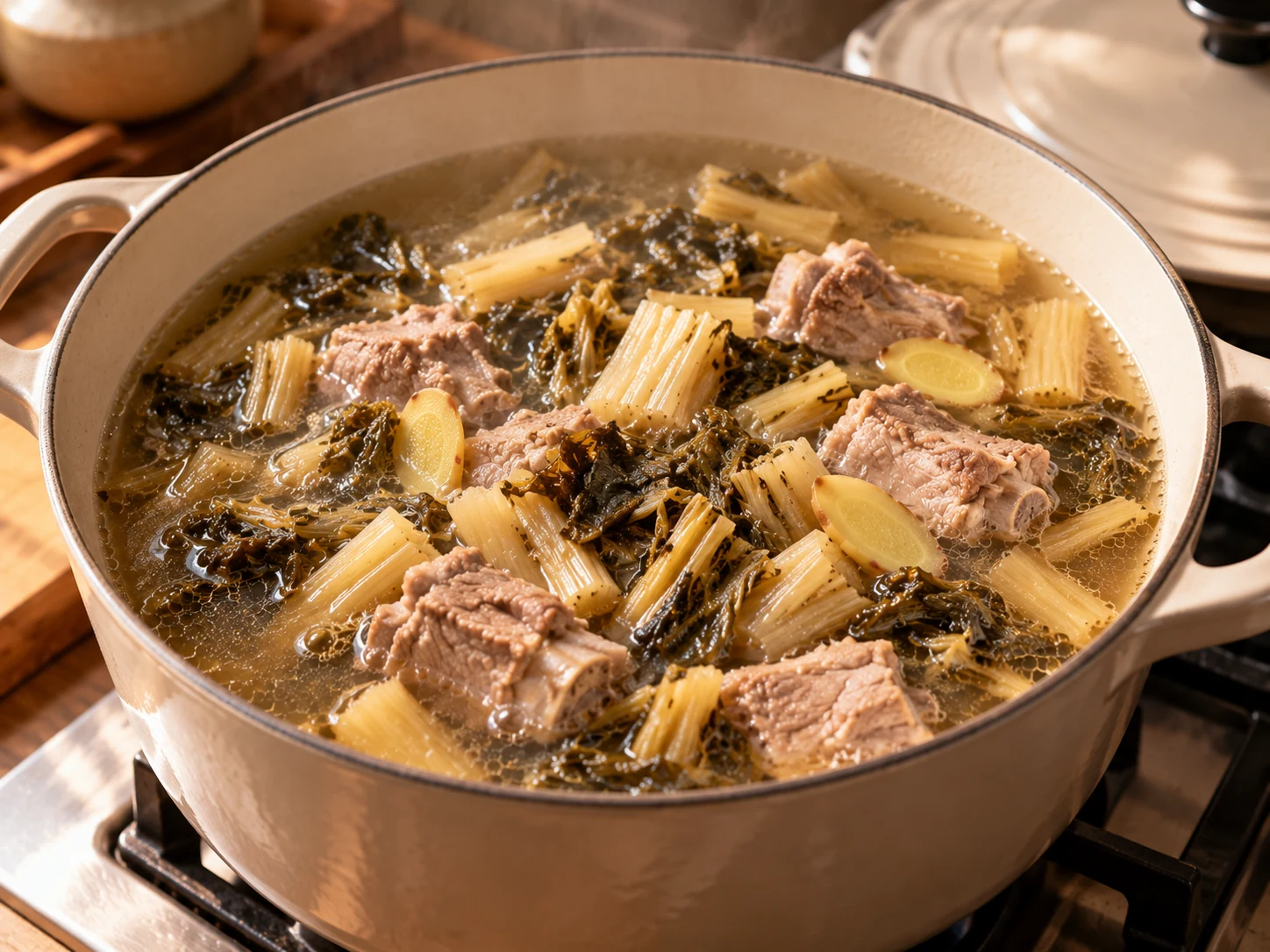
Recipe illustrations; measure ingredients using the written quantities.
Ingredients
- Xianyitang dried Chinese cabbage, from a 100 g pack 50 g
- Bone-in pork ribs, cut into roughly 5 cm pieces 600 g
- Fresh ginger, sliced 15 g
- Cold drinking water for soaking; discard afterwards 1.5 litres
- Drinking water for the soup, plus separate water for blanching 2 litres, plus hot water as needed
- Salt 2–4 g, to taste
Soaking guide
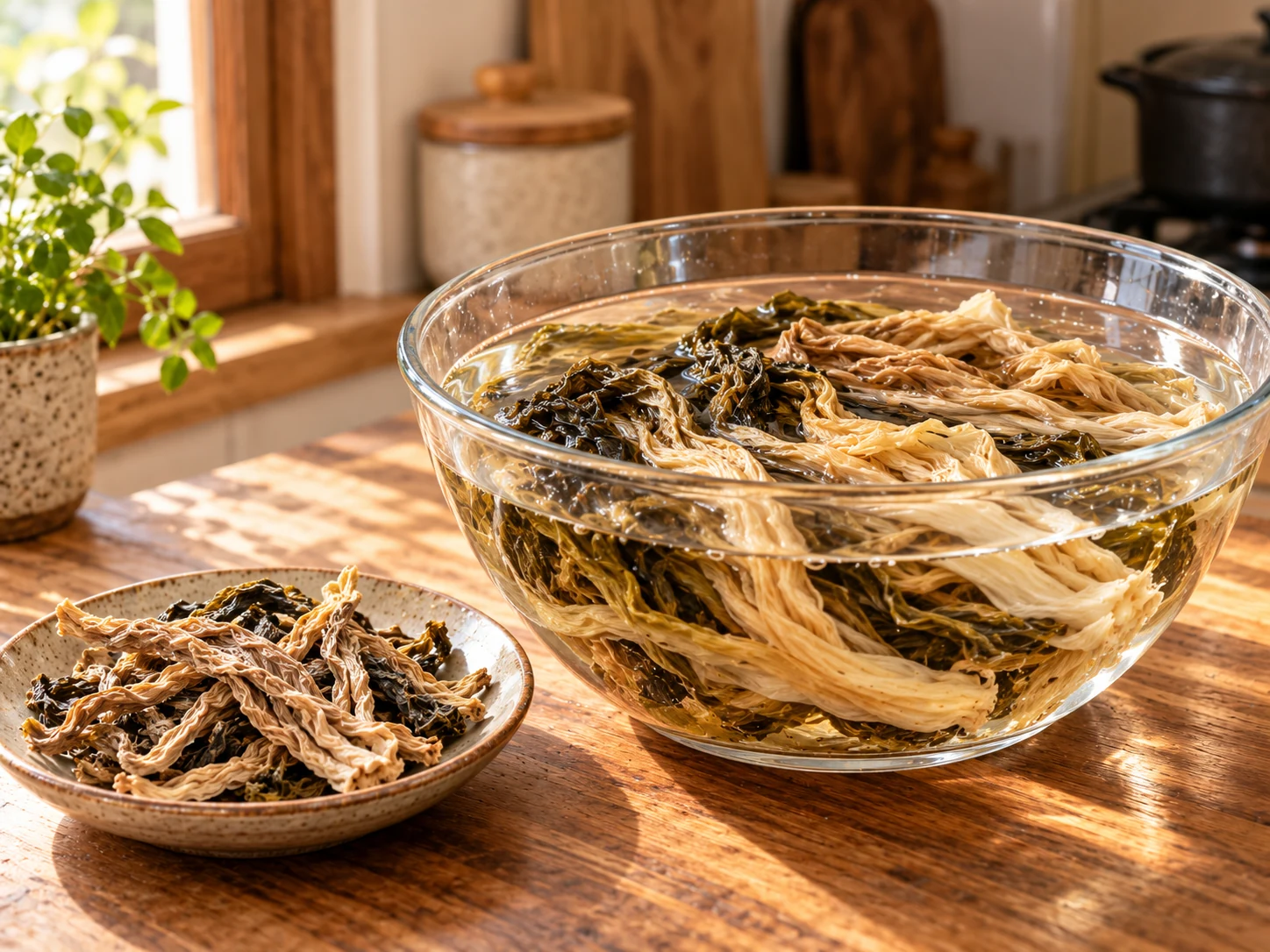
- Pick out debris and briefly rinse the cabbage. Cover it completely with 1.5 litres of cold drinking water in a large bowl, using a small plate to hold it down if needed. Soak for about 1–2 hours until the thick stalks bend easily without a hard centre. If still firm, change the water and continue. Refrigerate if soaking longer than 2 hours or in a warm kitchen.
- Lift out the cabbage and discard the soaking water. Open the folded leaves and stalk layers, gently wash in fresh water and change the water at least 2–3 times, repeating until no grit is visible and the rinse water is clean. Squeeze out excess water and cut into 4–5 cm lengths. Do not use the soaking water in the soup; soaking does not cook the cabbage.
Method
Rinse and soak the dried cabbage
Pick out debris and briefly rinse the cabbage. Cover it completely with 1.5 litres of cold drinking water in a large bowl, using a small plate to hold it down if needed. Soak for about 1–2 hours until the thick stalks bend easily without a hard centre. If still firm, change the water and continue. Refrigerate if soaking longer than 2 hours or in a warm kitchen.
Open out, wash and cut
Lift out the cabbage and discard the soaking water. Open the folded leaves and stalk layers, gently wash in fresh water and change the water at least 2–3 times, repeating until no grit is visible and the rinse water is clean. Squeeze out excess water and cut into 4–5 cm lengths. Do not use the soaking water in the soup; soaking does not cook the cabbage.
Blanch the ribs
Place the ribs in a pot and cover with cold water. Bring to the boil, gently boil for 3–5 minutes and skim off foam. Drain, discard that water, remove clinging foam and clean the pot. This brief blanch is not the full cooking step. Wash hands, utensils and surfaces after handling raw meat.
Simmer in fresh water
Put the ribs, cleaned cabbage, ginger and 2 litres of fresh water into a pot of at least 4-litre capacity. Bring to the boil and skim, then cover and reduce to a gentle simmer for about 2–2½ hours. Check every 30–40 minutes, topping up with hot water as needed to keep the ingredients mostly covered and prevent the pot boiling dry.
Check and season
The leaves and stalks should be tender, and the pork fully cooked and easy to separate from the bones. Continue simmering if it remains tough. When checking with a clean thermometer, avoid the bone and ensure the centre reaches 75°C for 30 seconds. Start with 2 g salt, adjust to taste and serve four portions hot.
Cooking tips
- Use half the 100 g pack and reseal the rest to protect it from moisture. Fresh cabbage is not a weight-for-weight substitute.
- Soaking time depends on thickness and dryness. Fully softened stalks and clean folded layers matter more than the clock.
- The flavour comes from ribs, ginger and dried cabbage; no scallops, honey dates or soup mix are needed.
Allergens
The Xianyitang pack states that it is packed in a facility that also handles peanuts, tree nuts, sesame and soya. Check the actual pack for anyone with allergies.
Storage and reheating
Divide leftovers into shallow containers, cool promptly and refrigerate within 2 hours of finishing cooking. Keep the fridge at 5°C or below; eat within 48 hours or freeze. Reheat only once until steaming hot throughout; stir soup during reheating so the whole batch is hot.
Pressure cooker
Fully soak and carefully wash dried Chinese cabbage before pressure cooking it with pork ribs and ginger. Use 50 g from the Xianyitang 100 g pack. Keep the soaking and blanching stages; no dried scallops or honey dates are added.
Estimates include soaking, blanching, heating to pressure, the pressure cycle and natural release. Pressure does not replace thorough washing or rehydration. This method reduces hob tending; the 70-minute setting is not the whole recipe time.
Recipe illustrations; measure ingredients using the written quantities.
Ingredients
- Xianyitang dried Chinese cabbage, from a 100 g pack 50 g
- Bone-in pork ribs, cut into roughly 5 cm pieces 600 g
- Fresh ginger, sliced 15 g
- Cold drinking water for soaking; discard afterwards 1.5 litres
- Fresh drinking water for the soup; extra hot water for adjusting the broth only after opening safely 1.5 litres; replace evaporation during uncovered simmering
- Salt 2–4 g, to taste
Soaking guide
- Pick out debris and briefly rinse the cabbage. Cover it completely with 1.5 litres of cold drinking water in a large bowl, using a small plate to hold it down if needed. Soak for about 1–2 hours until the thick stalks bend easily without a hard centre. If still firm, change the water and continue. Refrigerate if soaking longer than 2 hours or in a warm kitchen.
- Lift out the cabbage and discard the soaking water. Open the folded leaves and stalk layers, gently wash in fresh water and change the water at least 2–3 times, repeating until no grit is visible and the rinse water is clean. Squeeze out excess water and cut into 4–5 cm lengths. Do not use the soaking water in the soup; soaking does not cook the cabbage.
Method
Rinse and soak the dried cabbage
Pick out debris and briefly rinse the cabbage. Cover it completely with 1.5 litres of cold drinking water in a large bowl, using a small plate to hold it down if needed. Soak for about 1–2 hours until the thick stalks bend easily without a hard centre. If still firm, change the water and continue. Refrigerate if soaking longer than 2 hours or in a warm kitchen.
Open out, wash and cut
Lift out the cabbage and discard the soaking water. Open the folded leaves and stalk layers, gently wash in fresh water and change the water at least 2–3 times, repeating until no grit is visible and the rinse water is clean. Squeeze out excess water and cut into 4–5 cm lengths. Do not use the soaking water in the soup; soaking does not cook the cabbage.
Blanch the ribs
Place the ribs in a pot and cover with cold water. Bring to the boil, gently boil for 3–5 minutes and skim off foam. Drain, discard that water, remove clinging foam and clean the pot. This brief blanch is not the full cooking step. Wash hands, utensils and surfaces after handling raw meat.
Load the cooker and check the fill level
Use an electric pressure cooker of at least 6 litres. Check the sealing ring, steam path and minimum liquid requirement as instructed for your model. Food and liquid together must remain below its soup fill limit; use the lower of the half-full line and the model’s specified soup limit. If the batch does not fit, reduce all ingredients proportionately or use a larger cooker; do not pack the ingredients down. Add the blanched ribs, cleaned and cut cabbage, ginger and 1.5 litres fresh drinking water to the inner pot. Keep the cabbage in the liquid and check that food and water together stay within the soup limit. Pressure cooking loses less water: do not start with the hob version’s 2 litres plus top-ups.
Cook at high pressure for 70 minutes
Lock the lid and select the sealing or pressure-cooking position as directed for your model. Set high pressure for 70 minutes. Heating to pressure comes first; the countdown starts only at working pressure. Check the actual pressure and timing rather than relying on a default Soup programme. Do not open the lid during cooking.
What is natural pressure release?
When the pressure timer finishes, cancel cooking and turn off Keep Warm as instructed for your model. Leave the lid locked and let the cooker cool so the pressure falls on its own. Do not turn the valve for a quick release, move the electric cooker or cool it under running water. Allow roughly 20–40 minutes, sometimes longer. Open only when the float or pressure indicator has fully dropped and the lid unlocks normally as specified by the manufacturer; elapsed minutes alone do not establish that it is safe. Direct the escaping steam away from your face and hands when lifting the lid.
Check doneness, season and serve
After opening safely, check that the thick cabbage stalks are tender and the pork is fully cooked and separates easily from the bones. With a clean thermometer, check the thickest meat away from bone: it must reach 75°C for 30 seconds. If undercooked or still tough, simmer with the lid off and recheck. Skim visible fat. Start with 2 g salt and adjust within 2–4 g to taste. If the broth is too concentrated or low in volume, add a little hot drinking water only after opening and bring it back to the boil. Divide into four servings.
Cooking tips
- Designed for an electric pressure cooker with a selectable high-pressure setting. Do not transfer these timings directly to a stovetop pressure cooker; follow that model’s instructions.
- Total time includes heating to pressure and natural release. The high-pressure timer starts when working pressure is reached, not when the Start button is pressed.
- Times are estimates. Check doneness and follow your appliance instructions.
Allergens
The Xianyitang pack states that it is packed in a facility that also handles peanuts, tree nuts, sesame and soya. Check the actual pack for anyone with allergies.
Storage and reheating
Divide leftovers into shallow containers, cool promptly and refrigerate within 2 hours of finishing cooking. Keep the fridge at 5°C or below; eat within 48 hours or freeze. Reheat only once until steaming hot throughout; stir soup during reheating so the whole batch is hot.
Shop the Xianyitang ingredients for this recipe