Method
1
Fully rehydrate the bean curd sticks
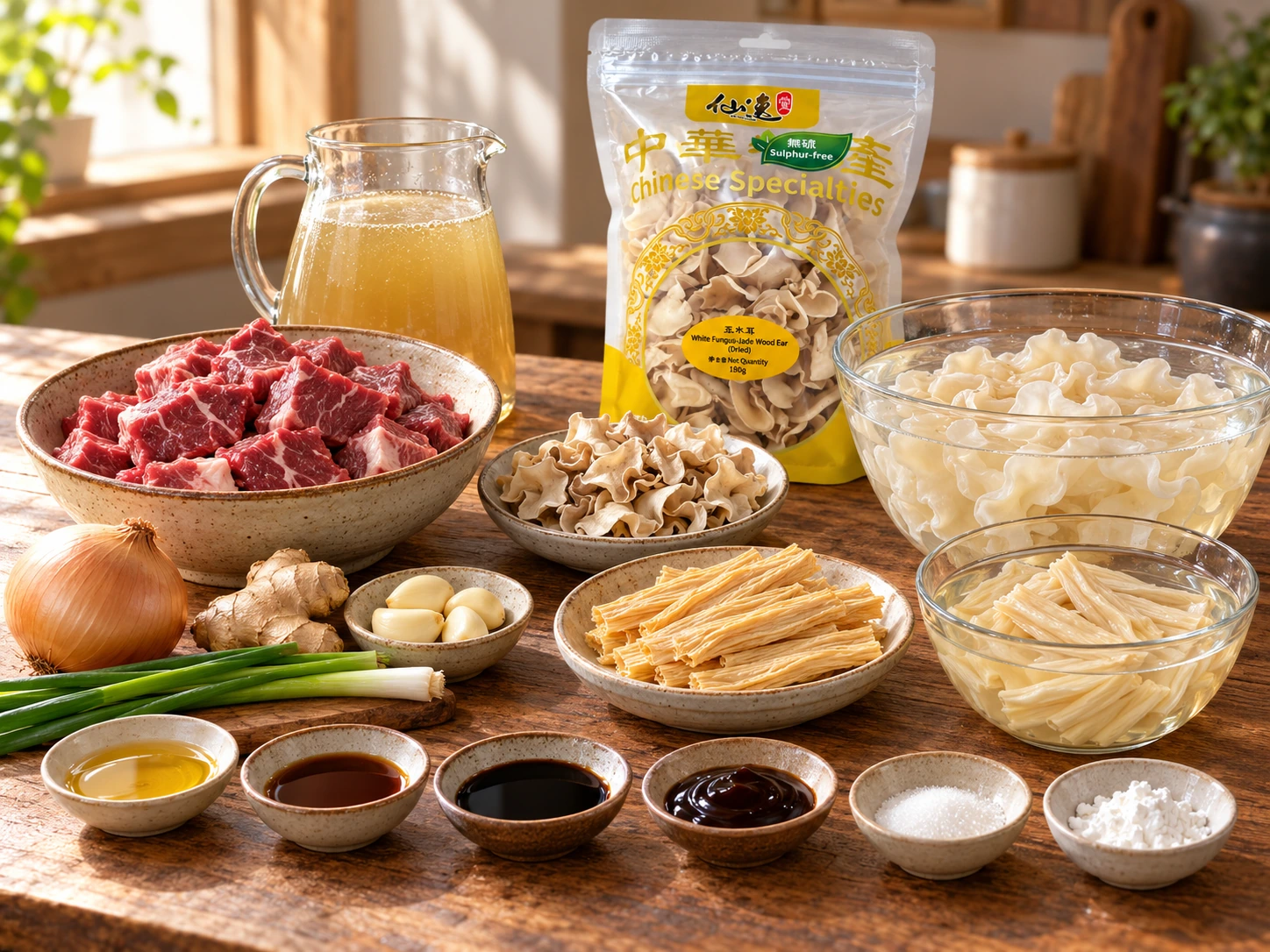
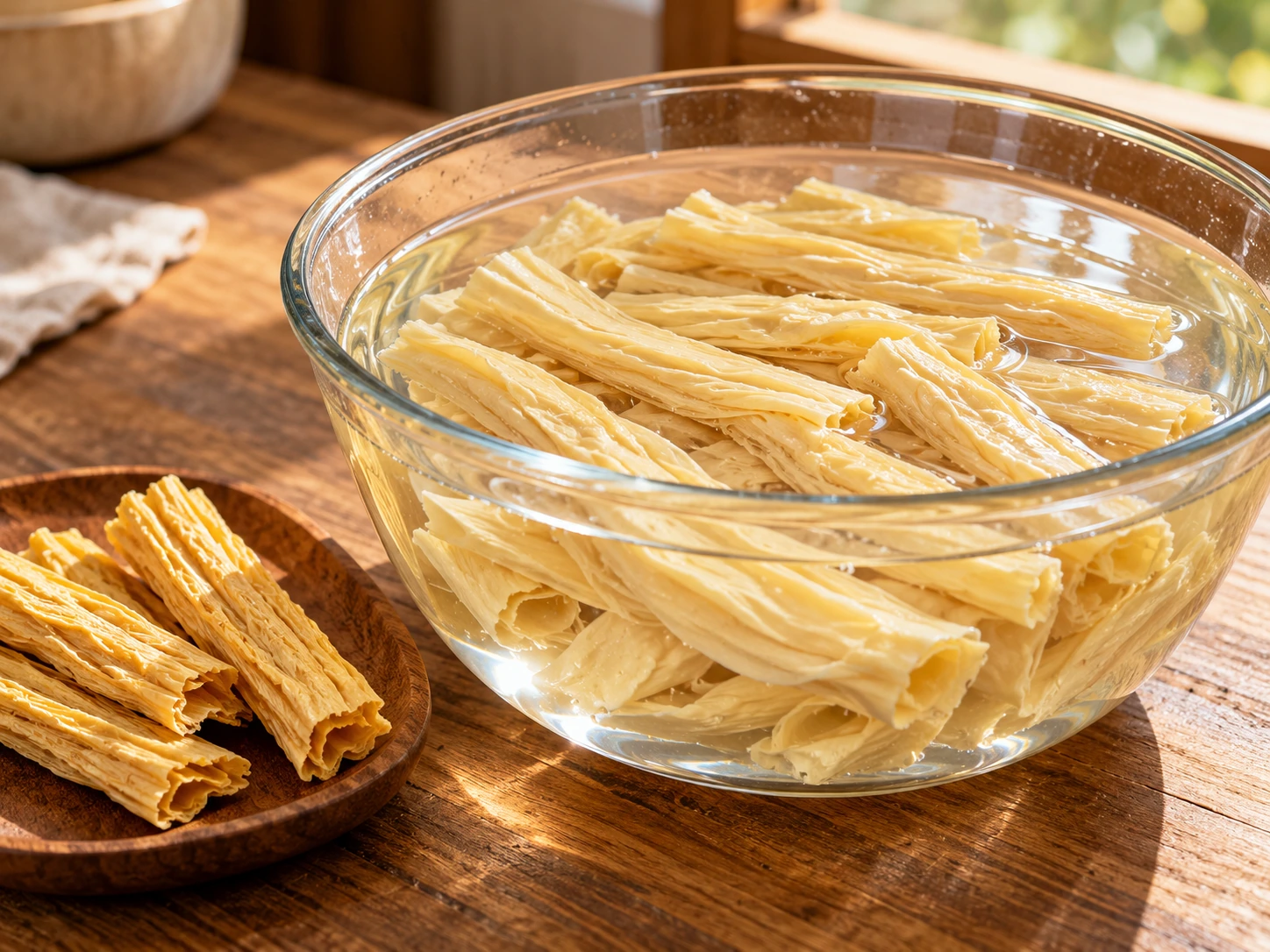
Submerge the dry sticks in about 1 litre cold drinking water in a covered food container. Refrigerate at 5°C or below for about 4–6 hours or longer until even the thick centres are free of hard dry cores; follow the actual pack first. Change the water and continue refrigerated soaking if needed. Lift out, rinse, discard the water and cut into 4–5 cm lengths. Keep refrigerated until needed. Prepare the night before if convenient, or start the beef during the later part of soaking.
2
Brown the beef and prepare the base
Fully thaw the beef, pat dry and do not rinse raw meat. Brown in batches in 15 ml oil in a heavy-based pot, then lift out. Gently cook onion, ginger and garlic for about 3–5 minutes. Add a little of the measured stock and loosen the pan base; remove any black burnt deposits. Clean hands, utensils and surfaces after handling raw beef. Browning the outside does not cook the centre.
3
Start the beef braise
Return the beef and add the rest of the stock, making 1 litre in total, with light and dark soy, oyster sauce and sugar. Bring to the boil, cover with a small gap and maintain a gentle simmer for about 90–120 minutes until the beef is nearly tender. Check and turn gently every 20–30 minutes, adding hot water as needed to maintain gravy and avoid drying. Extend this stage first if the beef remains tough.
4
Soak and wash the jade wood ear
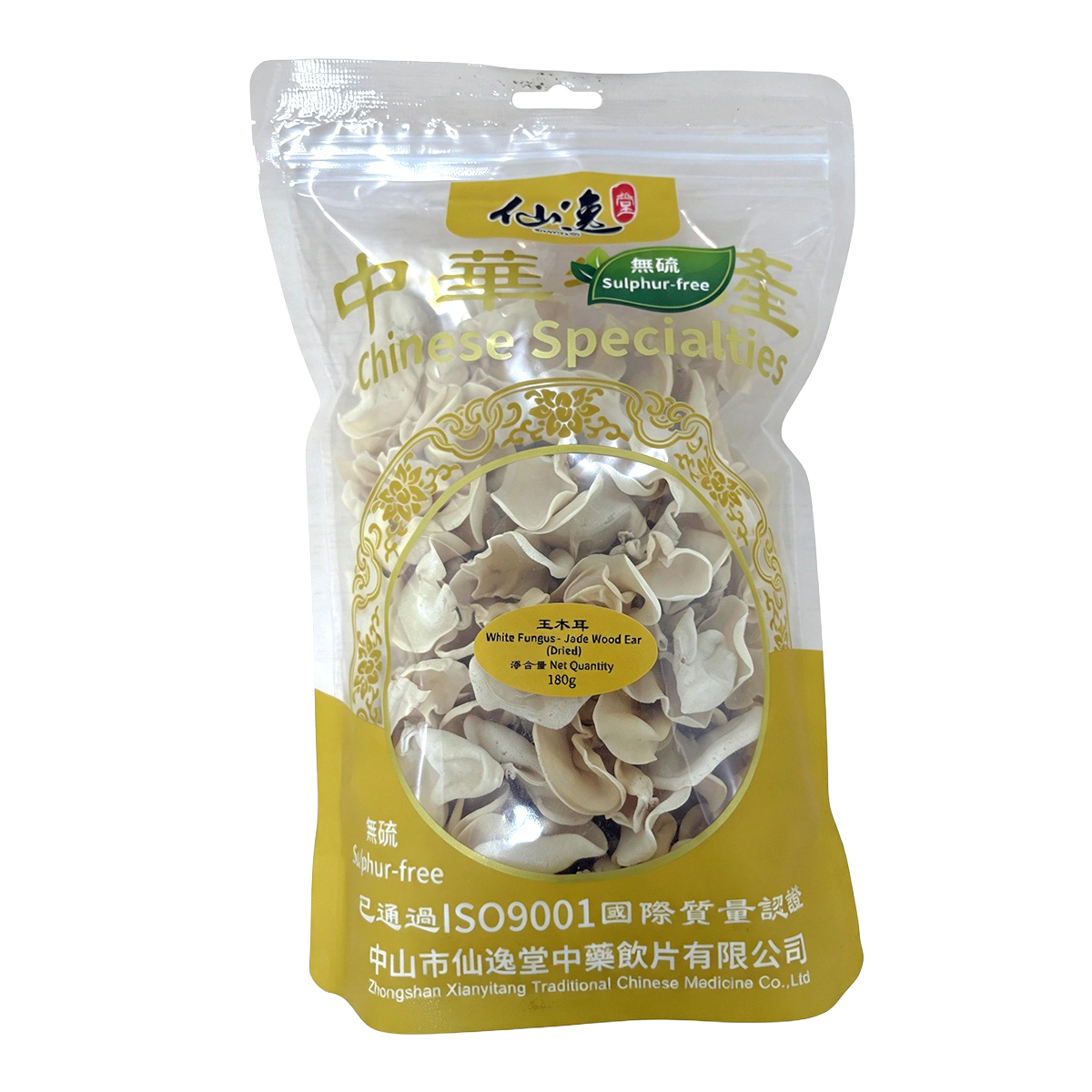
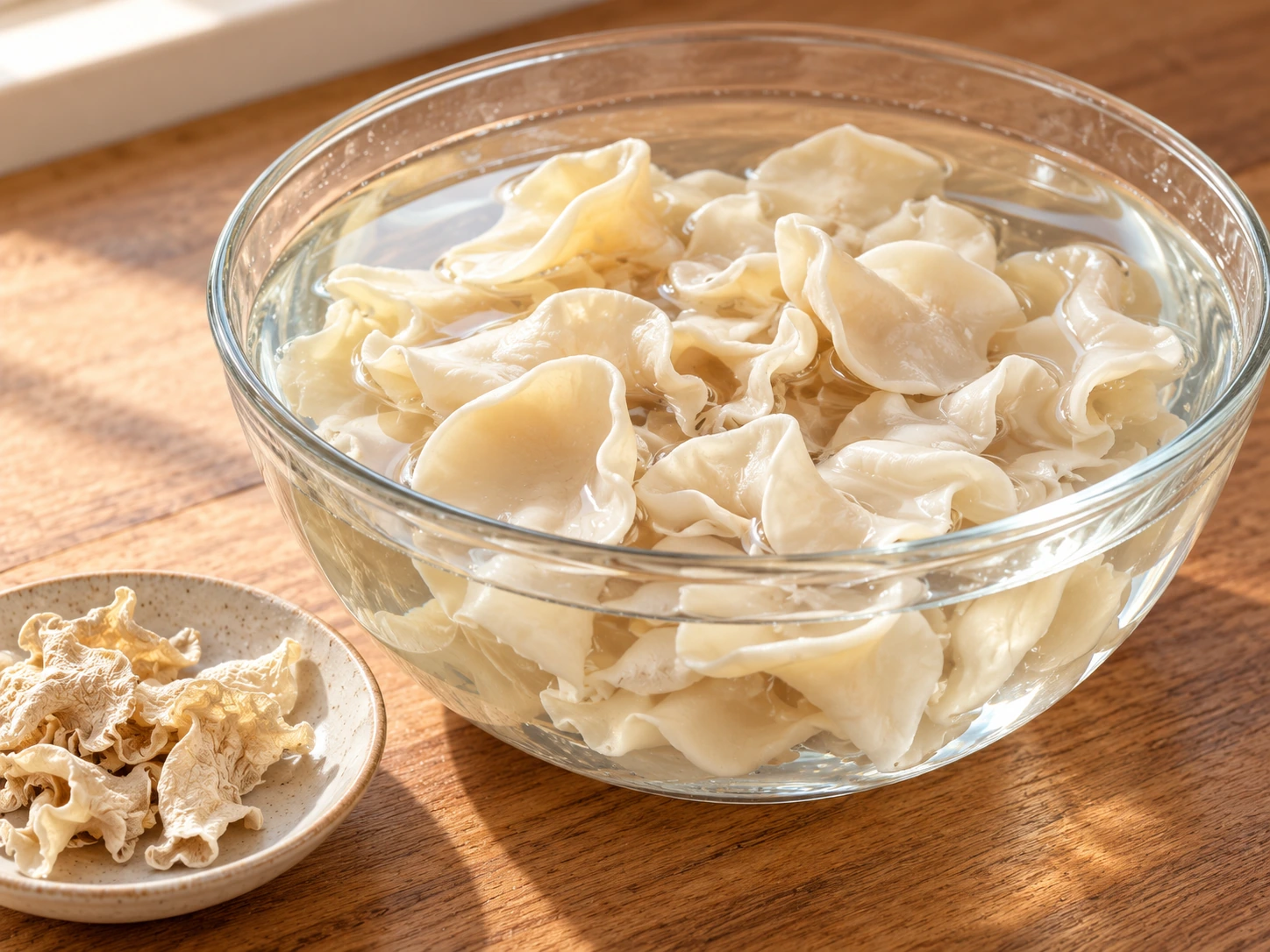
During the later part of the beef braise, pick over and rinse 15 g dried jade wood ear. Submerge in about 600 ml warm drinking water, roughly 30–40°C, and soak for the pack’s 15–30 minutes until the thick ears are soft throughout. Recheck if firm; do not leave indefinitely in warm water. Discard the soaking water, wash folds and root areas, trim tough roots and tear into 3–4 cm pieces. Cover and refrigerate if not cooking promptly. Jade wood ear is not snow-fungus rosettes.
5
Cook the wood ear fully, then add bean curd
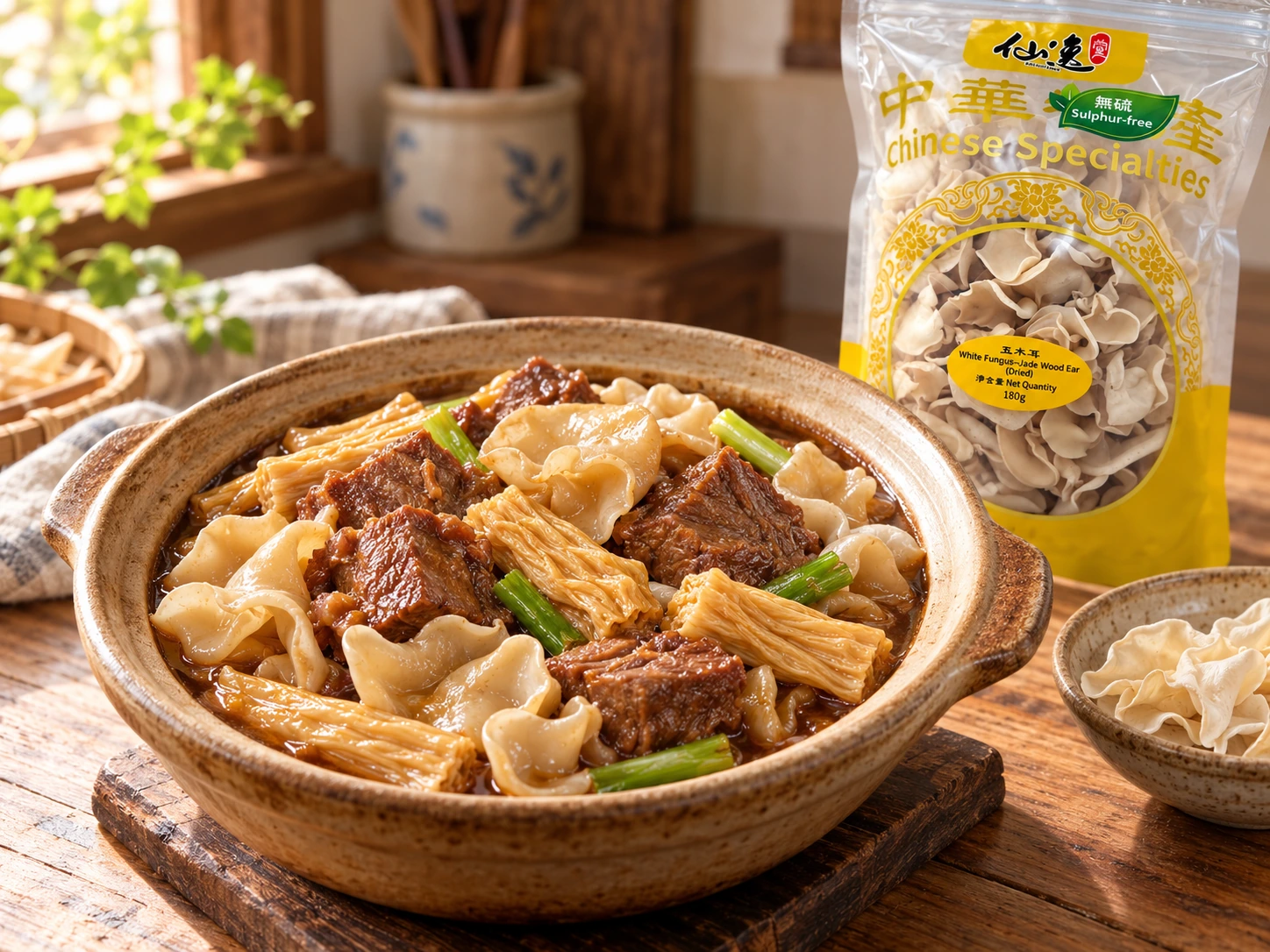
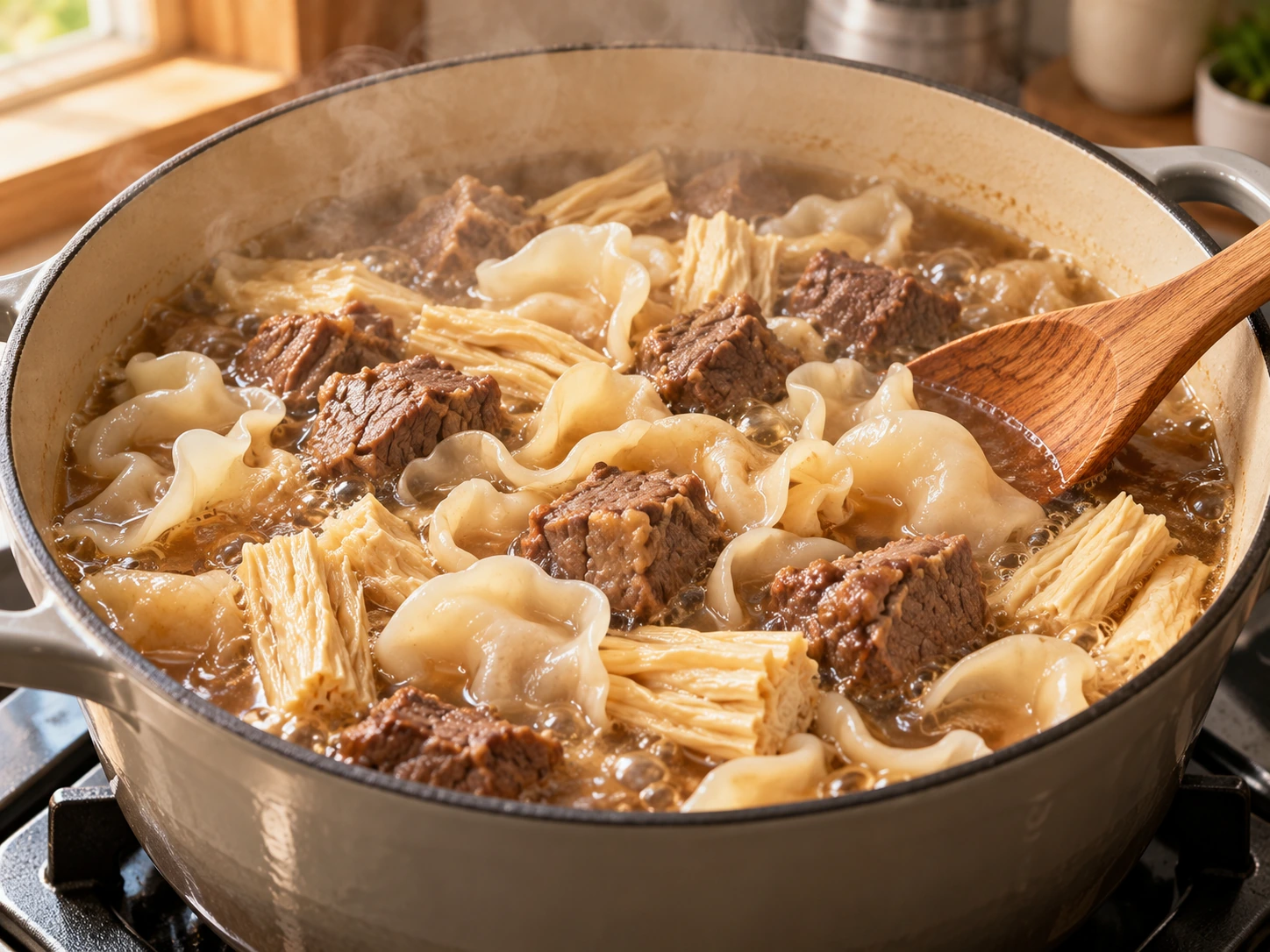
Add the cleaned rehydrated jade wood ear to the simmering beef. Bring back to the boil and keep a steady gentle simmer for 40–60 minutes until cooked throughout and the thick ears are tender to bite; the beef must also be tender. Maintain sufficient liquid and add hot water as needed. Add hydrated bean curd for the last 15–20 minutes, or longer as its label requires, stirring gently to avoid breaking it up. It must be hot and cooked through. Do not shorten the wood-ear cooking just because the beef is already cooked.
6
Check doneness and lightly finish the gravy
Check that the thickest beef reaches 75°C for 30 seconds and is tender to bite, and that wood ear and bean curd are fully cooked. Re-stir the cornflour slurry, add half and simmer for 1–2 minutes for a light gravy, adding more only if required. Add spring-onion pieces and heat briefly. Taste cooked gravy before adding any salt. Thin with a little hot water and bring back to the boil if too concentrated. Serve four as a shared dish with separately prepared rice.
Cooking tips
- Difficulty: Intermediate.
- Bean curd thickness varies substantially. Follow its label and check full hydration rather than assuming a universal short hot soak.
- This is a hob braise. The fungal pack’s simmering time has not been converted into a short pressure cycle.
- The thick pale ears are jade wood ear, not snow-fungus rosettes or black wood ear.
Allergens
Contains soya from bean curd and soy sauces. Some soy sauces, stocks and oyster sauces contain wheat; oyster sauce contains molluscs. The Xianyitang dried-ingredient packs state that they are packed in a facility also handling peanuts, tree nuts, sesame and soya. Check the actual labels of every brand used.
Storage and reheating
Keep raw meat and rehydrated fungi refrigerated at 5°C or below; follow the raw-meat pack instructions. Separate raw and cooked utensils and clean hands and surfaces after handling raw meat. Divide leftovers into shallow containers, cool promptly and refrigerate within 2 hours of cooking. Eat within 48 hours or freeze. Reheat only once until steaming hot throughout.