Method
1
Soak the jade wood ear
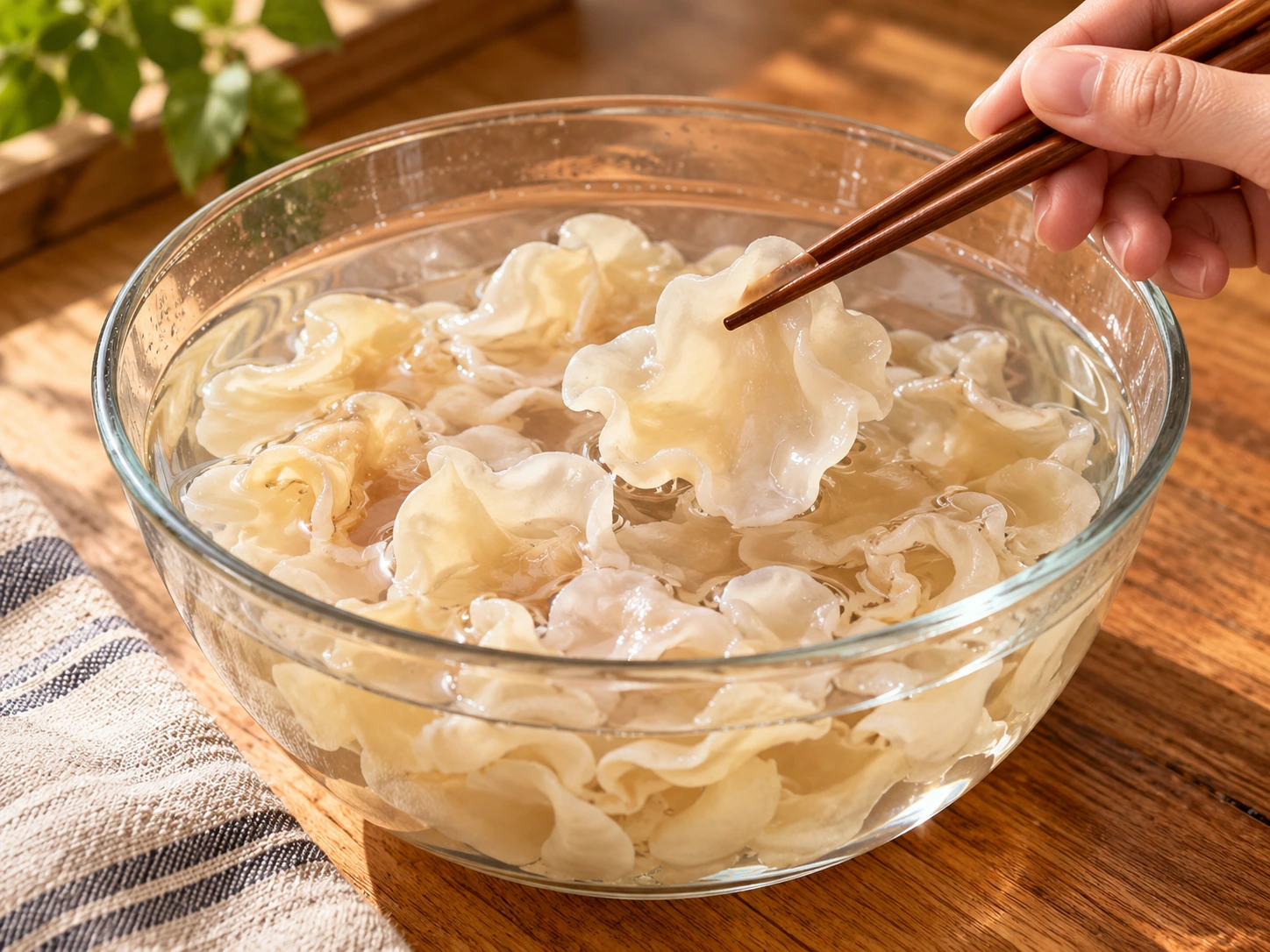
Rinse and submerge in at least 500 ml warm drinking water for about 15–30 minutes. Unfold the pieces and check there is no dry, hard centre. If needed, change to cold water and continue soaking, covered, in the fridge at 5°C or below. Discard the water, rinse each piece and trim hard bases.
2
Pre-cook until tender throughout
Cover with fresh water, bring to the boil and simmer steadily for 40–60 minutes, topping up with hot water as needed. The thickest parts must be fully cooked and supple. If still firm, simmer another 10–15 minutes and check again. Drain, cool just enough to handle and cut into roughly 5 mm strips. Soaking and the final toss do not replace this cooking.
3
Prepare the vegetables and beef
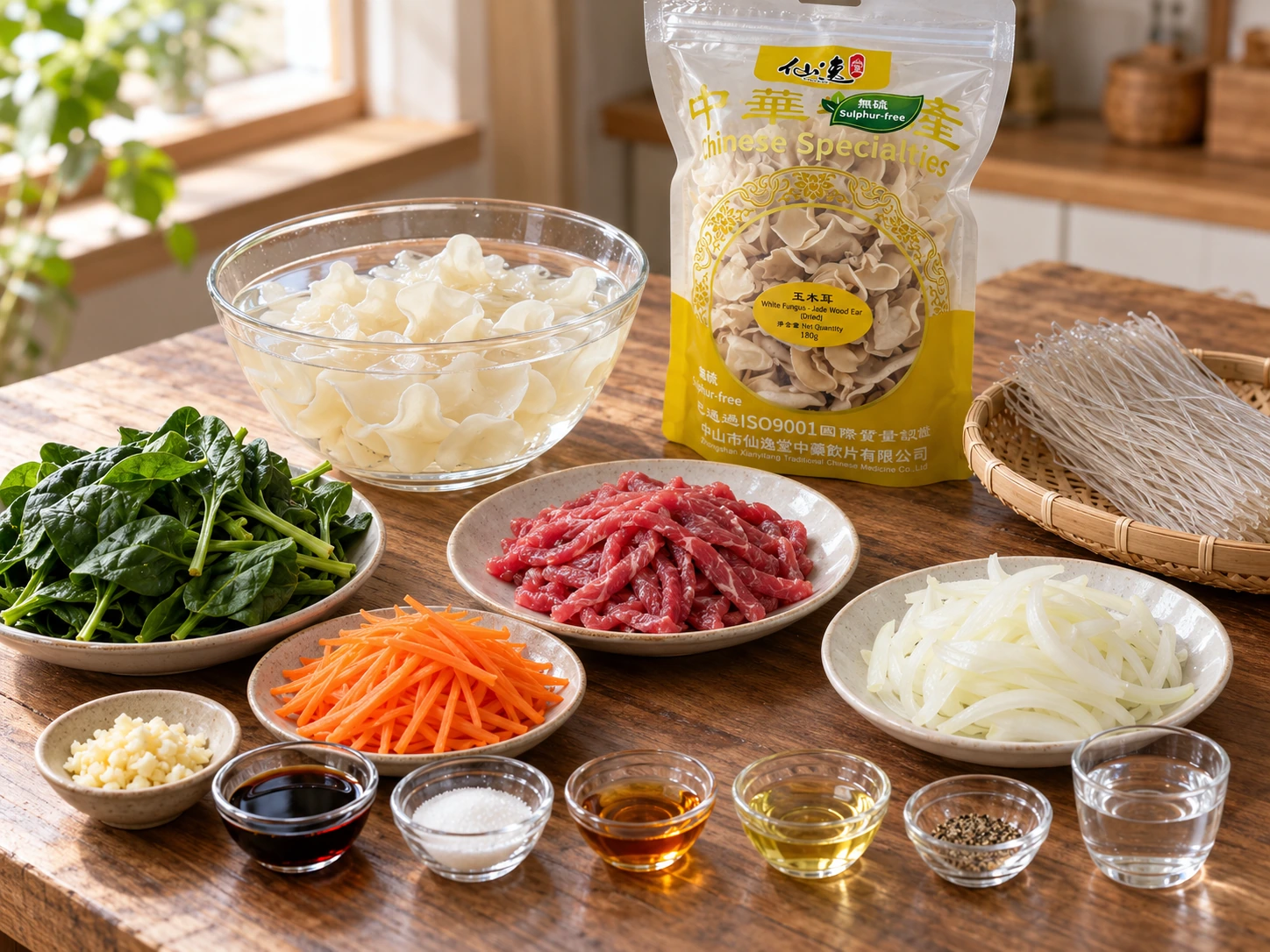
Prepare the vegetables towards the end of simmering. Cut beef on a separate board and mix with 10 ml soy sauce, 5 g sugar, 5 ml sesame oil and the pepper. Cover and refrigerate for about 15 minutes. Separately mix 30 ml soy sauce, 10 g sugar, garlic and 30 ml water. Clean hands, tools and surfaces after raw meat.
4
Cook noodles and stir-fry the components
Cook noodles according to their packet until pliable with no hard centre. Drain, snip to about 15 cm lengths and set aside briefly. In a wide pan, heat 10 ml oil and stir-fry beef for about 4–6 minutes until fully cooked; check thicker strips are cooked throughout with no raw centre and are steaming hot. Transfer to a clean plate. Add the remaining oil, cook onion and carrot for 3–4 minutes, then spinach for 1–2 minutes until wilted.
5
Combine and serve
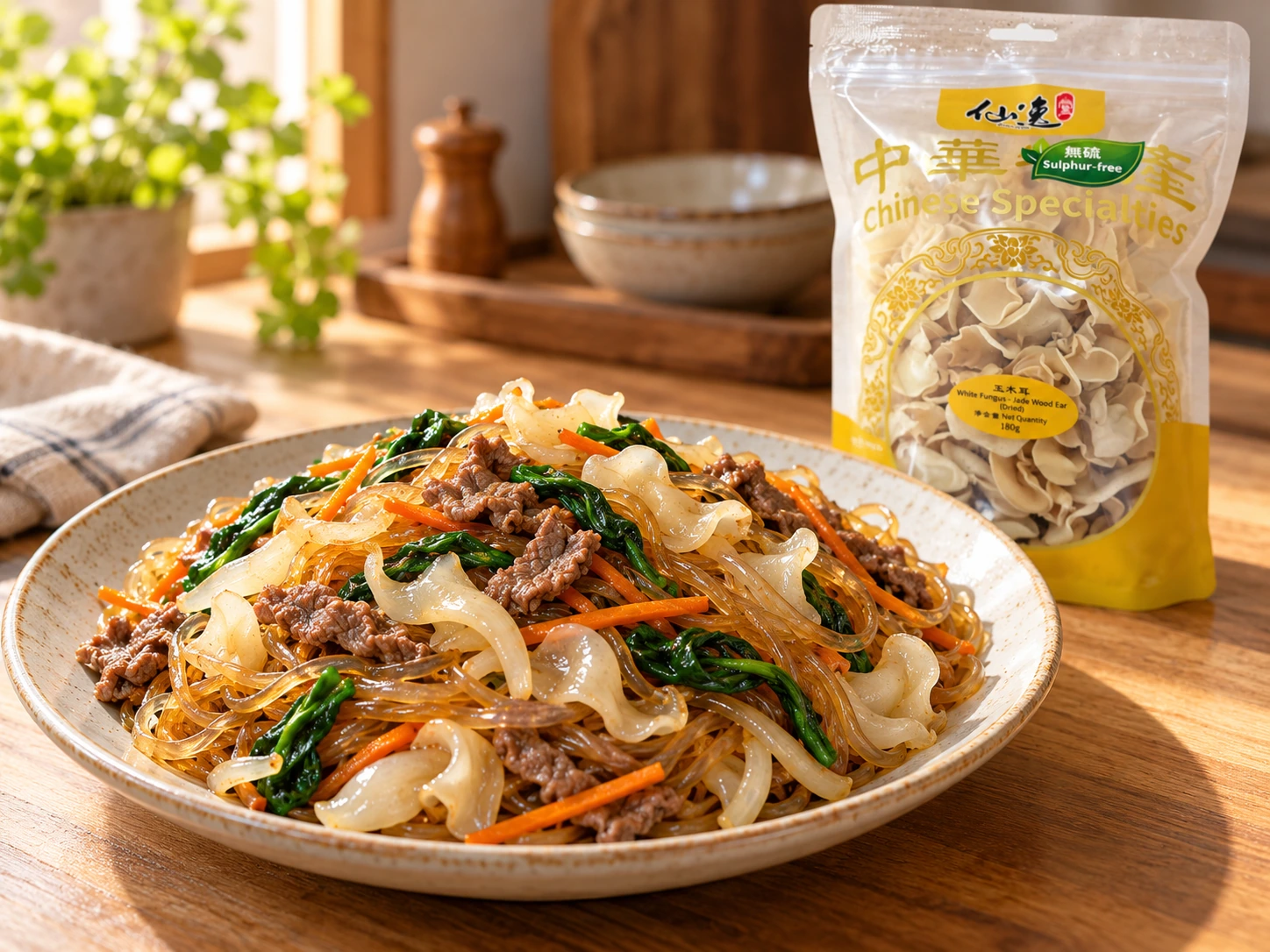
Add cooked wood ear, beef and noodles, then the dressing. Toss gently over medium heat for about 2–3 minutes until hot throughout and the noodles are glossy rather than sitting in liquid. Add hot water a tablespoon at a time if dry. Turn off the heat, fold in the remaining 10 ml sesame oil and serve promptly.

Cooking tips
- Difficulty: intermediate; prepare vegetables while the wood ear simmers.
- Dangmyeon differs from rice noodles and mung bean vermicelli. Follow its actual packet and check texture rather than relying on one fixed time.
- Inspired by Maangchi’s japchae; allow time for the separate preliminary cook needed for this jade wood ear.
Allergens
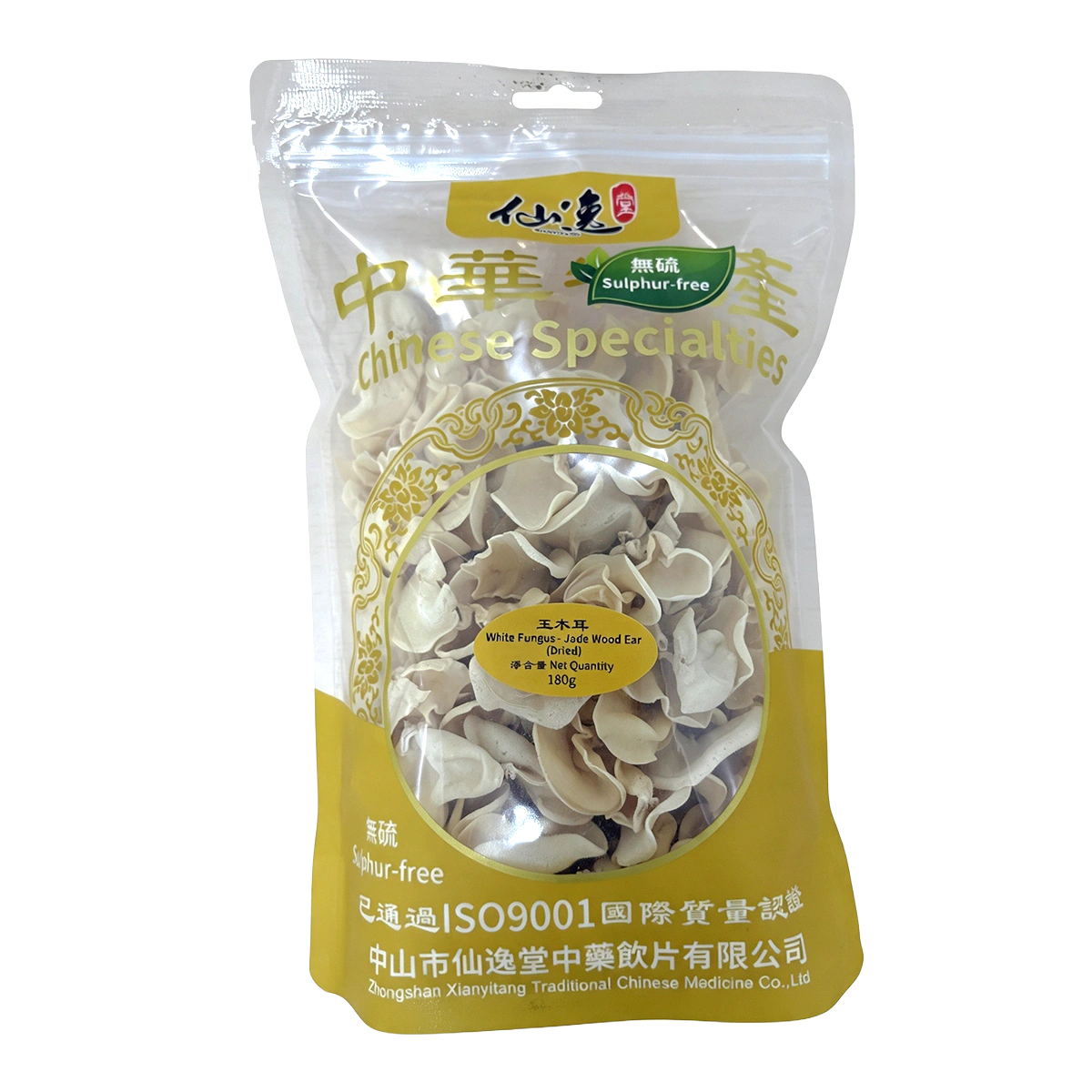
Contains soya and sesame; standard soy sauce usually contains wheat. Check the chosen brands. The Xianyitang dried-ingredient packs state that they are packed in a facility also handling peanuts, tree nuts, sesame and soya. Check the actual labels of every brand used.
Storage and reheating
Best freshly cooked. Cool leftovers promptly in shallow containers, refrigerate at 5°C or below within 2 hours and eat within 48 hours or freeze. Reheat only once until steaming hot throughout, adding a little water to the pan if needed. Keep raw beef and rehydrated wood ear refrigerated until cooking and follow the meat pack’s use-by instructions.