Method
1
Rinse and rehydrate the jade wood ear
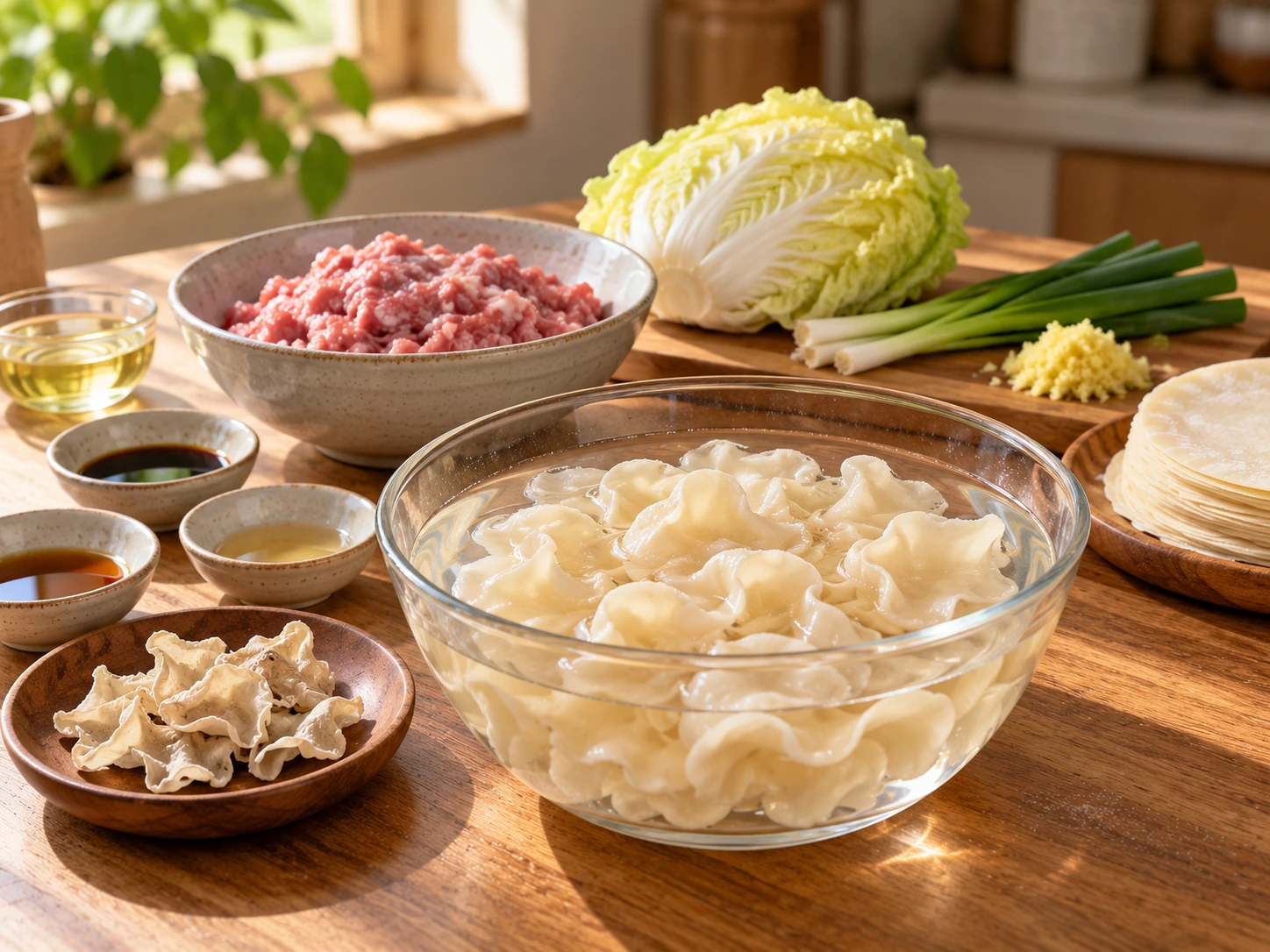
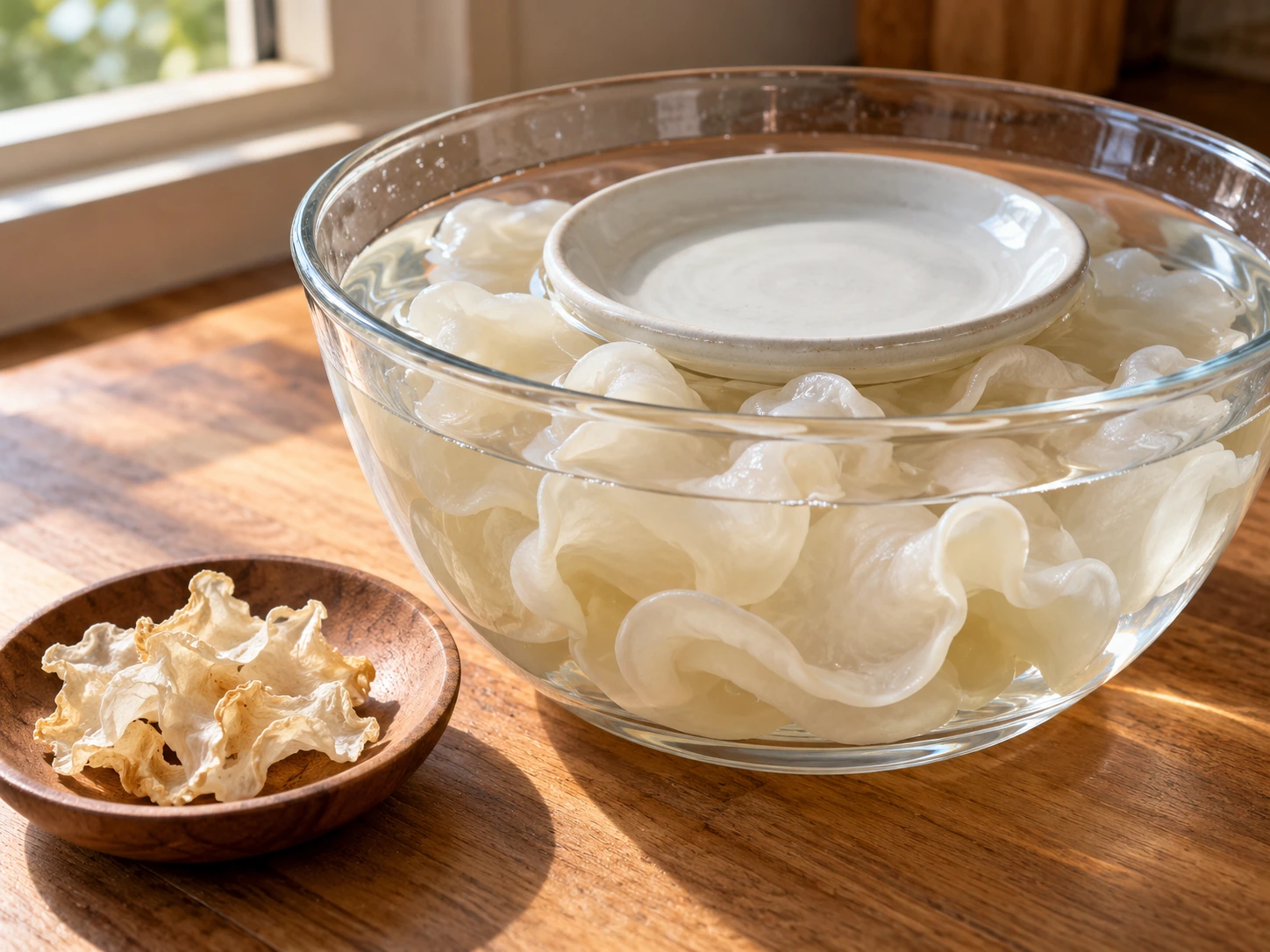
Pick over and briefly rinse 15 g dried jade wood ear. Cover in a roomy bowl with about 600 ml lukewarm drinking water, approximately 30–40°C. Follow the pack and soak for 15–30 minutes until the lobes open and are soft throughout. If still firm, continue until soft; cover and refrigerate at 5°C or below if soaking needs to be extended or preparation is interrupted. Discard the soaking water and rinse each lobe.
2
Cook the fungus fully first
Bring about 1 litre fresh drinking water to the boil. Add the jade wood ear, return to the boil and reduce to a steady simmer. Keep it submerged and cook for 40–60 minutes as directed on the pack, until fully cooked, topping up with hot water if needed. A brief blanch is not a substitute. Drain, spread on a clean shallow plate to cool promptly, then chop into 3–5 mm pieces. Rehydration is not cooking.
3
Prepare the cabbage and filling
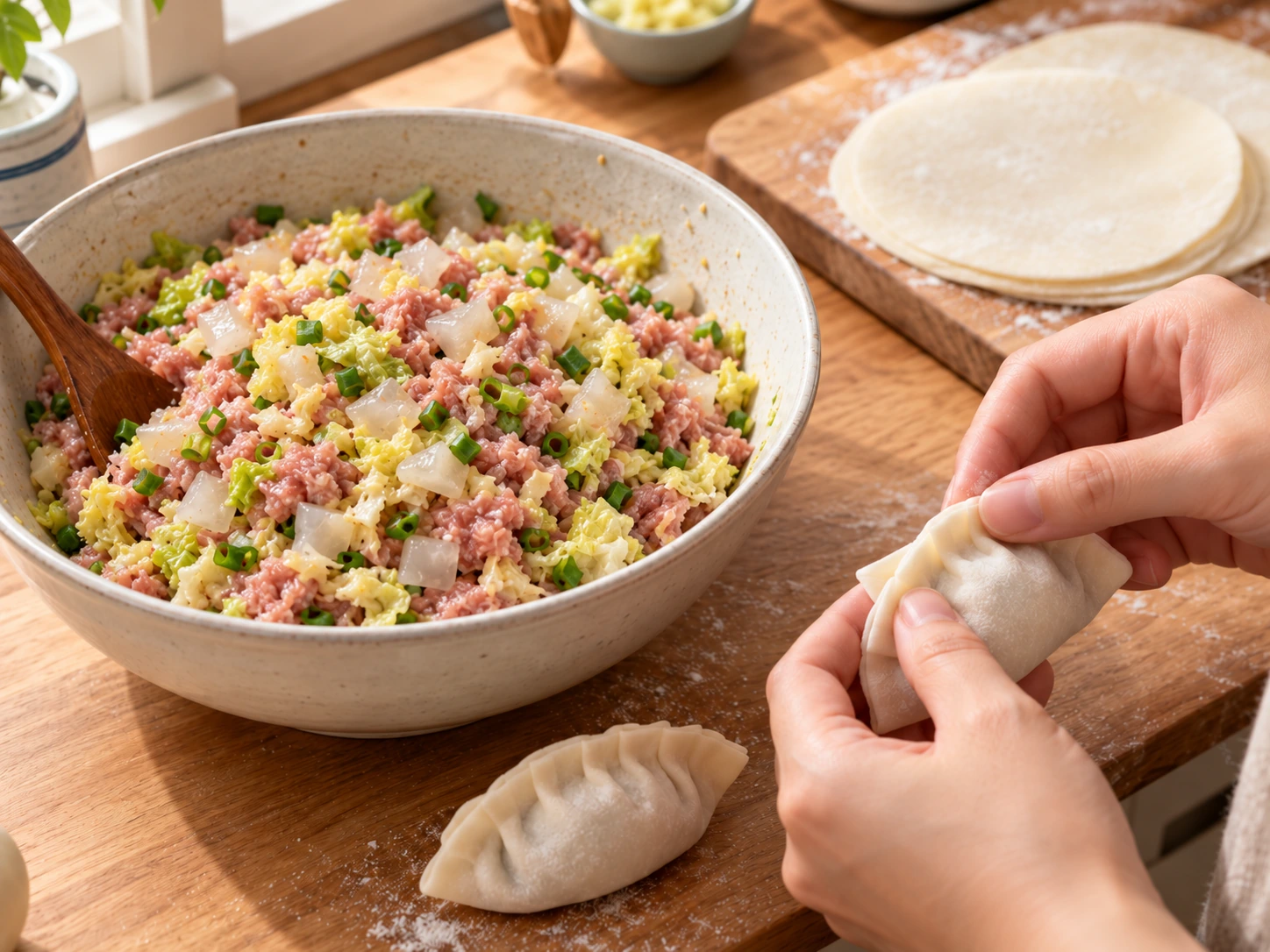
Finely chop the Chinese leaf, toss with 2 g salt and leave for 10 minutes, then squeeze out excess liquid. Mix with the pork, cooled chopped fungus, spring onions, ginger, 15 ml soy sauce and 5 ml sesame oil. Stir in one direction until lightly sticky. Do not taste raw filling; cook a small sample fully if checking seasoning. Keep unused filling refrigerated while wrapping.
4
Wrap and seal
Place about 1 level tablespoon filling, approximately 16–18 g, in each wrapper without overfilling. Follow the wrapper pack instructions, moisten the edge with a little water if needed, fold into a half-moon and pinch closed. Keep separated on a clean tray. Wrapper sizes vary, so expect about 28–30 dumplings; use the filling without forcing an exact count.
5
Pan-fry, steam and check the filling
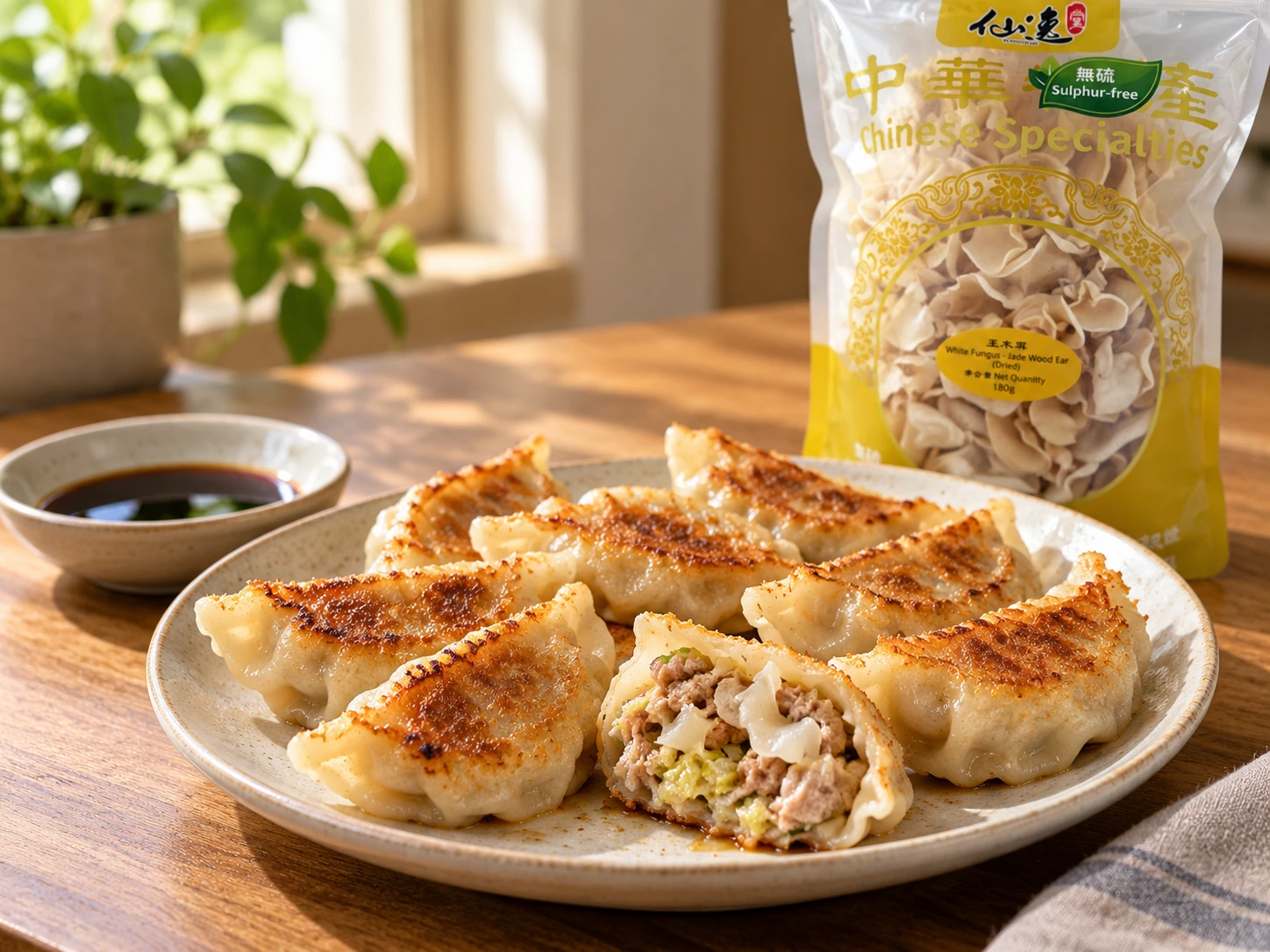
Heat a little of the oil in a wide non-stick pan over medium heat and add about 10–12 dumplings per batch. Fry for 2–3 minutes until the bases begin to colour. Carefully pour about 100–120 ml hot water down the side and cover immediately. Steam over medium-low heat for about 8–12 minutes. If the water is nearly gone before the filling is cooked, add a little more hot water and continue covered. Insert a clean probe from the side into the filling at the centre of the largest dumpling: it must reach 75°C for at least 30 seconds. Check each batch; translucent wrappers or browned bases alone do not prove doneness.

6
Crisp the bases and serve
Once the filling is fully cooked, uncover and let the remaining water evaporate over medium heat for about 1–2 minutes to crisp the bases. Stop before burning. Mix the dipping portions of soy sauce and rice vinegar and serve the dumplings hot.
Cooking tips
- Difficulty: Intermediate.
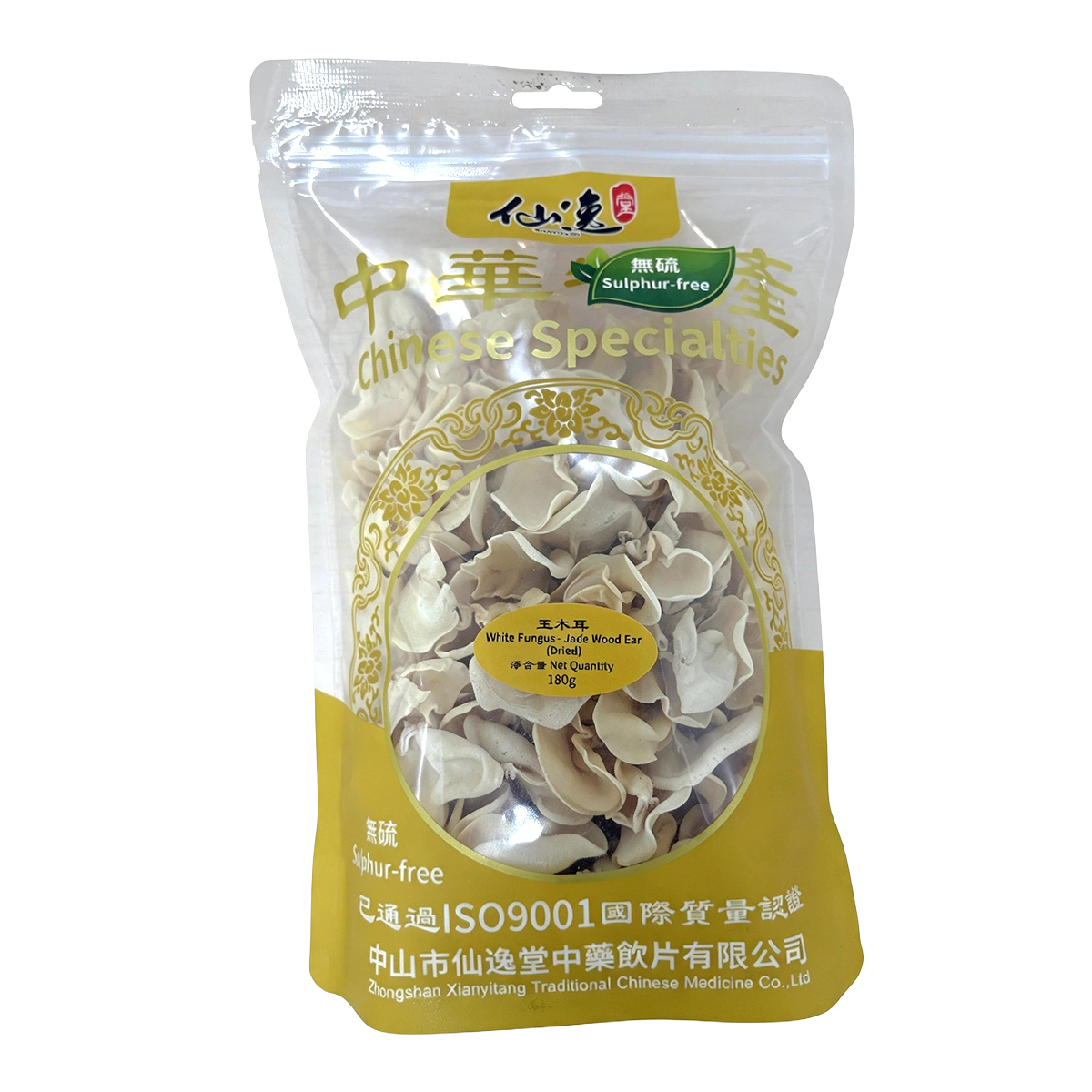
- Jade wood ear is thick white wood ear, not frilly snow fungus. Use 15 g dried weight, not the whole 180 g pack.
- Fully cook the fungus before mixing it with raw pork. The final pan-steaming cooks the filling and does not replace the earlier 40–60 minutes.
- Thicker wrappers, larger fillings or smaller pans may take longer. Steam gently, add water as needed and rely on the core-temperature check.
Allergens
Contains wheat (wrappers and most soy sauces), soya and sesame; some wrappers also contain egg. The Xianyitang dried-ingredient packs state that they are packed in a facility also handling peanuts, tree nuts, sesame and soya. Check the actual labels of every brand used.
Storage and reheating
Keep raw meat and rehydrated fungi refrigerated at 5°C or below; follow the raw-meat pack instructions. Separate raw and cooked utensils and clean hands and surfaces after handling raw meat. Divide leftovers into shallow containers, cool promptly and refrigerate within 2 hours of cooking. Eat within 48 hours or freeze. Reheat only once until steaming hot throughout.