Method
1
Rehydrate in the fridge and keep the caps whole
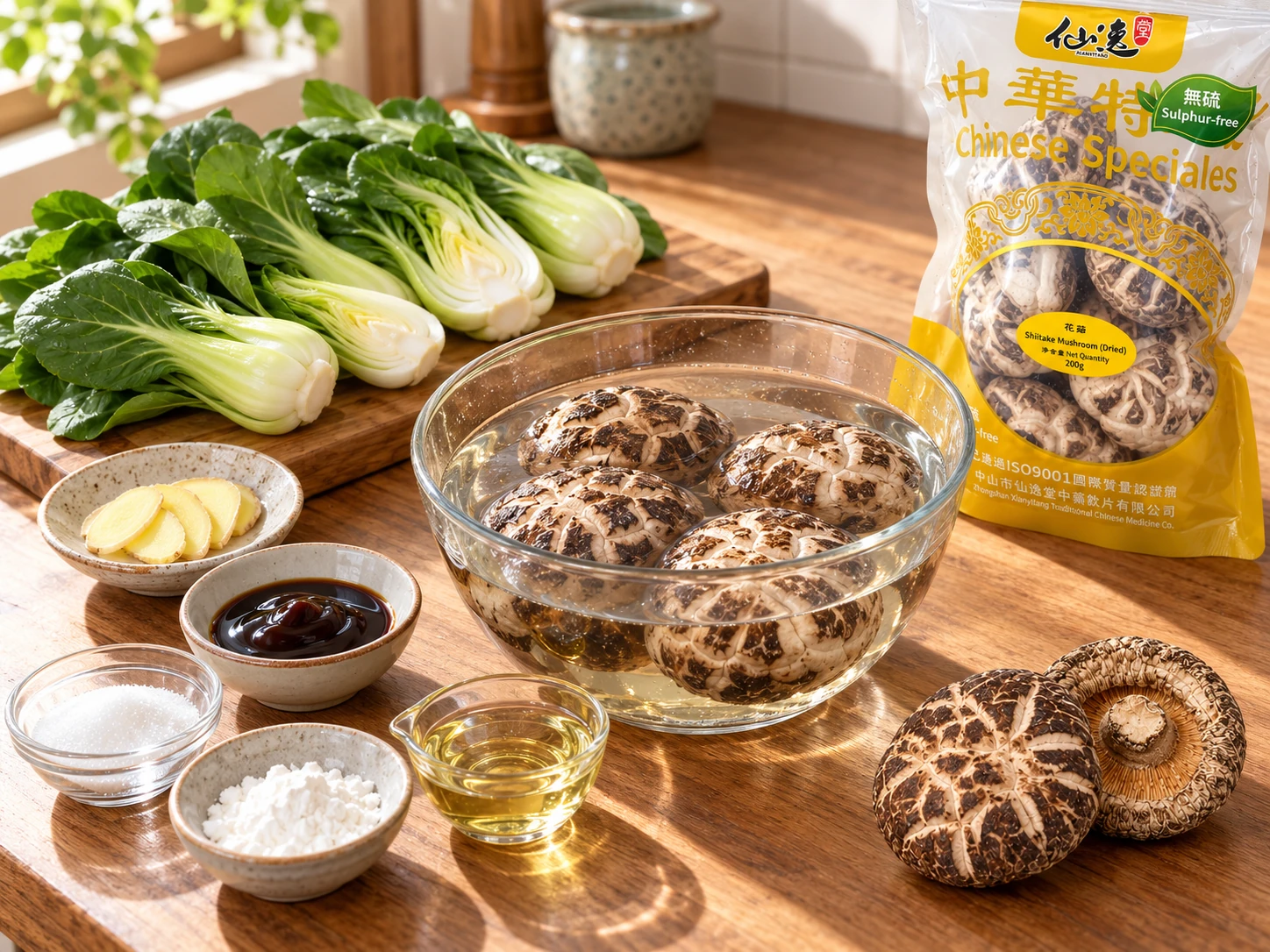
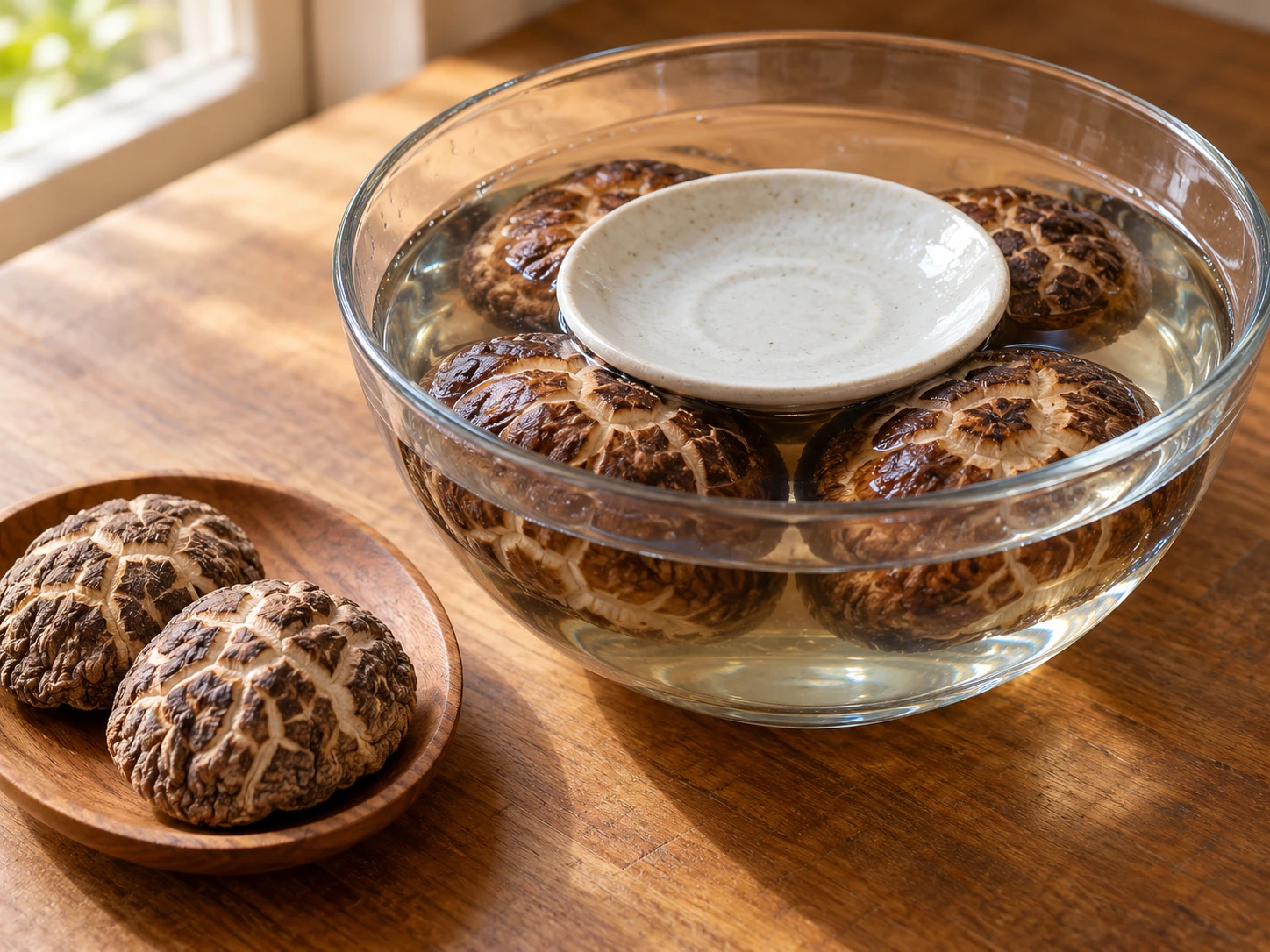
Rinse four dried flower shiitake caps briefly and discard the rinse water. Put in a roomy bowl with about 1 litre cold drinking water, enough to submerge them. Hold down gently with a clean small plate, cover and refrigerate at 5°C or below for about 8–12 hours. The thickest centre must feel soft with no hard core; continue soaking in the fridge if needed rather than relying on time alone. Top up absorbed water and leave room for expansion. Discard soaking water, rinse again, gently press out excess water and trim tough stems. Rehydration is not cooking. Keep these caps whole and check all four are soft through the centre after trimming stems.
2
Slowly braise the large caps
Heat 10 ml oil in a wide covered pan over medium heat. Fry ginger for about 30 seconds, add caps and turn gently for about 1 minute. Add 500 ml fresh water, 25 g oyster sauce, 10 ml light soy and 3 g sugar. Bring to the boil, cover and maintain a gentle simmer for about 45–60 minutes, turning occasionally and preventing sticking or boiling dry. Even the thickest flesh must be thoroughly cooked and tender enough to bite; continue braising if needed, adding hot water when low. Five-minute timings for small shiitake do not apply.
3
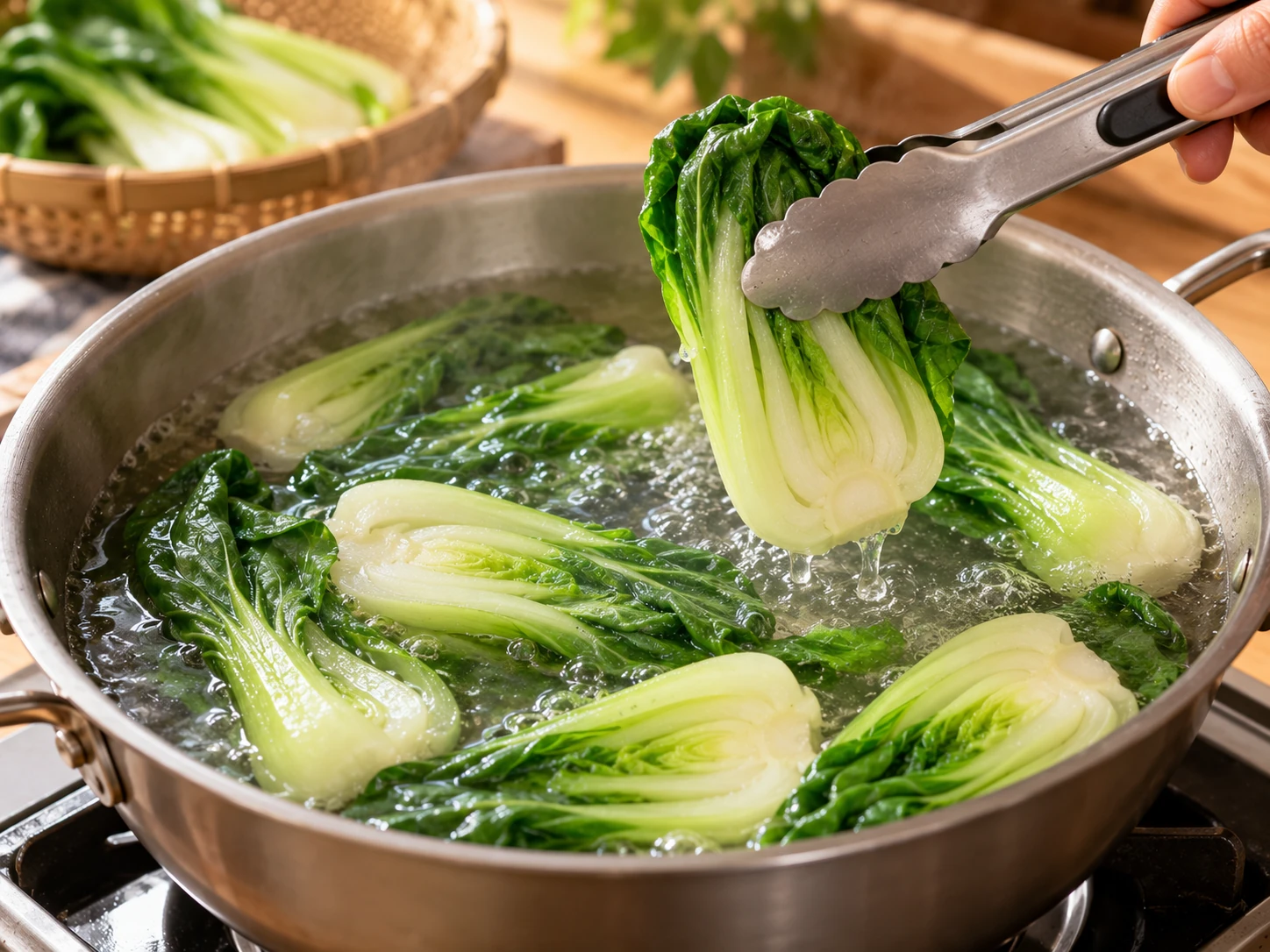
Wash and blanch the pak choi
Towards the end of braising, wash the pak choi, halve or quarter lengthways and rinse soil from the stalk layers. Bring about 1.5 litres water to the boil in a separate pan. Cook the vegetables in batches for about 2–3 minutes, until the stalks are cooked and readily pierced and leaves are tender. Larger heads or thick stalks take longer; check their texture. Drain and arrange while hot around a large plate. Do not soak in cold water or leave to cool for a long time.
4
Remove caps and make a light glaze
Lift out cooked caps and keep warm. Measure 150 ml braising sauce into a small pan, topping up with fresh water if short. Keep surplus sauce separately for serving; do not thicken all 500 ml into a heavy gel. Mix 5 g cornflour with 15 ml cold water and stir again before adding. Bring the sauce to the boil, add slurry gradually while stirring and simmer for about 1–2 minutes until lightly coating a spoon. Use only as much slurry as needed; loosen with a little hot water if too thick.
5
Arrange whole caps and serve hot
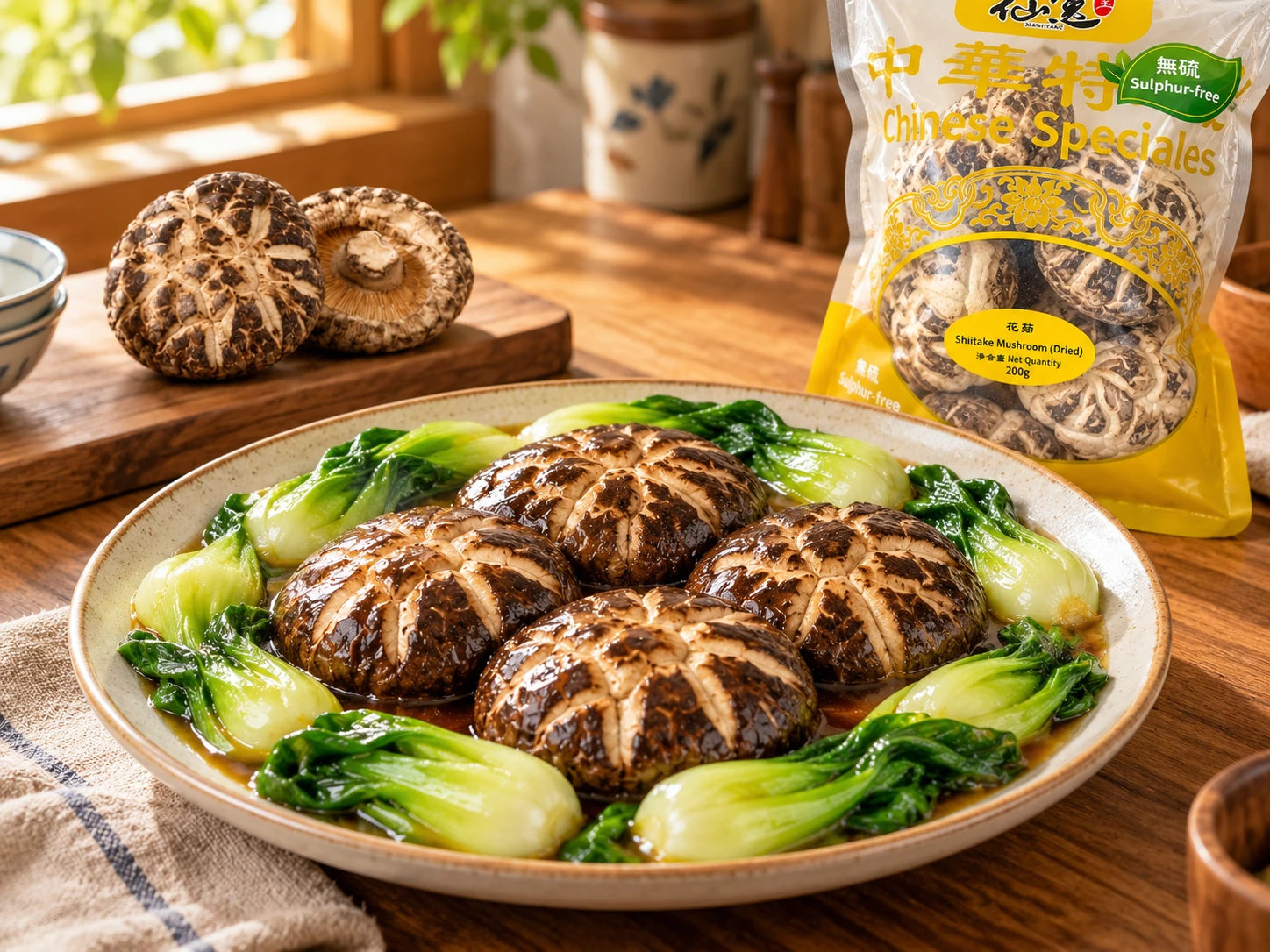
Place the mushrooms in the centre of the pak choi and spoon over a little glaze. Serve straight away while hot throughout. Cut the large caps into portions at the table if preferred. Oyster sauce is already salty; taste cooked sauce before adding extra soy, and do not add salt by default.
Cooking tips
- Rehydrate whole large caps completely and braise gently so the centres become tender.
- Use pak choi, available in UK supermarkets, and rinse soil from the stalk layers after cutting.
- Although there are no meat pieces, oyster sauce contains molluscs; this recipe is not labelled vegan.
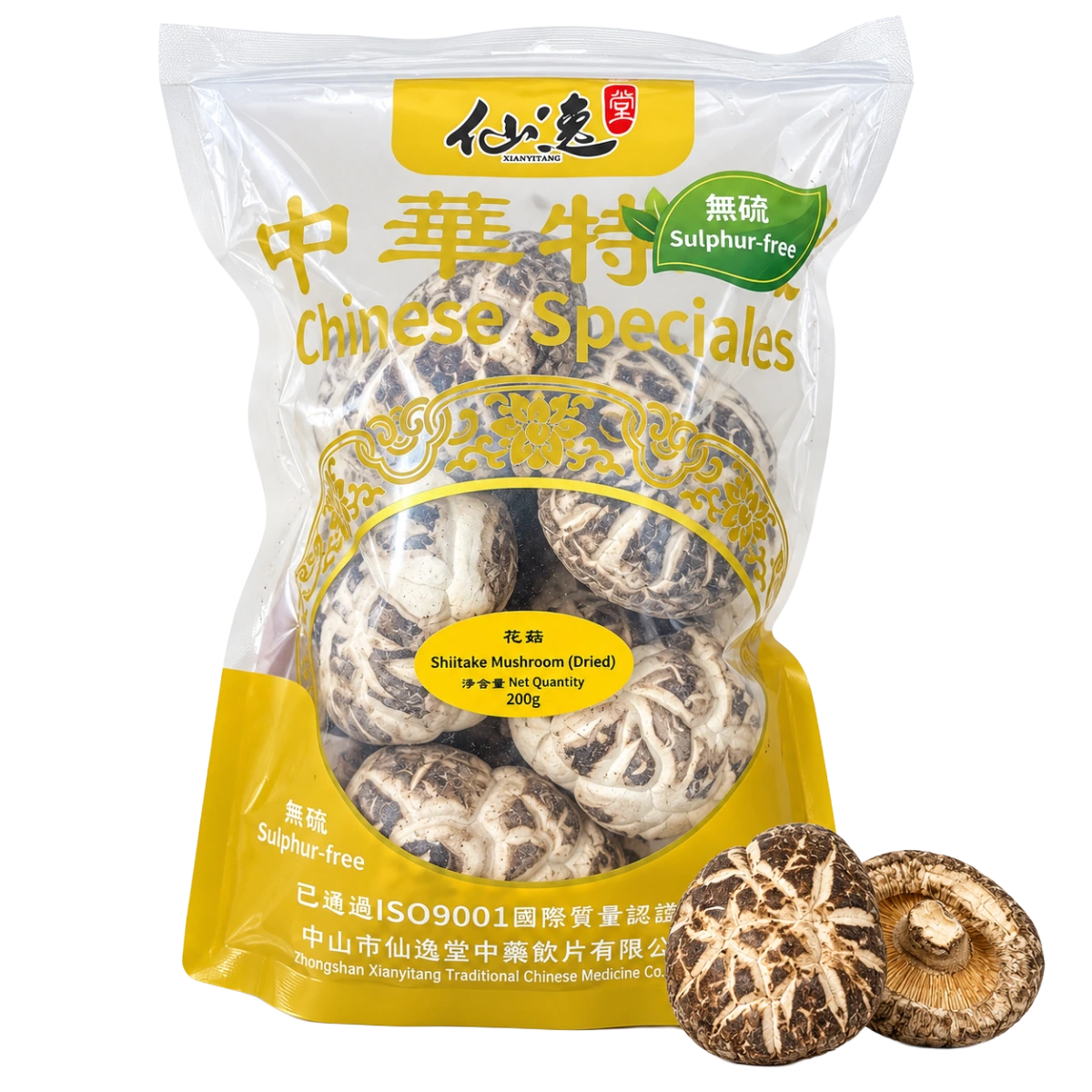
- These flower shiitake caps are approximately 8–10 cm when dried, with natural variation, and expand during soaking. Use a wide pan that comfortably holds all four for turning. Present whole, then cut into shared portions at the table.
Allergens
Oyster sauce contains molluscs and may also contain soya or wheat; light soy sauce usually contains soya and wheat (gluten). The Xianyitang pack states that it is packed in a facility also handling peanuts, tree nuts, sesame and soya. Check every actual ingredient label.
Storage and reheating
Keep rehydrated mushrooms refrigerated at 5°C or below and aim to cook that day. This dish is best fresh. Divide leftovers into shallow containers, cool promptly and refrigerate within 2 hours of cooking. Eat within 48 hours or freeze. Reheat only once until steaming hot throughout.