Method
1
Rinse and briefly boil the beans
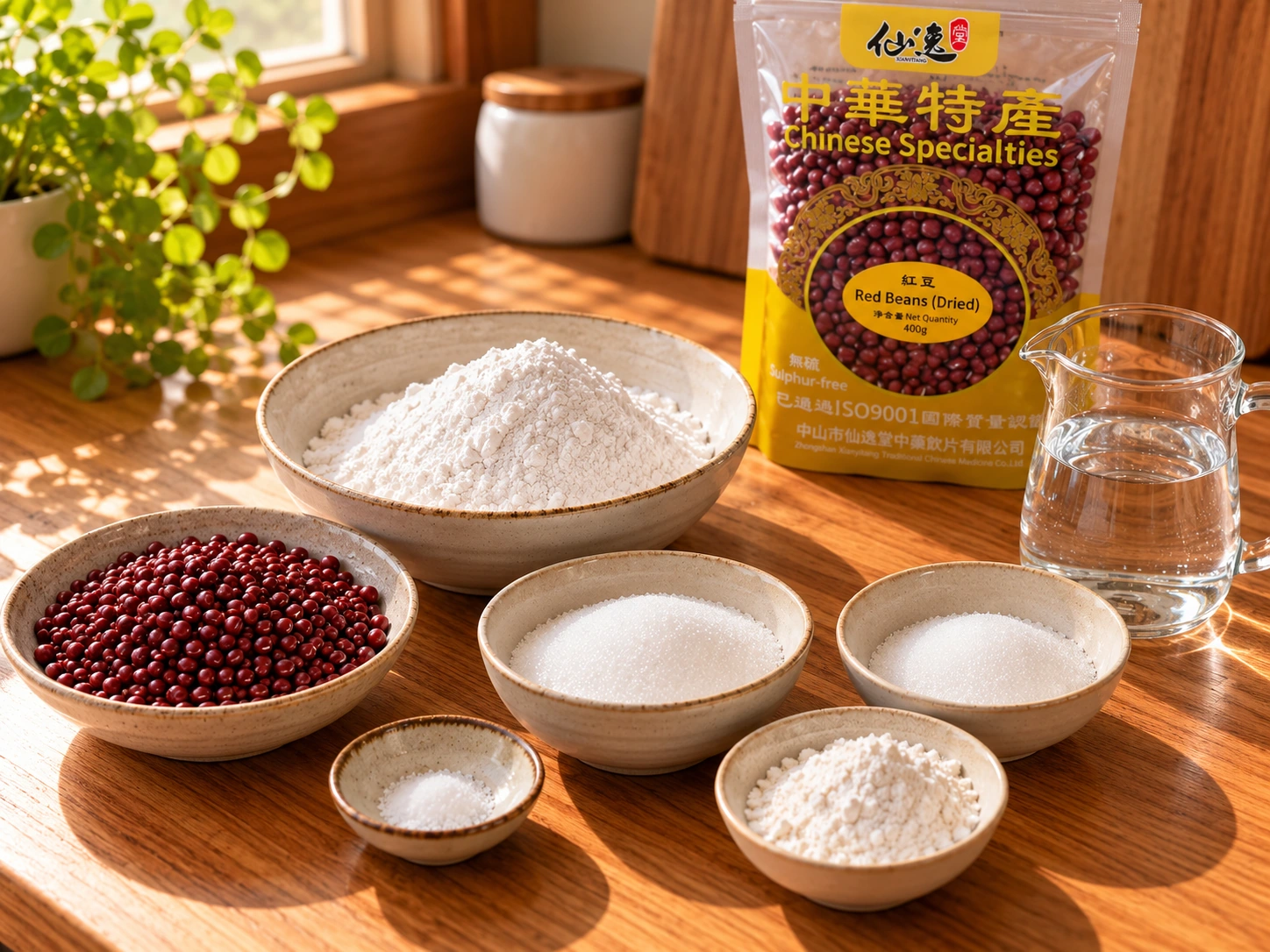
Pick over the 100 g beans, remove debris and damaged beans, and rinse thoroughly. Cover with fresh water by about 3–5 cm in a saucepan. Bring to a full boil for about 2 minutes, then drain and rinse. This method starts with dried beans; if your pack requires soaking, follow its refrigerated soaking directions first and add that time.
2
Cook until completely tender before sweetening
Cover again with fresh water by about 3–5 cm. Bring to the boil, then simmer steadily for about 60–90 minutes with the lid slightly ajar, topping up with hot water to keep the beans submerged. Crush several beans with a spoon: both skins and centres should be soft, without a chalky core. Extend in 15-minute intervals if needed. Cook fully before adding sugar; do not eat undercooked beans.
3
Reduce and cool the filling
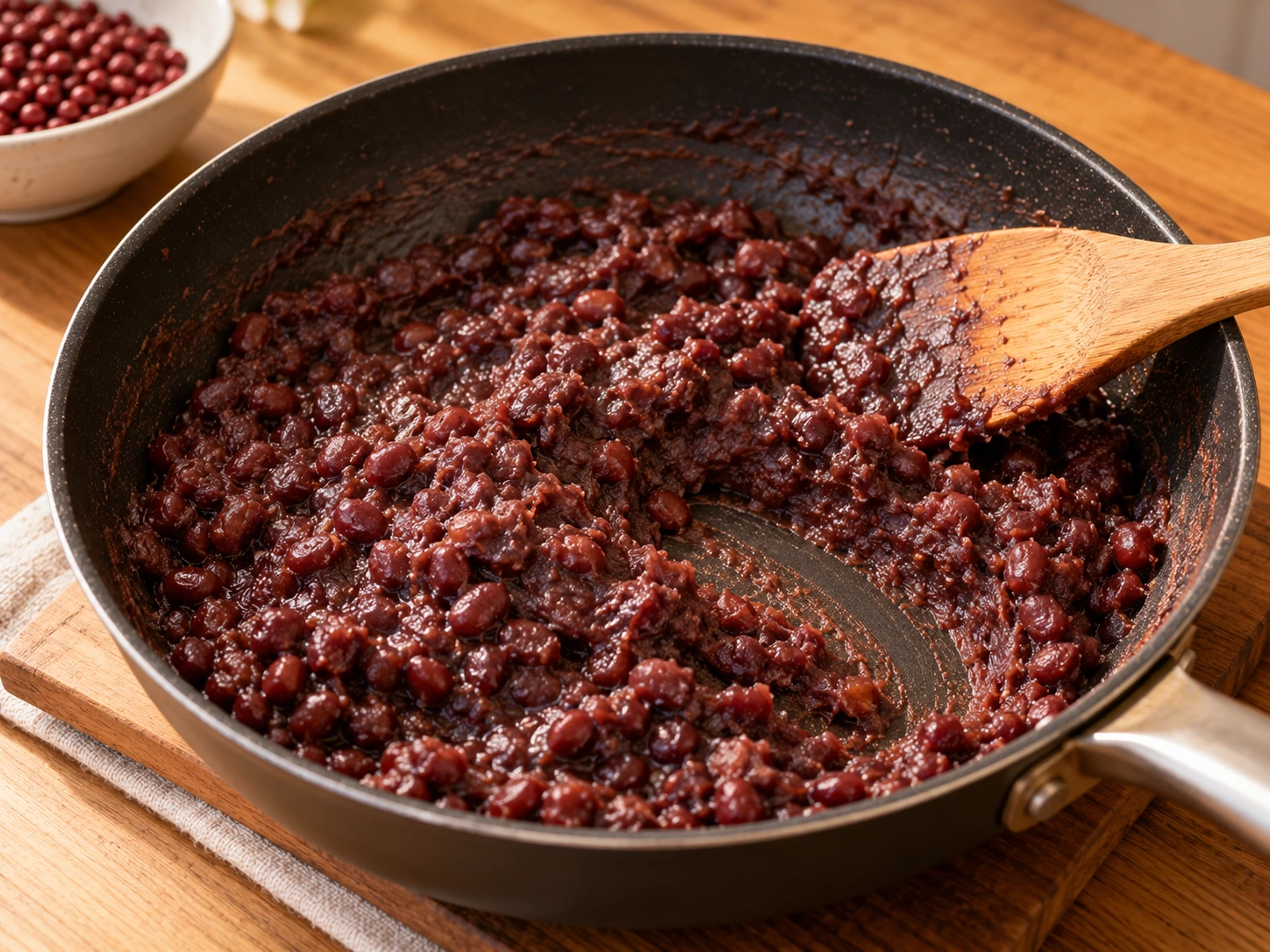
Drain excess water from the tender beans. Return to the pan, adding 80 g sugar in two stages and the 0.5 g salt. Mash and stir over low heat for about 15–25 minutes, retaining a little bean texture. Stop when a spatula leaves a brief trail across the base and the soft paste mounds. Add hot water a teaspoon at a time if too dry. Spread thinly in a clean shallow container to cool promptly, about 45–60 minutes, refrigerating within 2 hours. Once cool, weigh out 240 g and divide into twelve 20 g portions. Yield varies: store any excess separately, or divide a smaller batch evenly into twelve and note the portion weight.
4
Steam the mochi dough fully
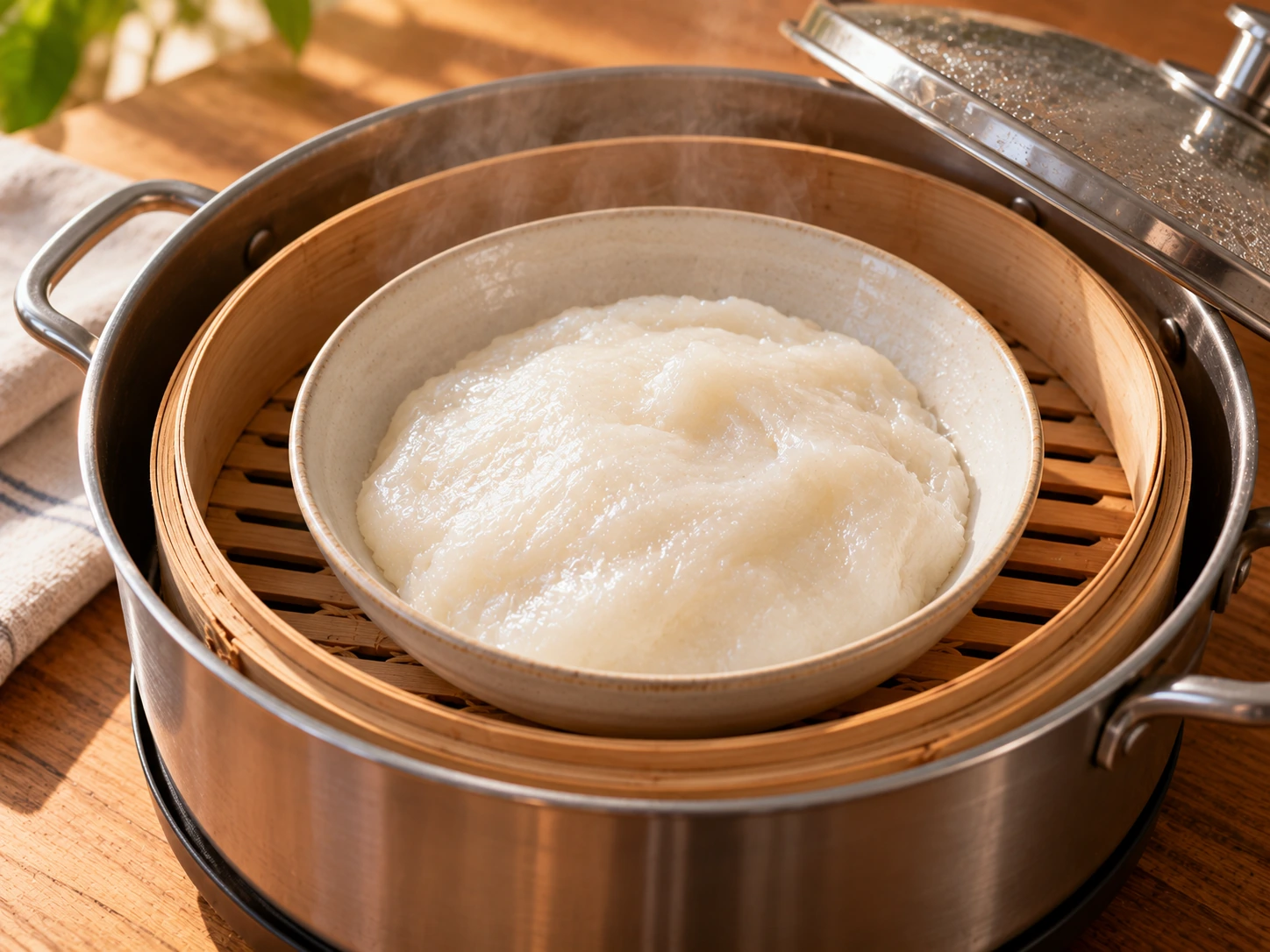
Have the cooled filling and ready-to-eat dusting flour ready first. Mix 115 g mochiko, 50 g sugar and 180 ml water until no dry flour remains, then put in a shallow heatproof bowl. Place over boiling steamer water and cover so condensation cannot drip into the bowl. Steam over medium-high heat for about 15–20 minutes, stirring thoroughly with a wet spatula at about 8 minutes before covering again. The whole mass should become sticky, elastic and slightly translucent, with no white raw batter in the centre. Steam for another 3–5 minutes and check if needed. Lift the lid away from your face; hot mochi can burn.
5
Shape while the dough is warm
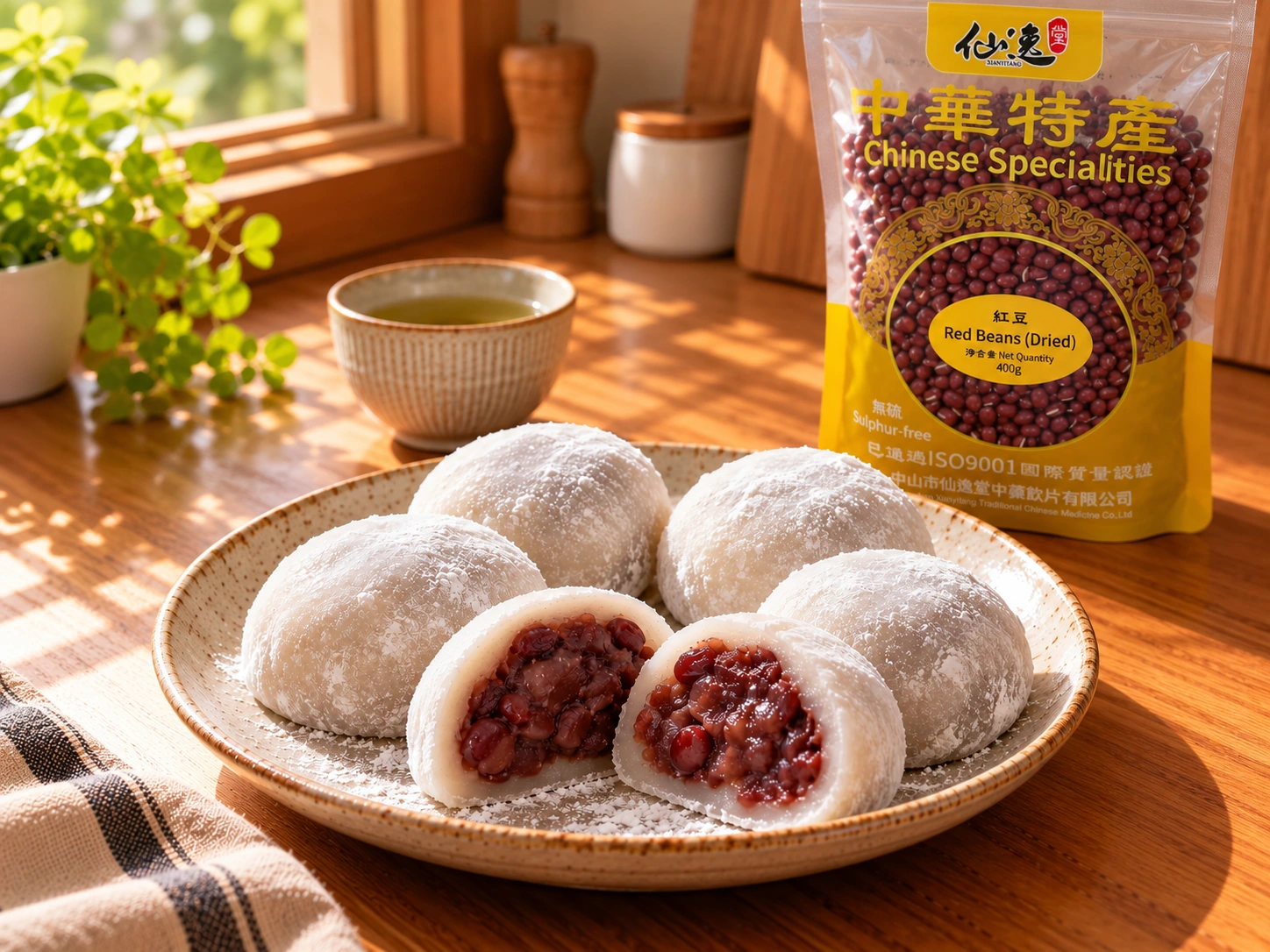
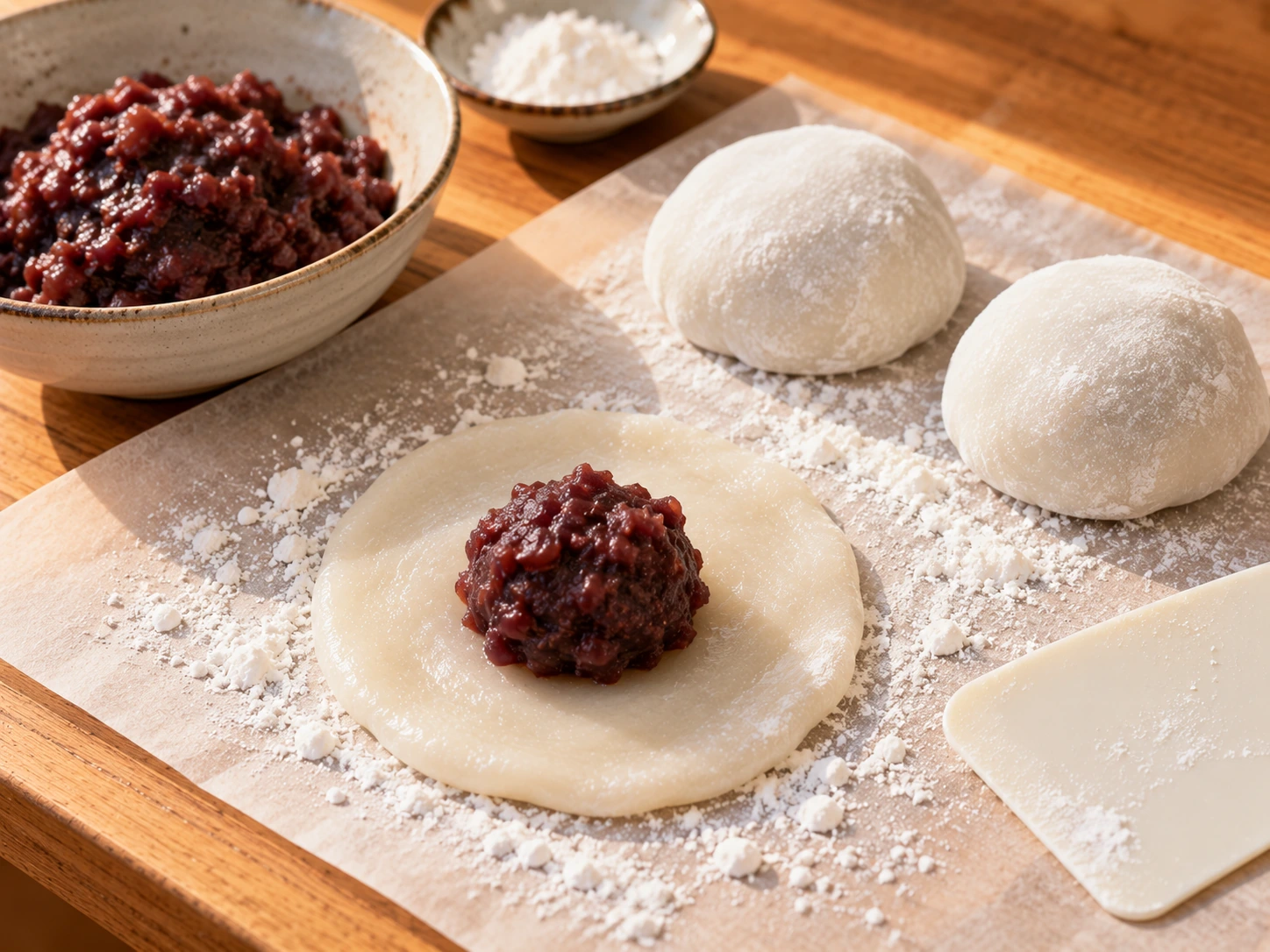
Lightly dust baking parchment with the cooked dusting flour. Tip on the cooked mochi and leave about 5–10 minutes until safe to handle but still warm and pliable. Dust lightly, flatten evenly and divide into twelve pieces with a scraper. Flatten each into an approximately 8–9 cm round, add one portion of cold filling, bring the edges together and pinch closed. Set seam-side down and brush away excess flour. Make small sweets roughly 4–5 cm across. Work promptly, aiming to cool and refrigerate the batch within 1 hour of steaming the dough.
Cooking tips
- This dough specifies mochiko. Do not replace it with the same volume of ordinary rice flour or other starch. Other glutinous rice flours absorb differently; use a suitable formula for that brand.
- Use dusting flour specifically labelled cooked and ready to eat. Have it ready before starting; do not dust finished sweets with raw rice flour or raw starch.
- Filling yield is approximate: weigh the 240 g used. Reducing sugar affects texture and keeping quality; sugar does not make this recipe safe for room-temperature storage.
- Mochi is sticky and chewy. Cut into small bites, chew thoroughly and never swallow a whole sweet. It is unsuitable for people with swallowing difficulties.
Allergens
No major allergen is intentionally added by this formula, but check flour and dusting-powder labels for cross-contact. The Xianyitang dried-ingredient packs state that they are packed in a facility also handling peanuts, tree nuts, sesame and soya. Check the actual labels of every brand used.
Storage and reheating
Cool bean paste promptly in a shallow layer, refrigerate at 5°C or below within 2 hours and use within 48 hours or freeze in portions. Daifuku has its best texture on the day: cool and refrigerate promptly, aiming for within 1 hour of steaming the dough, and eat within 24 hours or freeze before then. Chilling firms the mochi; take out only what you will eat and let it soften briefly, rather than leaving the whole box out. Thaw frozen sweets in the fridge and eat within 24 hours. The 24-hour limit is a conservative choice for this cooked-rice dessert, not the source’s room-temperature storage advice.