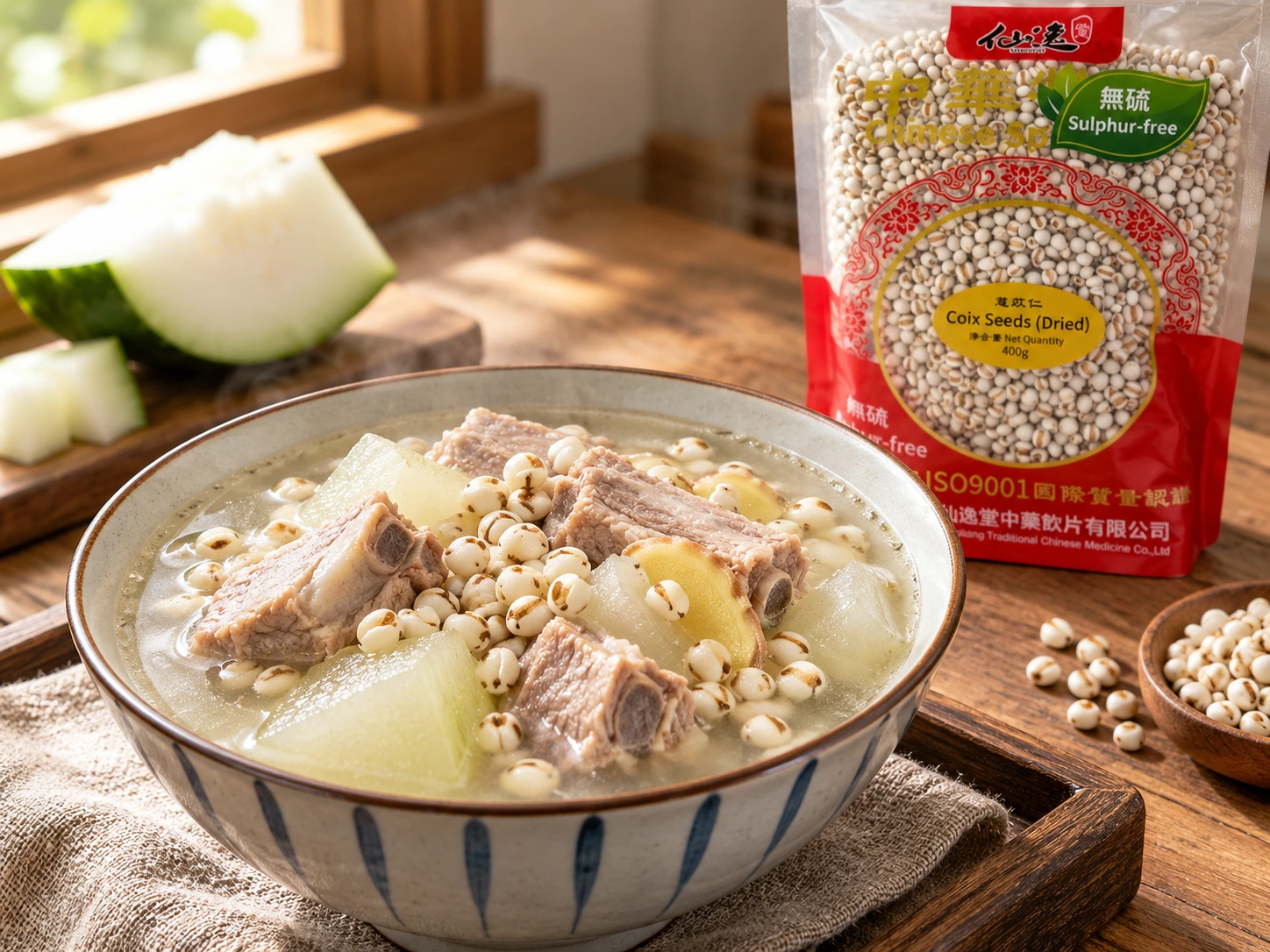
Winter Melon, Coix Seed & Pork Rib Soup
Hob / electric pressure cooker · Coix seeds 400 g
Hob
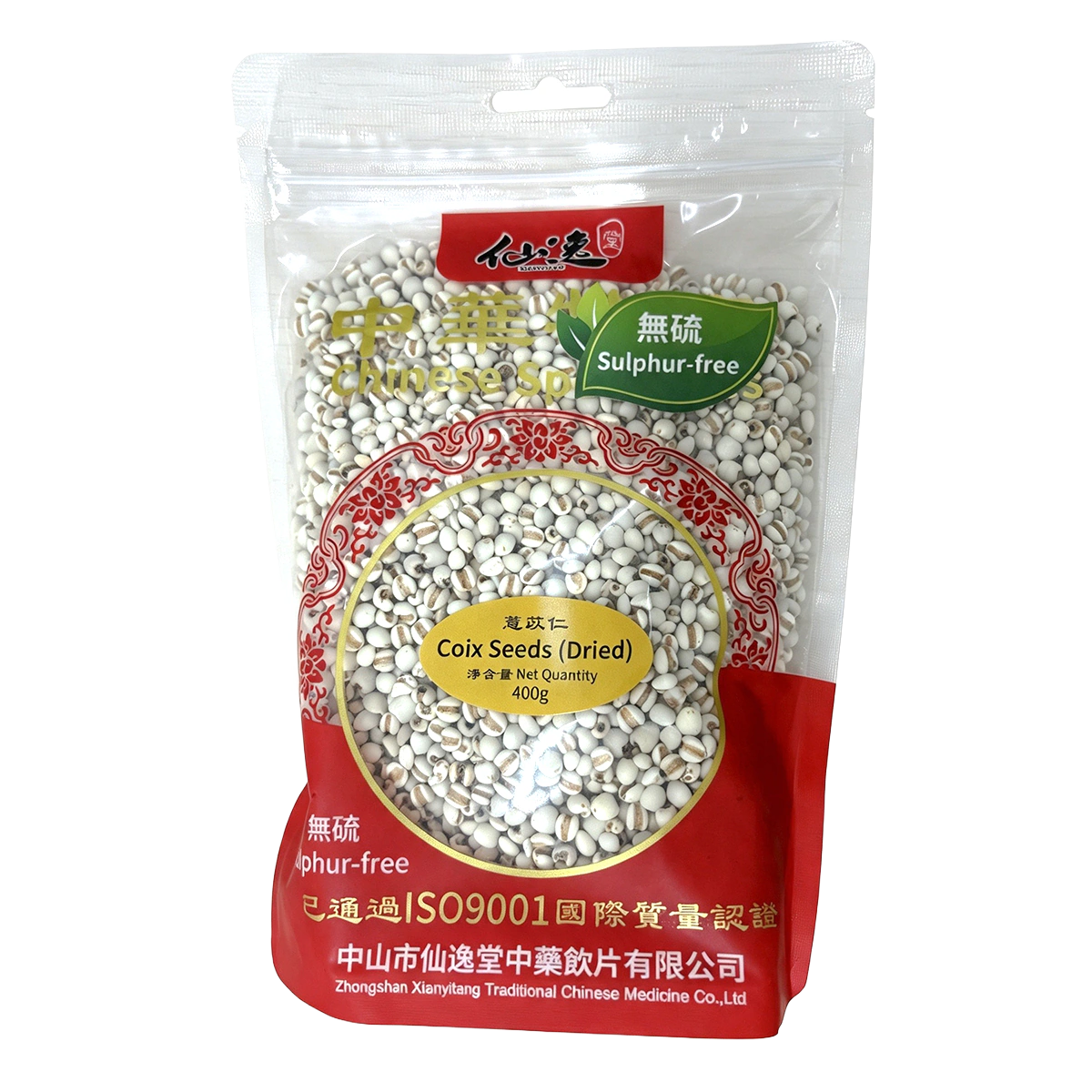
Use 60 g from the Xianyitang 400 g coix-seed pack with pork ribs and ginger; add winter melon later to keep its shape. These are coix seeds or Job’s tears, not ordinary pearl barley. Winter melon and ribs are bought separately. No dried scallops, oysters or honey dates are added.
Times are estimates and include soaking and preparation; some tasks can overlap. Check hydration and doneness as described.
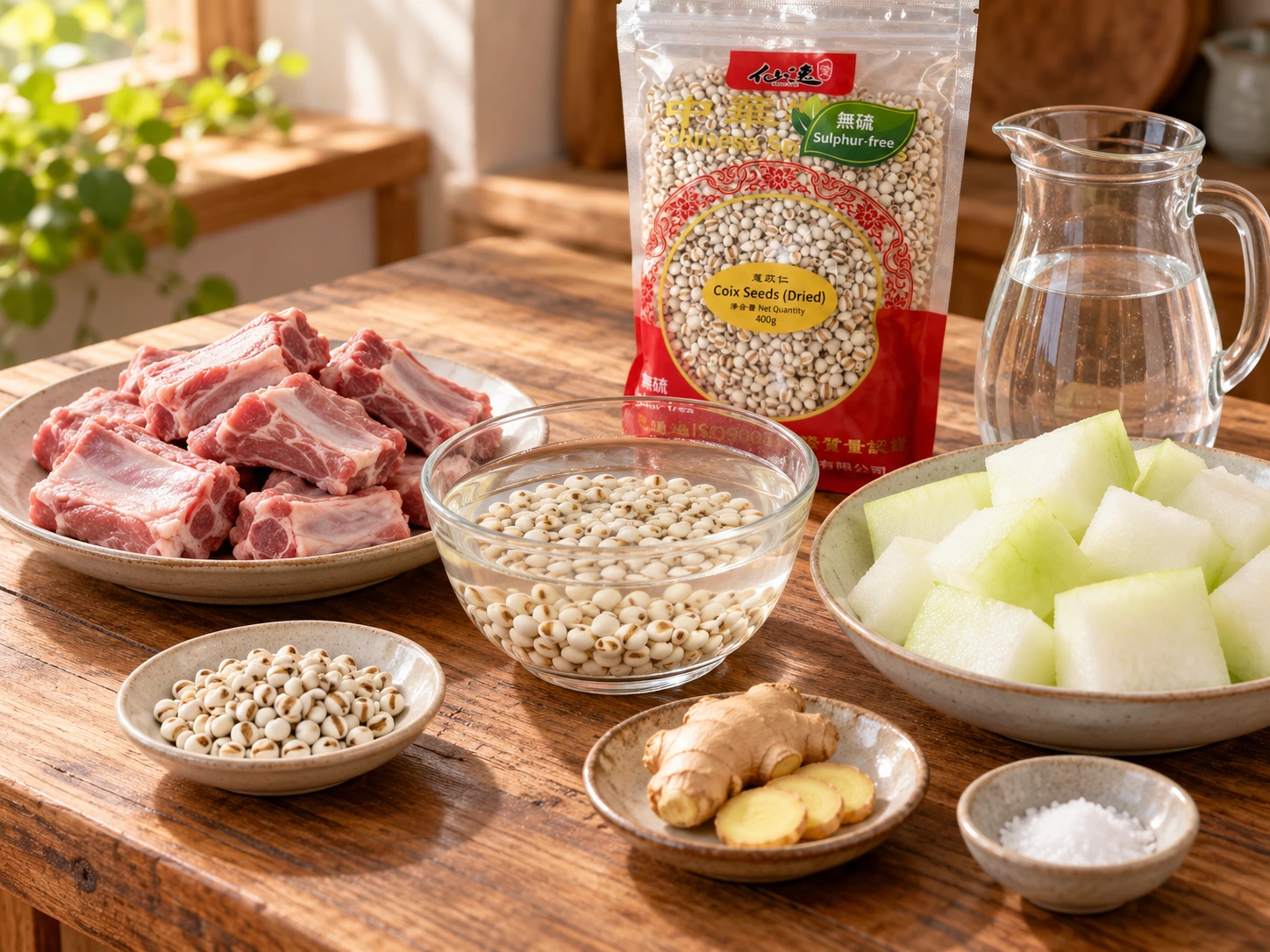
Recipe illustrations; measure ingredients using the written quantities.
Ingredients
- Xianyitang coix seeds / Job’s tears, from a 400 g pack; weigh dry 60 g
- Bone-in pork ribs, cut into 4–5 cm pieces 500 g
- Winter melon, 600 g after peeling and deseeding, cut into roughly 3 cm pieces 600 g
- Ginger, sliced 15 g
- Salt 2–4 g, to taste
- Cold drinking water for soaking coix; discard afterwards About 600 ml, enough to submerge
- Fresh drinking water for the hob broth; separate water for blanching ribs 2 litres, plus hot drinking water as needed
Method
Rinse and refrigerate the coix soak
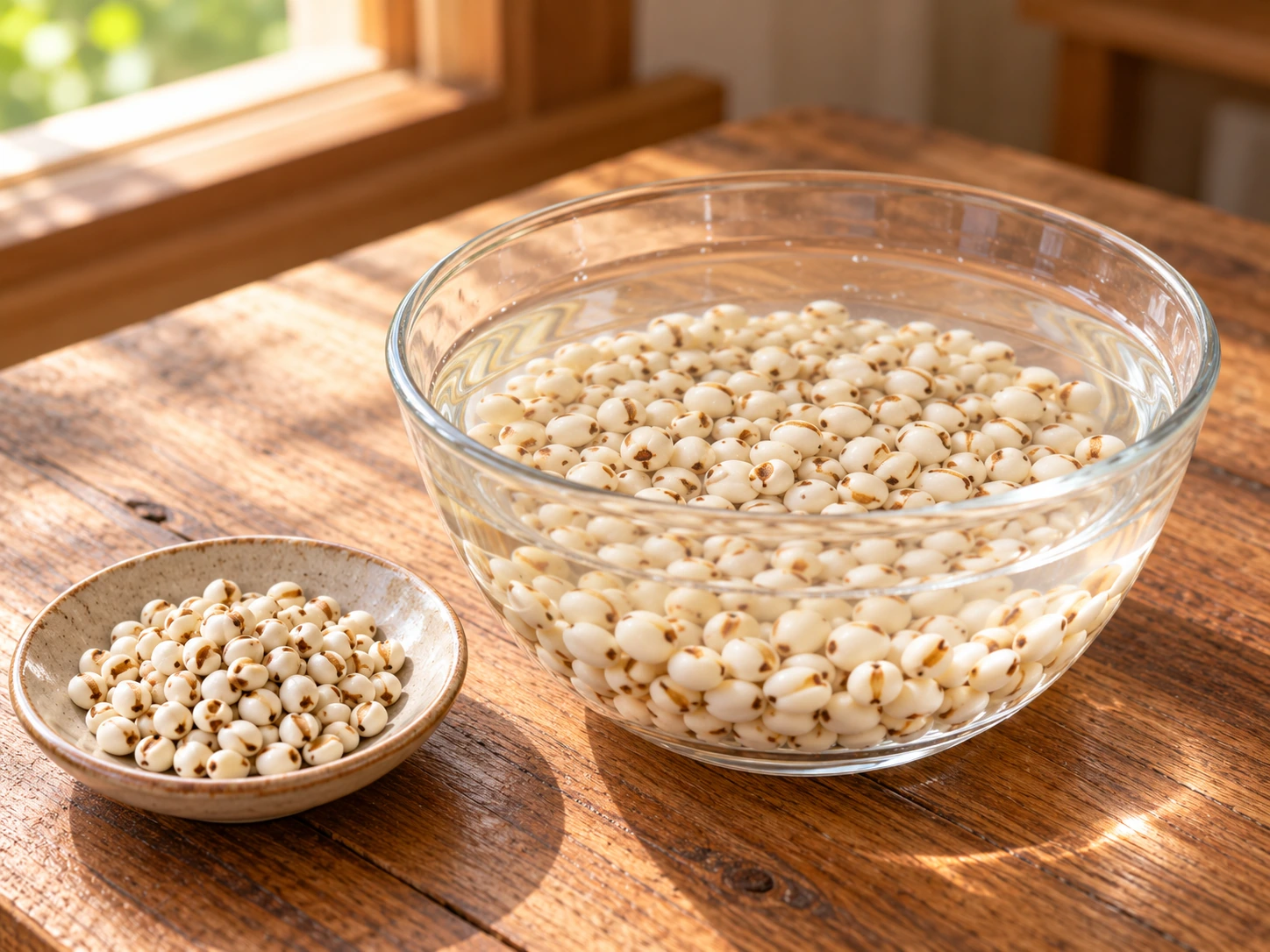
Pick over and rinse 60 g coix seeds. Submerge in about 600 ml cold drinking water, cover and refrigerate at 5°C or below for roughly 1–2 hours, or as labelled. Drain, rinse and discard the soak water. This hydrates the seeds but does not cook them; they still need thorough cooking until soft at the centre.
Blanch ribs and prepare winter melon
Cover ribs with cold water in a pan, bring to the boil and gently boil for 3–5 minutes, skimming foam. Drain, discard the blanching water and remove clinging foam. Blanching is not full cooking. Wash winter melon, peel and remove seeds, then weigh 600 g flesh and cut into roughly 3 cm pieces. Cover and refrigerate until needed. Clean hands, utensils and surfaces after handling raw meat.
Simmer seeds and ribs first
Put ribs, rinsed coix, ginger and 2 litres fresh water in a soup pot of at least 4 litres. Bring to the boil, skim, then cover with a gap and gently simmer for about 60–75 minutes. Check every 20–30 minutes, stir the base gently and add hot water as required to keep ingredients in broth and prevent drying. Seeds should begin to soften and ribs be nearly tender. If either remains very hard or tough, extend this stage before adding winter melon.
Add winter melon and check full cooking
Add 600 g winter melon, return to the boil and gently simmer for about 20–30 minutes until translucent and easily pierced while still holding its shape. Coix centres must be soft without a dry hard core. Check the thickest rib meat with a clean thermometer away from bone for 75°C for 30 seconds and tender texture. Continue cooking with sufficient broth if anything is not ready rather than stopping solely by the clock.
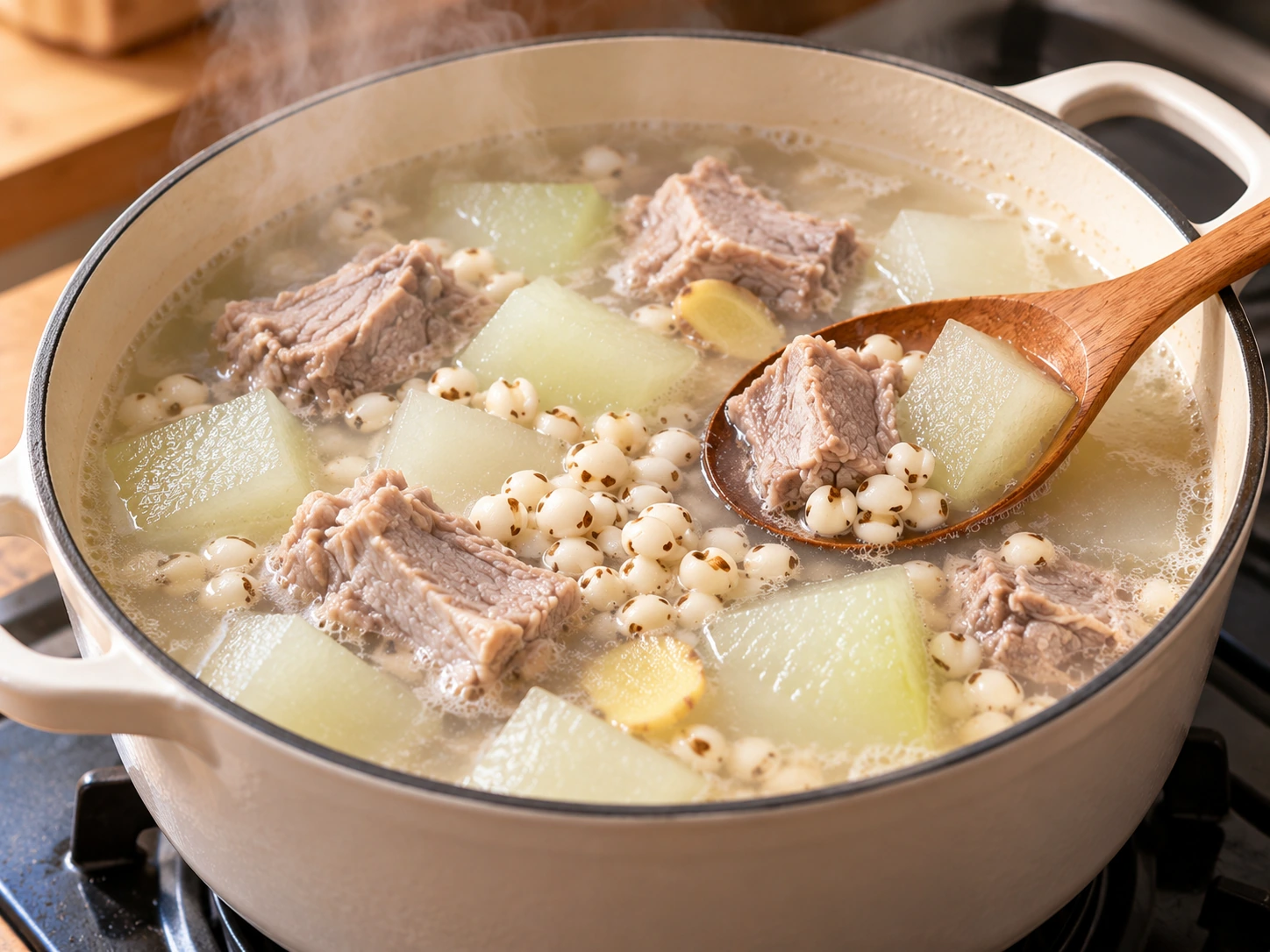
Season and portion
Start with 2 g salt, taste the cooked soup and adjust within roughly 2–4 g to preference. If too concentrated, add a little hot drinking water and bring back to the boil. Divide into four servings and serve hot. Do not decorate the finished soup with uncooked coix or raw winter melon.
Cooking tips
- Difficulty: Easy.
- Coix seeds are Job’s tears, not ordinary pearl barley; do not assume identical cooking times for substitutions.
- Add winter melon later so it does not disintegrate while the ribs cook.
- Add salt at the end, tasting the cooked soup and adjusting a little at a time.
Allergens
No wheat, soya, egg or milk is intentionally added, but check the actual labels of any seasoning used. The Xianyitang dried-ingredient packs state that they are packed in a facility also handling peanuts, tree nuts, sesame and soya. Check the actual labels of every brand used.
Storage and reheating
Keep raw ribs and soaked coix covered and refrigerated at 5°C or below; follow the raw-meat pack instructions. Separate raw and cooked utensils and clean hands and surfaces after handling raw meat. Divide cooked soup into shallow containers, cool promptly and refrigerate within 2 hours of cooking. Eat within 48 hours or freeze. Reheat only once until the ribs, melon and soup are hot throughout.
Pressure cooker
Use 60 g from the Xianyitang 400 g coix-seed pack with pork ribs and ginger; add winter melon later to keep its shape. These are coix seeds or Job’s tears, not ordinary pearl barley. Winter melon and ribs are bought separately. No dried scallops, oysters or honey dates are added.
Includes soaking, preparation, heating to pressure, the pressure timer, complete natural release and the final uncovered melon simmer. Check doneness; 35 minutes is not the total recipe time.
Recipe illustrations; measure ingredients using the written quantities.
Ingredients
- Xianyitang coix seeds / Job’s tears, from a 400 g pack; weigh dry 60 g
- Bone-in pork ribs, cut into 4–5 cm pieces 500 g
- Winter melon, 600 g after peeling and deseeding, cut into roughly 3 cm pieces 600 g
- Ginger, sliced 15 g
- Salt 2–4 g, to taste
- Cold drinking water for soaking coix; discard afterwards About 600 ml, enough to submerge
- Fresh drinking water for the electric pressure cooker broth; separate water for blanching ribs 1.5 litres; adjust only after opening safely
Method
Rinse and refrigerate the coix soak
Pick over and rinse 60 g coix seeds. Submerge in about 600 ml cold drinking water, cover and refrigerate at 5°C or below for roughly 1–2 hours, or as labelled. Drain, rinse and discard the soak water. This hydrates the seeds but does not cook them; they still need thorough cooking until soft at the centre.
Blanch ribs and prepare winter melon
Cover ribs with cold water in a pan, bring to the boil and gently boil for 3–5 minutes, skimming foam. Drain, discard the blanching water and remove clinging foam. Blanching is not full cooking. Wash winter melon, peel and remove seeds, then weigh 600 g flesh and cut into roughly 3 cm pieces. Cover and refrigerate until needed. Clean hands, utensils and surfaces after handling raw meat.
Load and check the soup fill limit
Use an electric pressure cooker of at least 6 litres. Check its sealing ring, steam path and minimum liquid requirement as instructed. Add blanched ribs, rinsed coix, ginger and 1.5 litres fresh water, without the melon. Combined food and liquid must stay below the lower of the half-full line and the model’s soup or grain limit. Reduce the whole batch proportionately or use a larger cooker if needed; do not pack food down.
Cook at high pressure for 35 minutes
Lock the lid and select the sealing or pressure-cooking position as directed for your model. Set high pressure for 35 minutes; the countdown starts at working pressure, with heat-up time additional. Do not add winter melon yet or open while under pressure. This is an estimated adaptation time; check actual rib and coix doneness after safely opening.
What is natural pressure release?
When the pressure timer finishes, cancel cooking and turn off Keep Warm as instructed for your model. Leave the lid locked and let the cooker cool so the pressure falls on its own. Do not turn the valve for a quick release, move the electric cooker or cool it under running water. Allow roughly 20–40 minutes, sometimes longer. Open only when the float or pressure indicator has fully dropped and the lid unlocks normally as specified by the manufacturer; elapsed minutes alone do not establish that it is safe. Direct the escaping steam away from your face and hands when lifting the lid.
Open safely, then cook the winter melon
After complete natural release and safe opening, check the ribs and coix. If meat is tough or seed centres remain hard, continue a permitted uncovered gentle simmer until tender, adding a little hot water if needed. Add 600 g winter melon and simmer uncovered for about 20–30 minutes until translucent and easily pierced. Rib meat must reach 75°C for 30 seconds and coix must be soft throughout. Do not reseal for pressure cooking at this stage; the illustration shows this uncovered final melon stage.
Season and portion
Start with 2 g salt, taste the cooked soup and adjust within roughly 2–4 g to preference. If too concentrated, add a little hot drinking water and bring back to the boil. Divide into four servings and serve hot. Do not decorate the finished soup with uncooked coix or raw winter melon.
Cooking tips
- Difficulty: Easy.
- Coix seeds are Job’s tears, not ordinary pearl barley; do not assume identical cooking times for substitutions.
- Add winter melon later so it does not disintegrate while the ribs cook.
- Add salt at the end, tasting the cooked soup and adjusting a little at a time.
Allergens
No wheat, soya, egg or milk is intentionally added, but check the actual labels of any seasoning used. The Xianyitang dried-ingredient packs state that they are packed in a facility also handling peanuts, tree nuts, sesame and soya. Check the actual labels of every brand used.
Storage and reheating
Keep raw ribs and soaked coix covered and refrigerated at 5°C or below; follow the raw-meat pack instructions. Separate raw and cooked utensils and clean hands and surfaces after handling raw meat. Divide cooked soup into shallow containers, cool promptly and refrigerate within 2 hours of cooking. Eat within 48 hours or freeze. Reheat only once until the ribs, melon and soup are hot throughout.
Shop the Xianyitang ingredients for this recipe