Method
1
Soak and clean the black wood ear
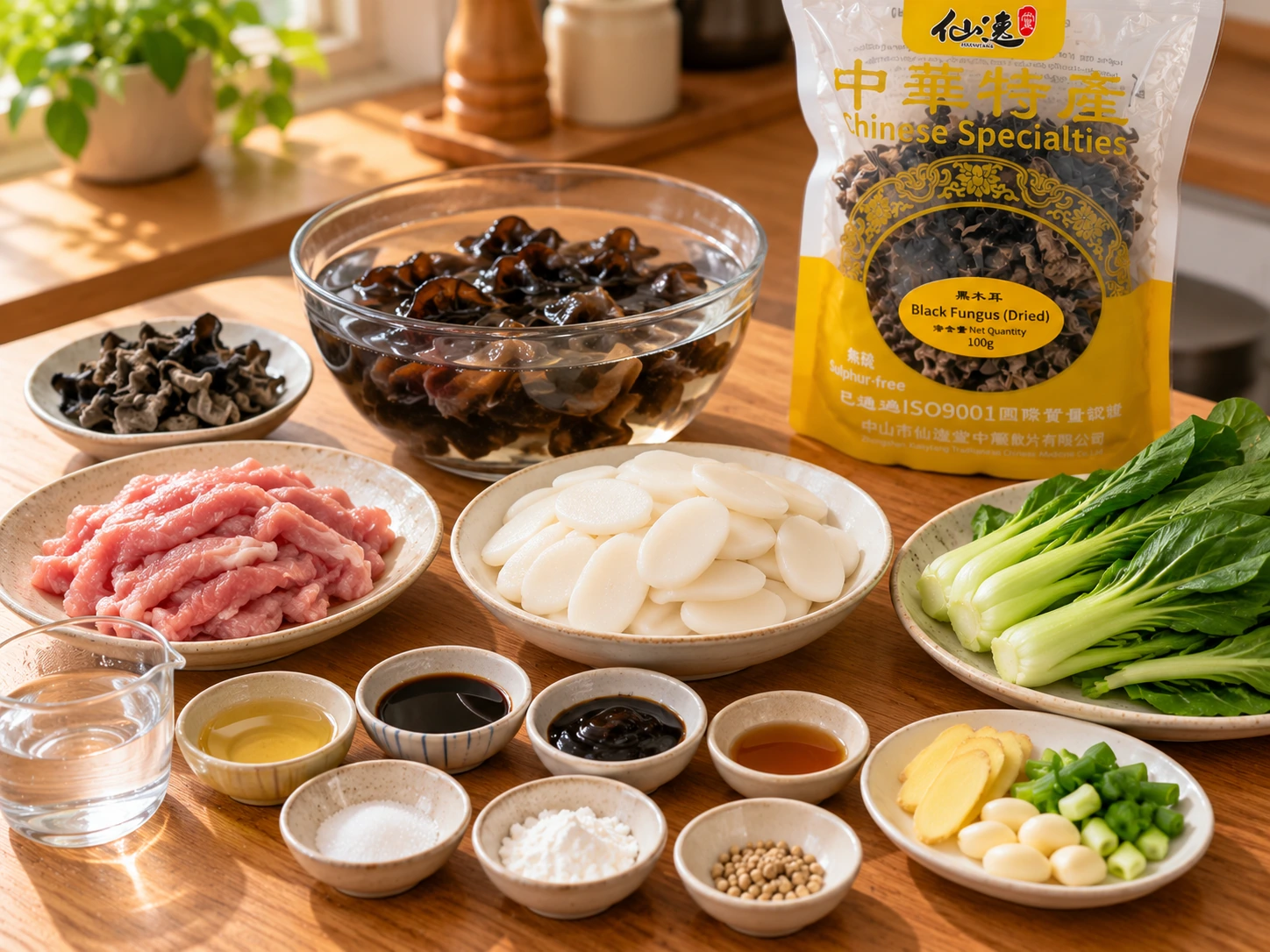
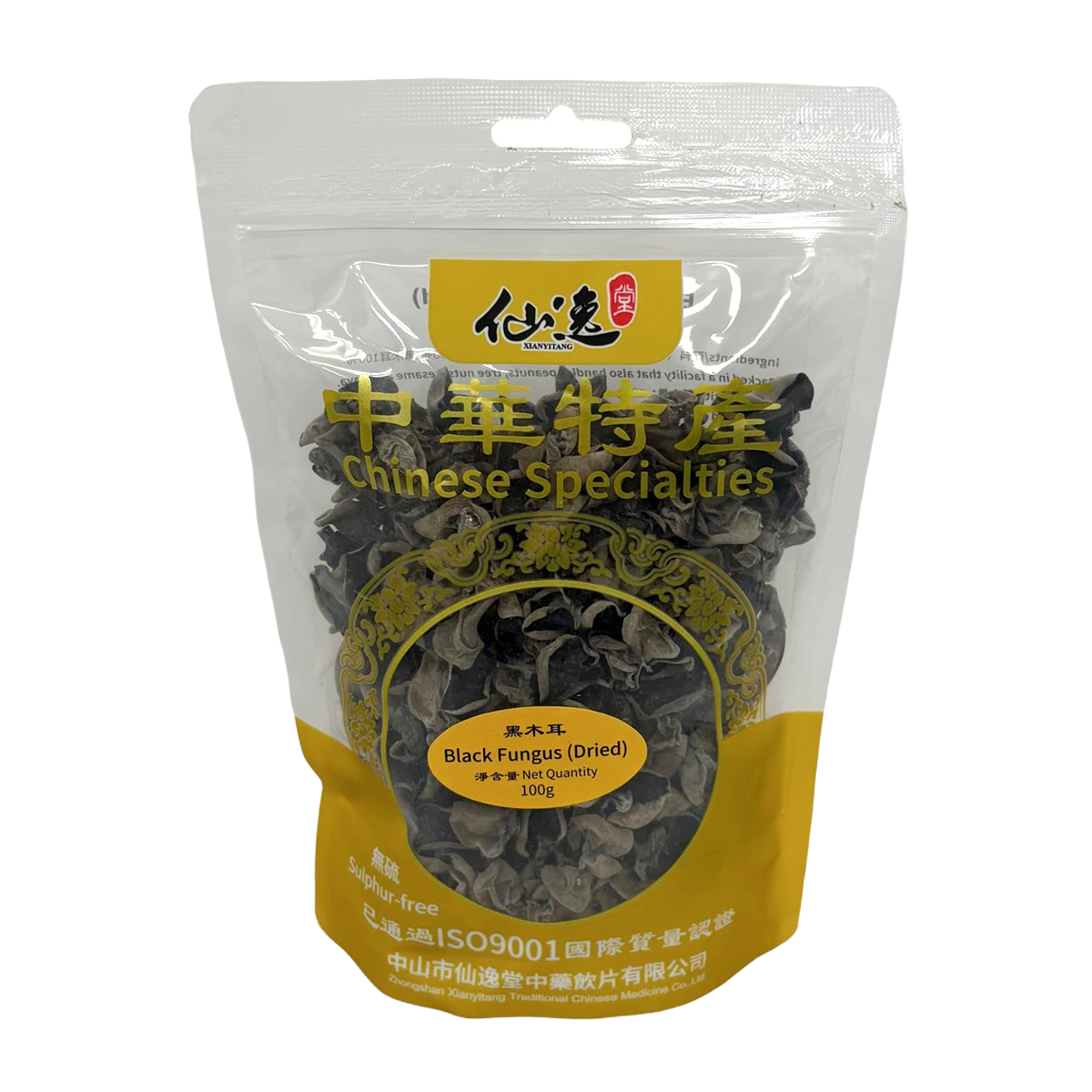
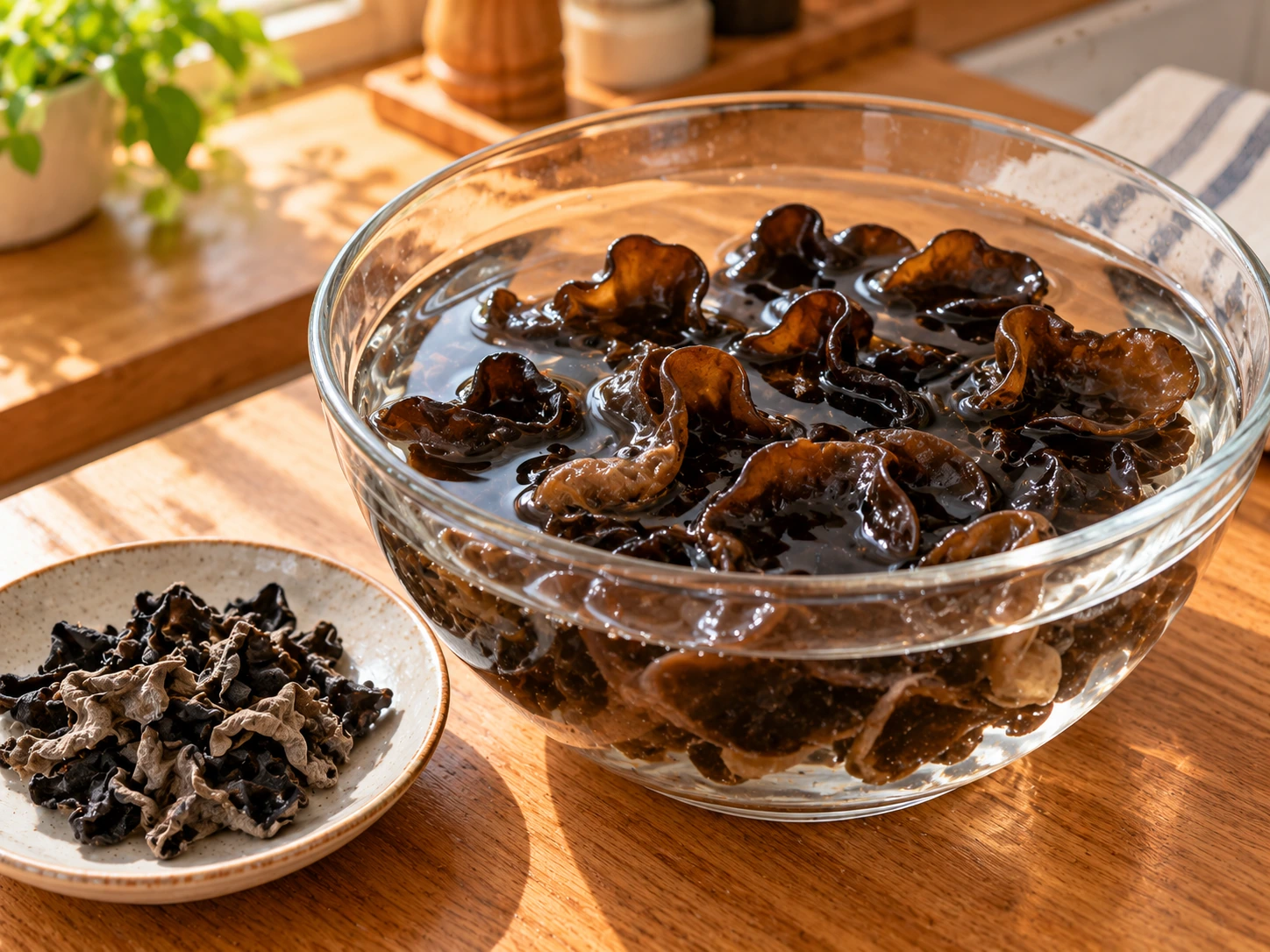
Rinse the dried ears and submerge in warm drinking water for 15–30 minutes until soft throughout. Discard the water, rinse grit from folds, trim tough roots and tear into bite-sized pieces. Soaking does not cook them; do not leave them indefinitely in warm water. Cover and refrigerate if cooking is delayed.
2
Pre-cook the fungi separately
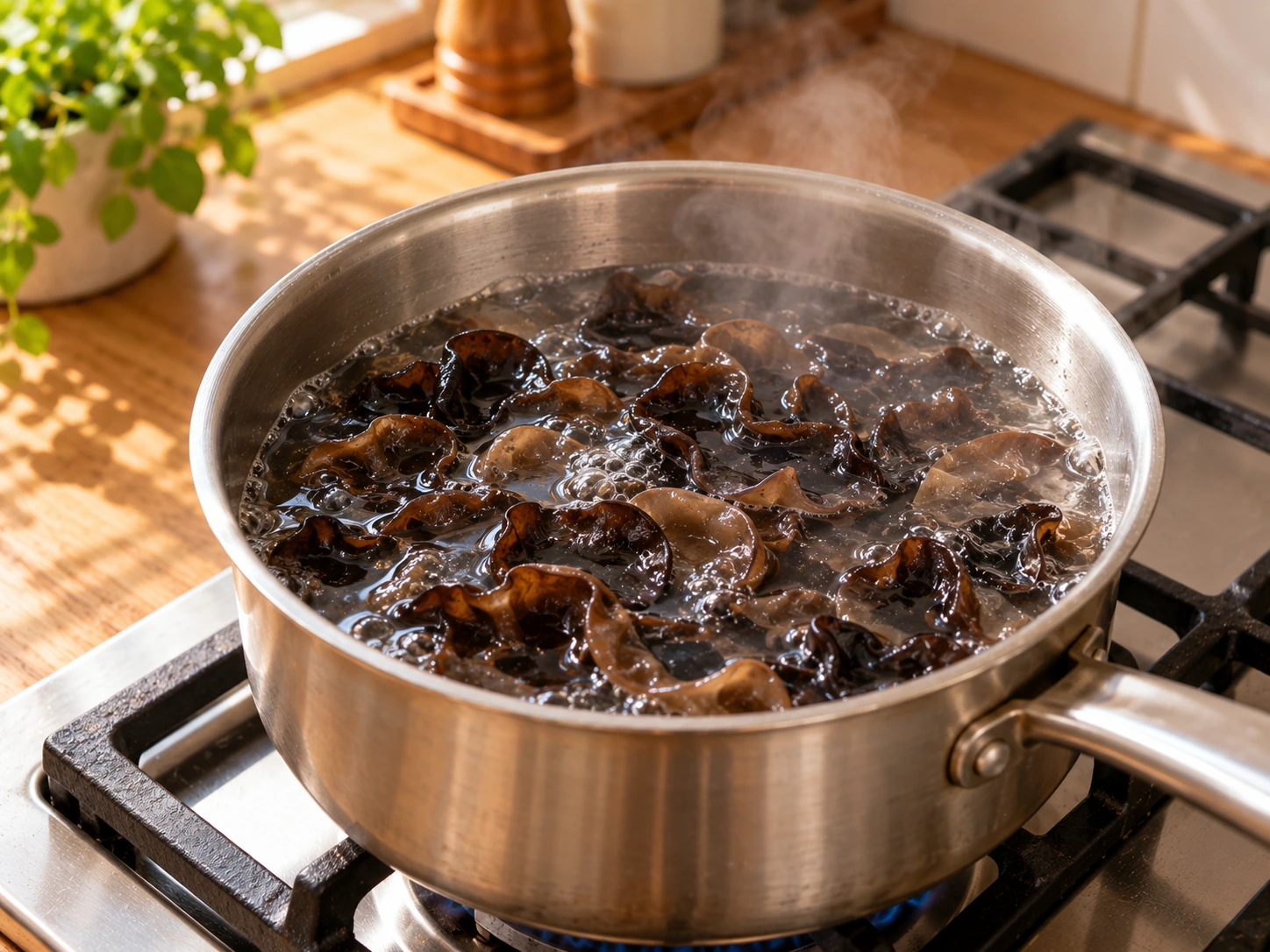
Put the cleaned hydrated ears in about 800 ml fresh drinking water. Bring to the boil and gently simmer for 40–60 minutes until cooked throughout and the thicker parts are tender to bite. Maintain sufficient water, topping up with hot water as needed. Drain and set aside. The brief final stir-fry does not replace this cooking stage.
3
Prepare pork, vegetables and rice cakes in parallel
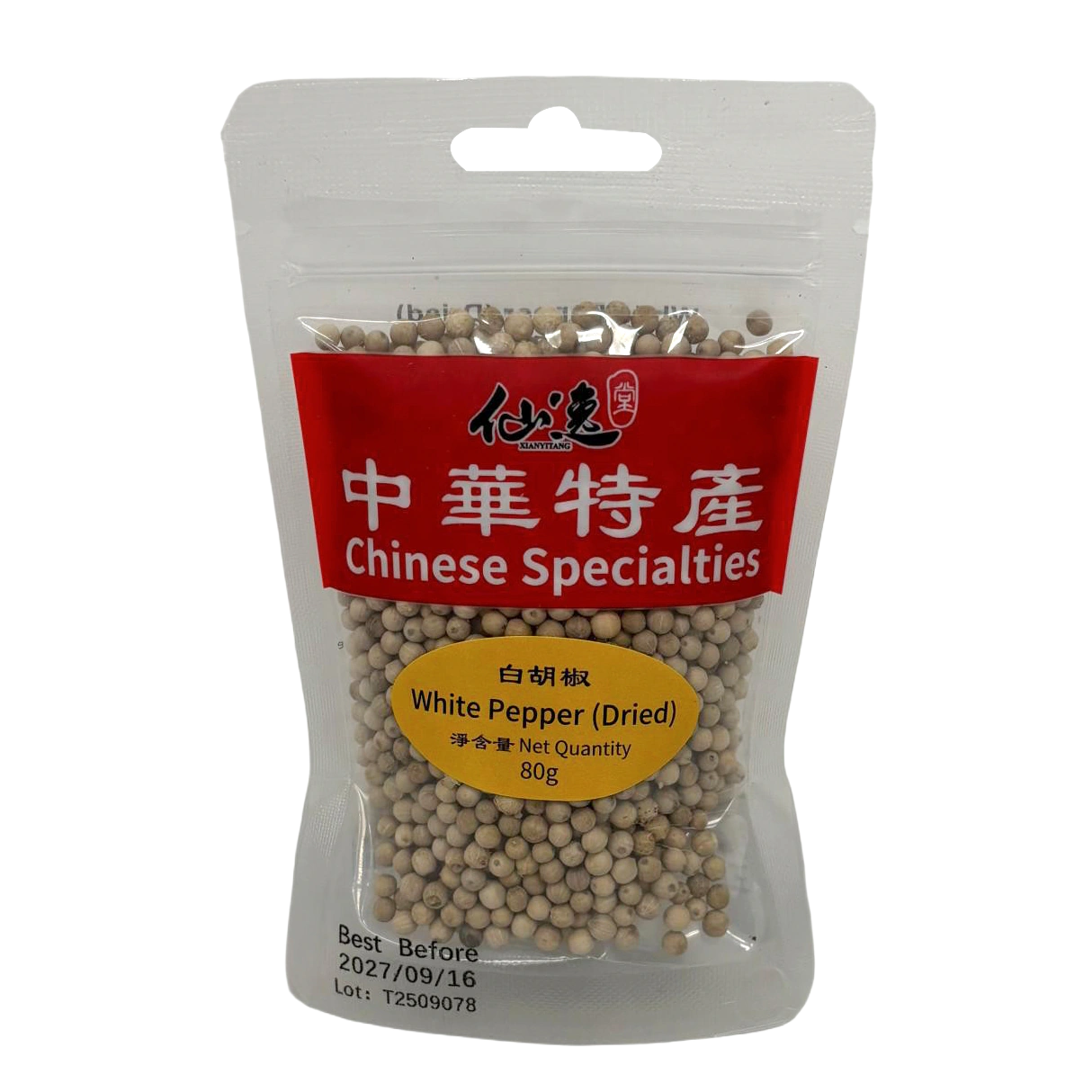
While the fungi cook, mix pork with 10 ml light soy sauce, white pepper, 5 g cornflour and 20 ml water. Cover and marinate in the fridge for about 20 minutes. Separate raw-meat tools and clean hands and surfaces. Thaw, rinse or pre-cook rice cakes exactly as their label requires, then drain. Brands differ in hydration and cooking needs; a universal soak or direct fry is unsuitable. Mix the remaining light soy, dark soy, oyster sauce and sugar.
4
Cook the pork first
Heat about half the oil in a wide pan. Spread out the pork and cook through, checking the thickest strips reach 75°C for 30 seconds rather than judging by surface colour alone. Transfer to a clean plate, not the bowl that held raw pork.
5
Combine with rice cakes and vegetables
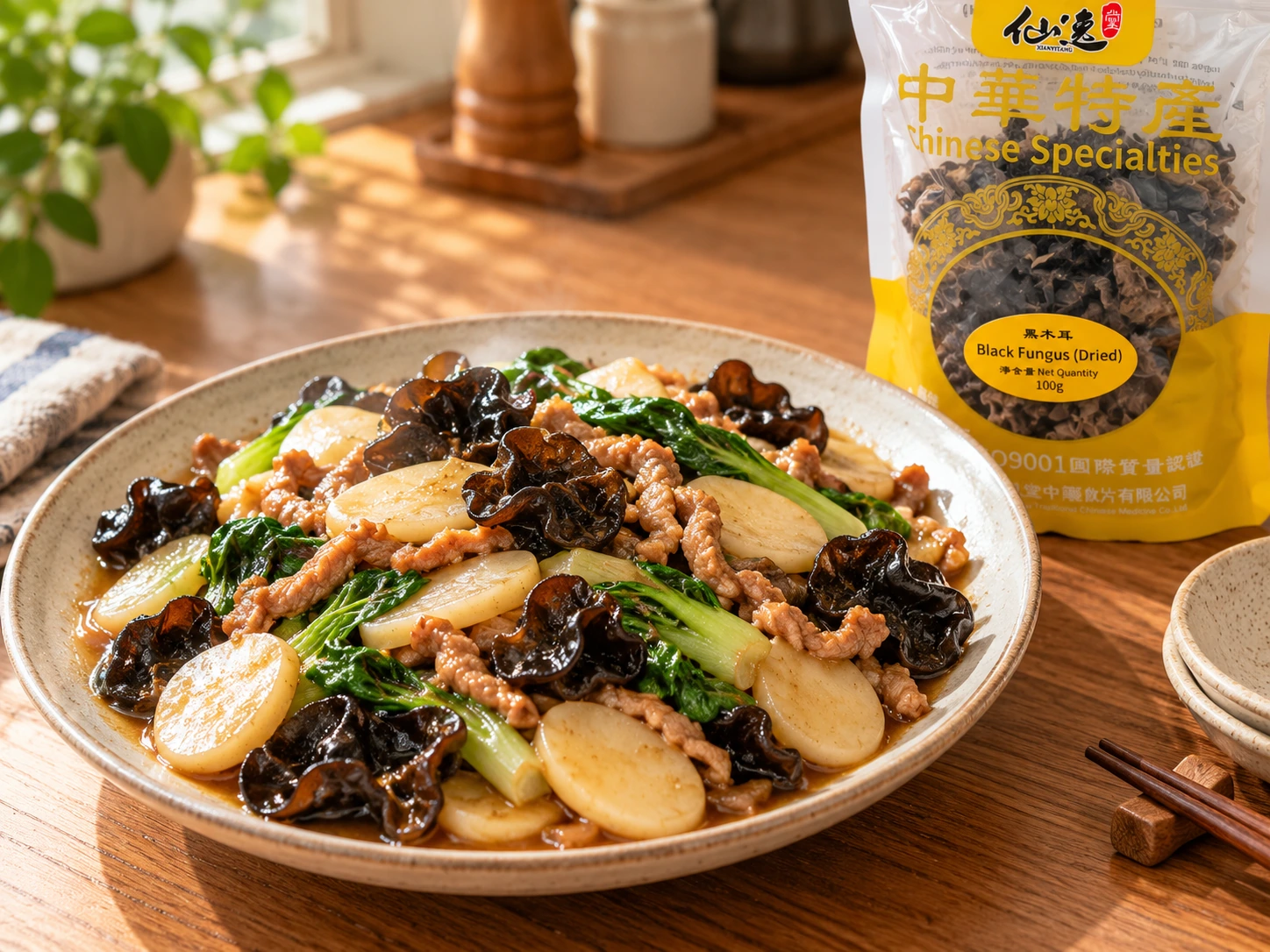
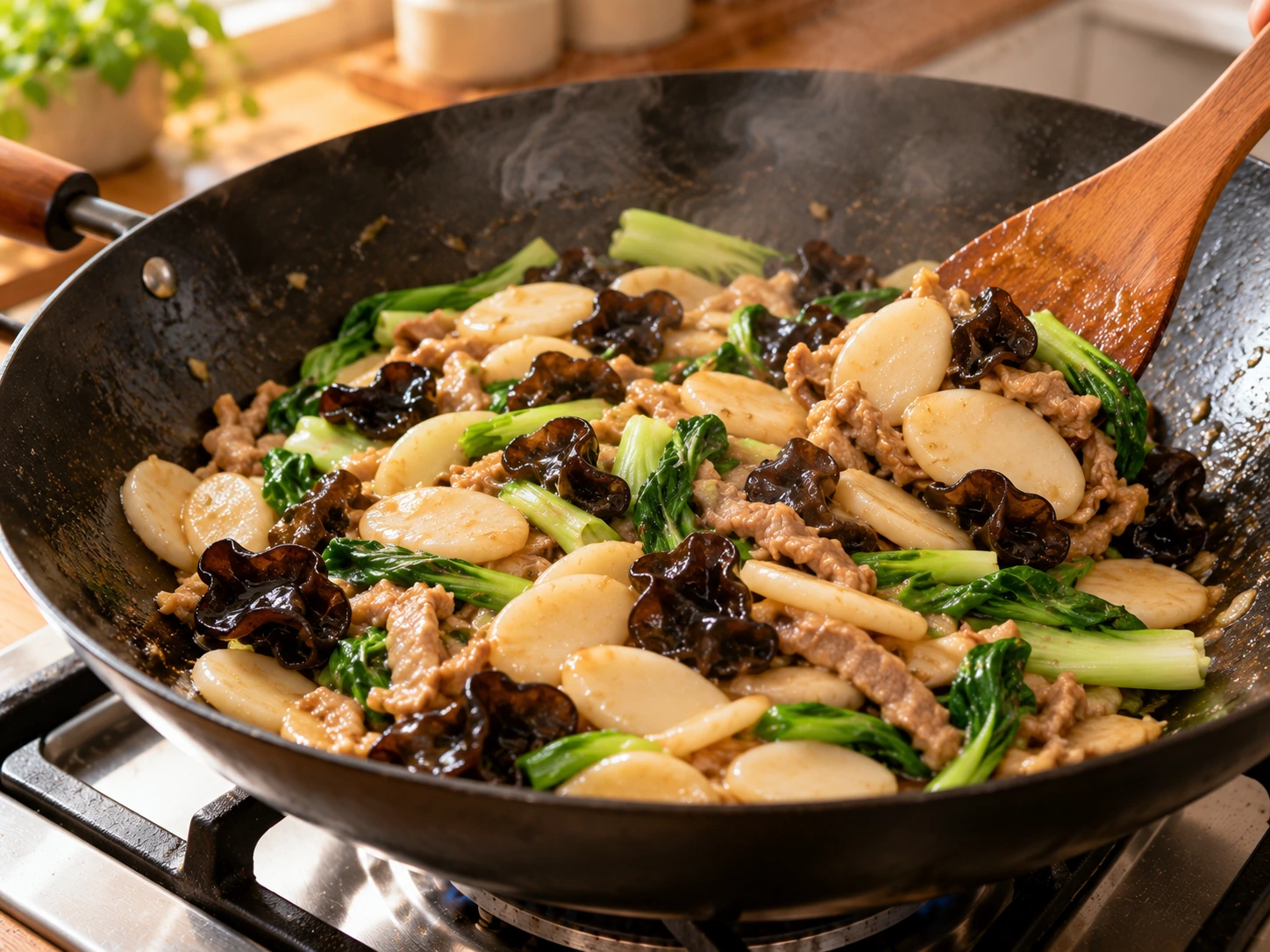
Gently fry ginger and garlic in the remaining oil. Add pak choi stems for about 1 minute, then the rice cakes prepared as labelled and sufficient water. Cover and cook as the rice-cake label directs until each slice is soft without a hard centre. Add leaves, fully cooked fungi, cooked pork and mixed sauce. Toss gently for about 2–3 minutes until the leaves are cooked and everything is hot and lightly coated. Add a little water if needed rather than frying dry and hard. Finish with sesame oil and spring onion and heat briefly.
Cooking tips
- Difficulty: Easy to intermediate.
- Use thin savoury rice cakes, not a sweet sticky-rice cake.
- Water and timing depend on the brand: follow its label and check tenderness.
- Both fungi and pork are cooked before the final toss, which combines and heats the dish.
Allergens
Contains soya, wheat in many soy sauces, molluscs from oyster sauce and sesame. Check rice-cake and sauce labels. The Xianyitang dried-ingredient packs state that they are packed in a facility also handling peanuts, tree nuts, sesame and soya. Check the actual labels of every brand used.
Storage and reheating
Best freshly cooked. Cool leftovers promptly in shallow containers, ideally refrigerating within 1 hour, and eat within 24 hours. Reheat only once until hot throughout. Follow any stricter rice-cake storage instructions. Keep raw pork and hydrated fungi refrigerated and use promptly.