Method
1
Rehydrate the dried fungi separately
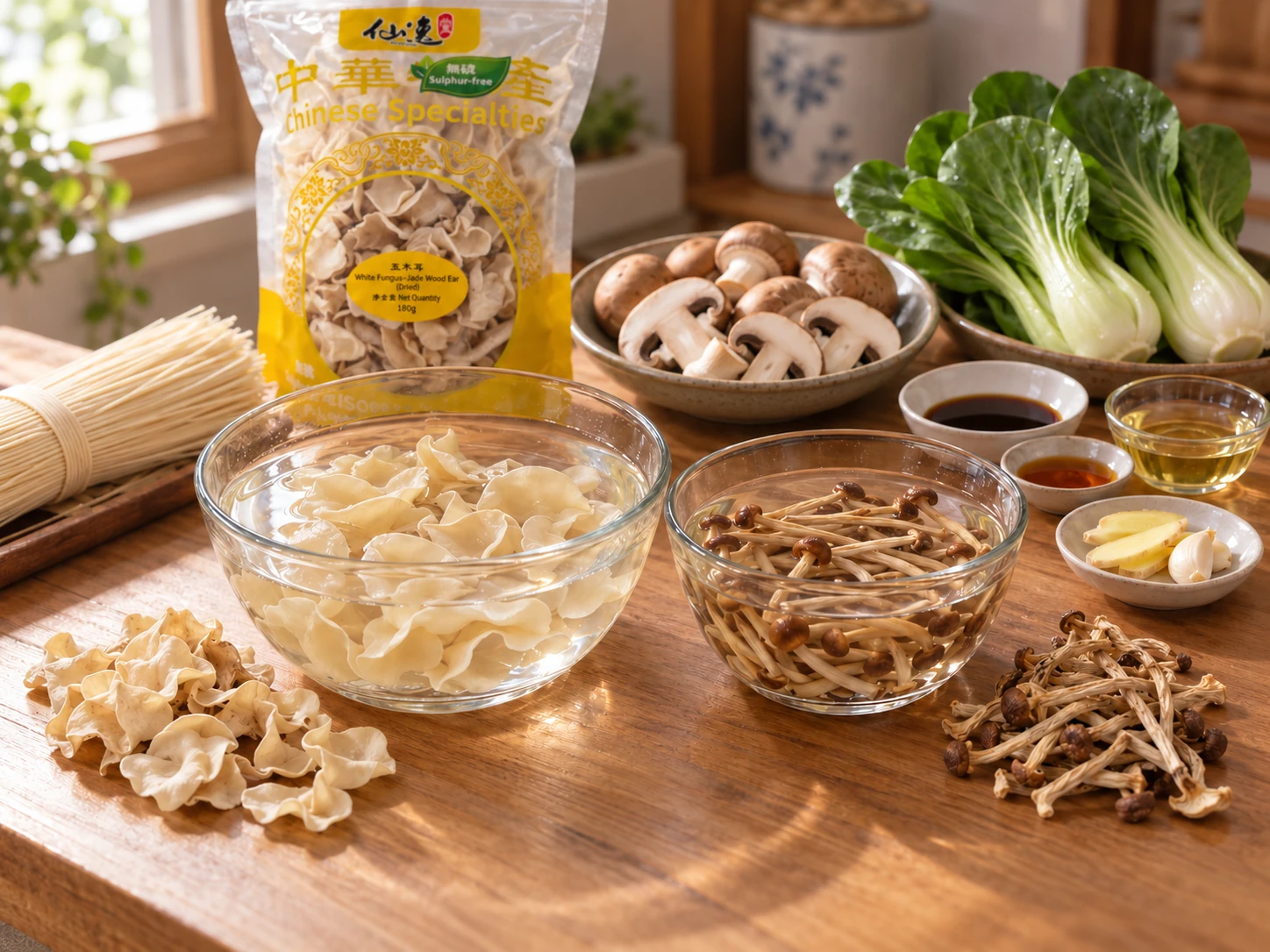
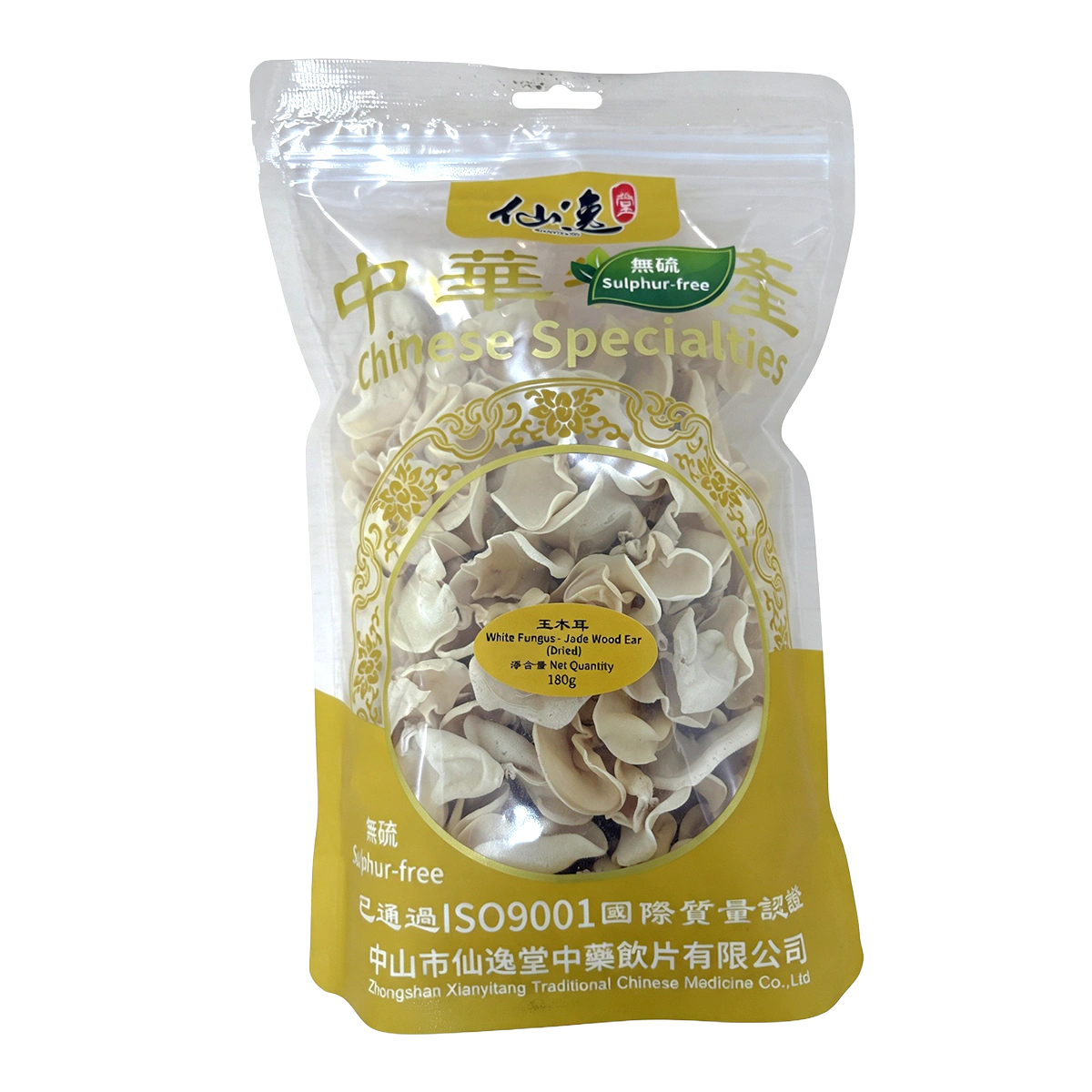
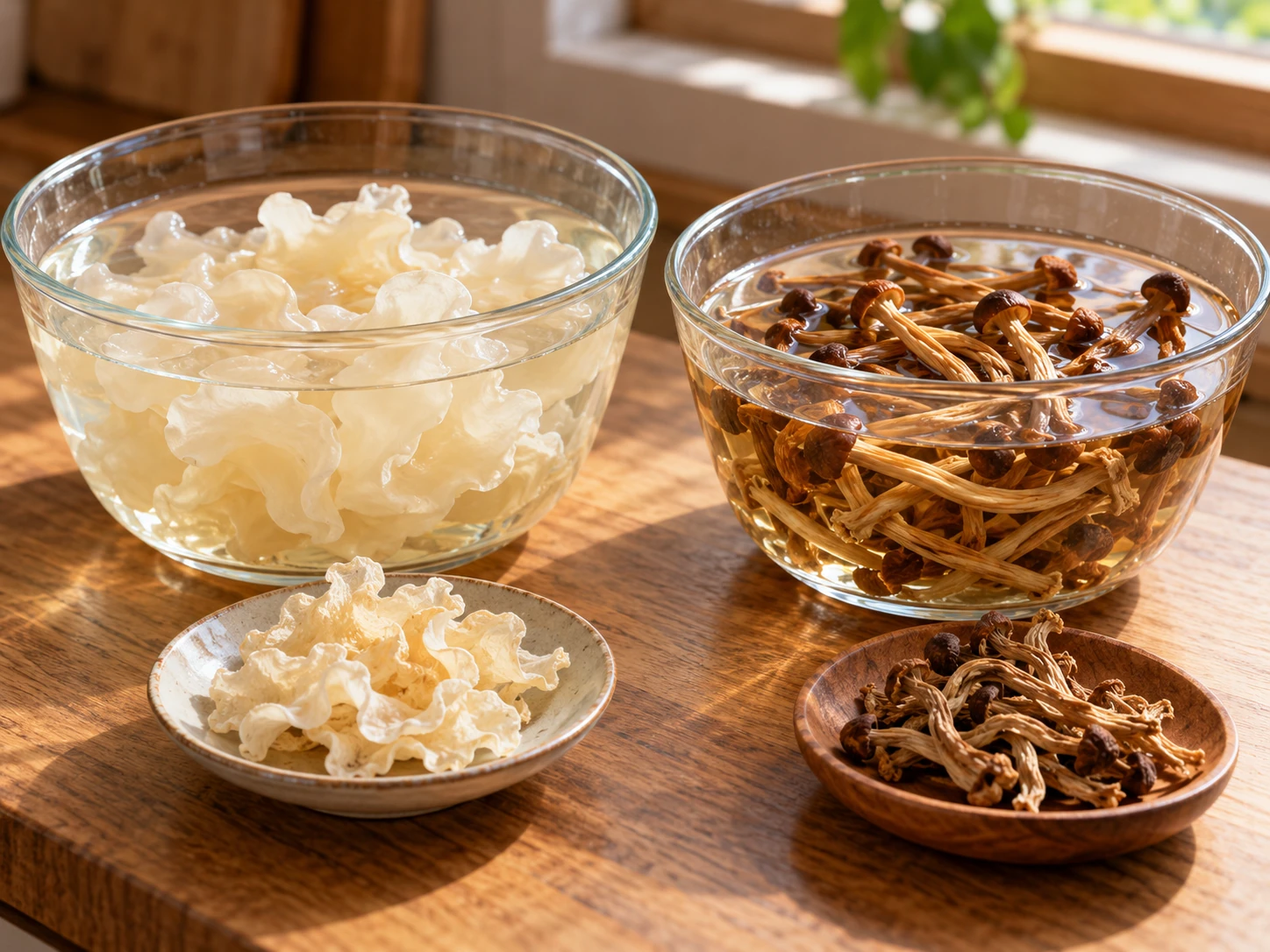
Pick over and rinse 12 g dried jade wood ear. Cover in a roomy bowl with about 500 ml lukewarm drinking water, approximately 30–40°C. Following the pack, soak for 15–30 minutes until the lobes open and are soft throughout. Check and continue as needed, without leaving it at room temperature for prolonged periods; if preparation must wait, cover and move to a fridge at 5°C or below. Discard soaking water, rinse each lobe and tear into 3–4 cm pieces. This is thick white wood ear, not frilly snow fungus; expansion or colour does not prove it is cooked. Rinse the tea tree mushrooms in a separate bowl and soak in about 400 ml lukewarm drinking water for 15–30 minutes following the pack, until stems are pliable. Check and continue if needed, trim hard root ends and rinse again. Discard both soaking waters.
2
Fry the fresh mushrooms and simmer the broth
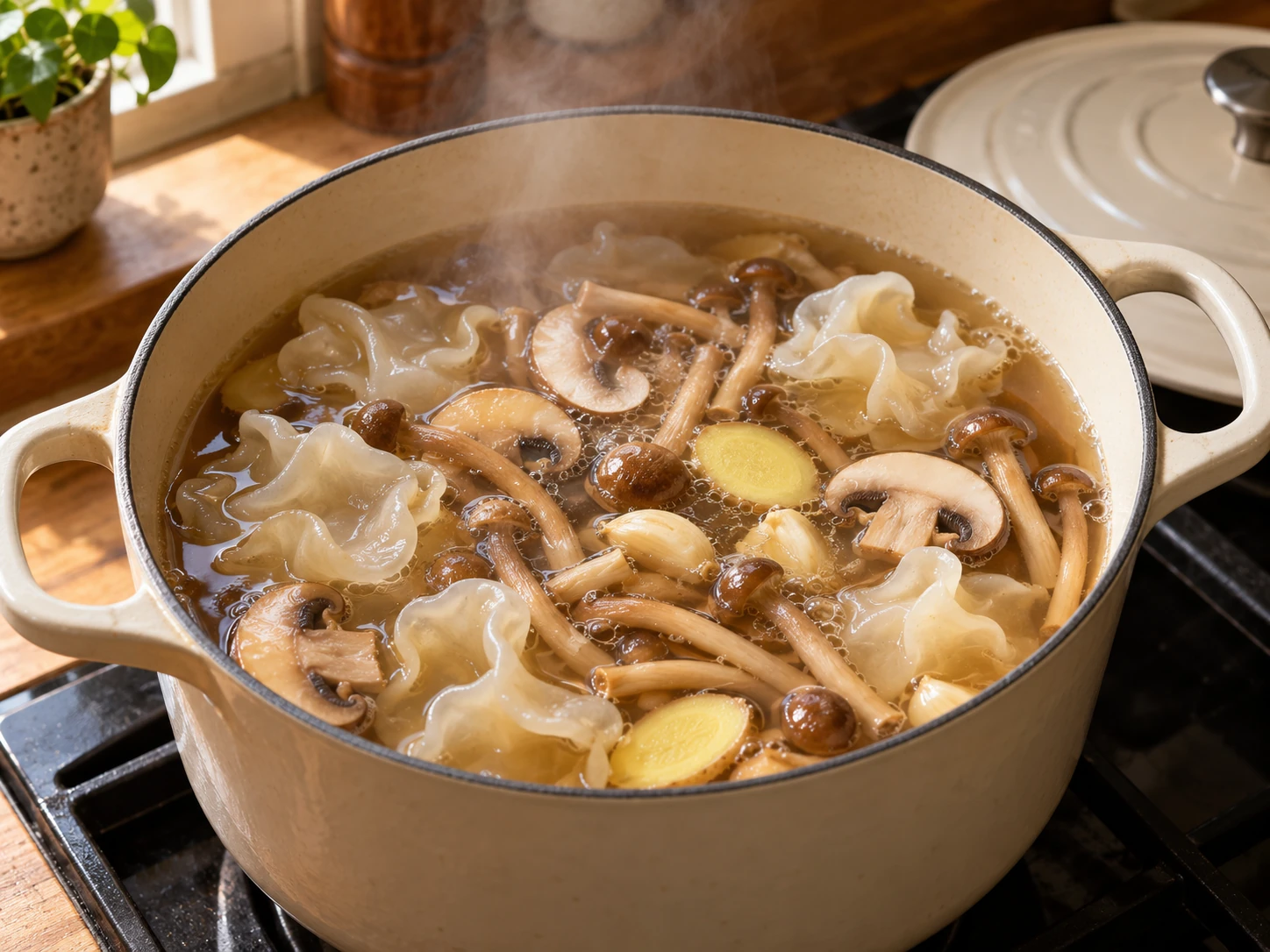
Heat 10 ml oil in a large pan over medium heat. Fry ginger and garlic for about 30 seconds and chestnut mushroom slices for 3–4 minutes. Add wood ear, tea tree mushrooms and 1.2 litres fresh water. Bring to the boil, cover and maintain a steady gentle boil for 40–60 minutes until both dried fungi are cooked through and thick lobes and stems are tender to bite. Stir and check water, topping up with boiling water as needed. A brief hot-water dip is not a substitute.
3
Cook noodles separately and add the greens
When fungi are cooked, cook the 160 g noodles in a separate pan using the pack water quantity and timing, then drain. Do not put uncooked dry noodles straight into serving bowls. Add pak choi to the broth for about 2–3 minutes until stalks are cooked and leaves tender, extending for thick stalks. Stir in 15 ml light soy and 3 ml sesame oil.
4
Divide and serve hot
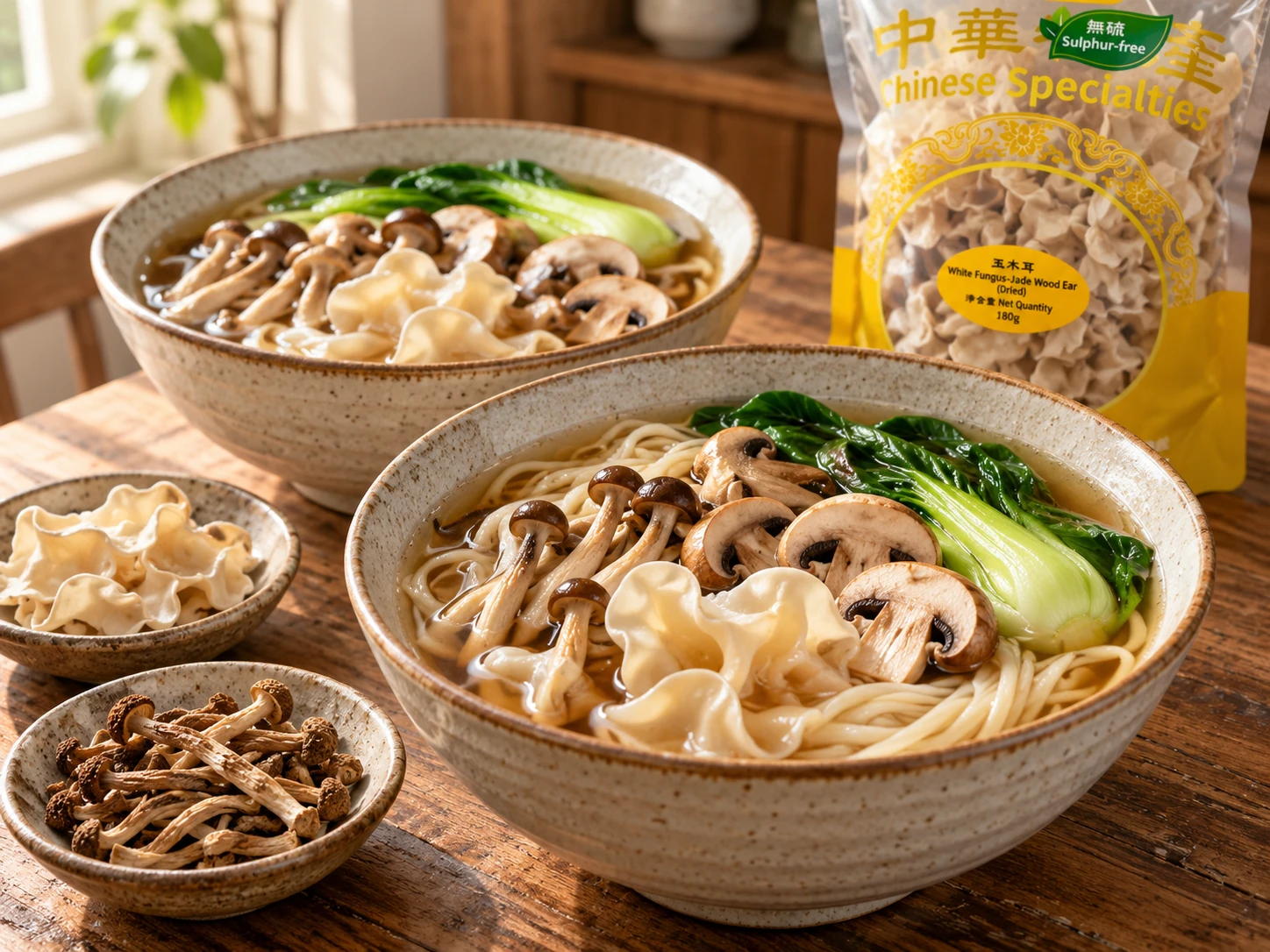
Share cooked noodles between two generous bowls and add cooked fungi, pak choi and hot broth. Serve promptly. Divide broth to suit your bowls and serve any surplus separately rather than soaking noodles until they absorb it all. Soy is salty, so taste cooked broth before adjusting; do not add salt by default.
Cooking tips
- Both tea tree mushrooms and jade wood ear are dried ingredients and need separate soaking and full cooking. Supermarket chestnut mushrooms are an additional fresh ingredient.
- The broth uses fungi, ginger and garlic without meat stock. Check your noodle pack for egg.
Allergens
Contains wheat (gluten) from noodles; soy sauce usually contains soya and wheat, and sesame oil contains sesame. Egg-containing noodles would add egg. The Xianyitang pack states that it is packed in a facility also handling peanuts, tree nuts, sesame and soya. Check every actual ingredient label.
Storage and reheating
Keep rehydrated fungi at 5°C or below and aim to cook that day. Divide cooked leftovers into shallow containers, cool promptly and refrigerate within 2 hours of cooking. Eat within 48 hours or freeze. Reheat only once until steaming hot throughout.