Method
1
Soak and clean the jade wood ear
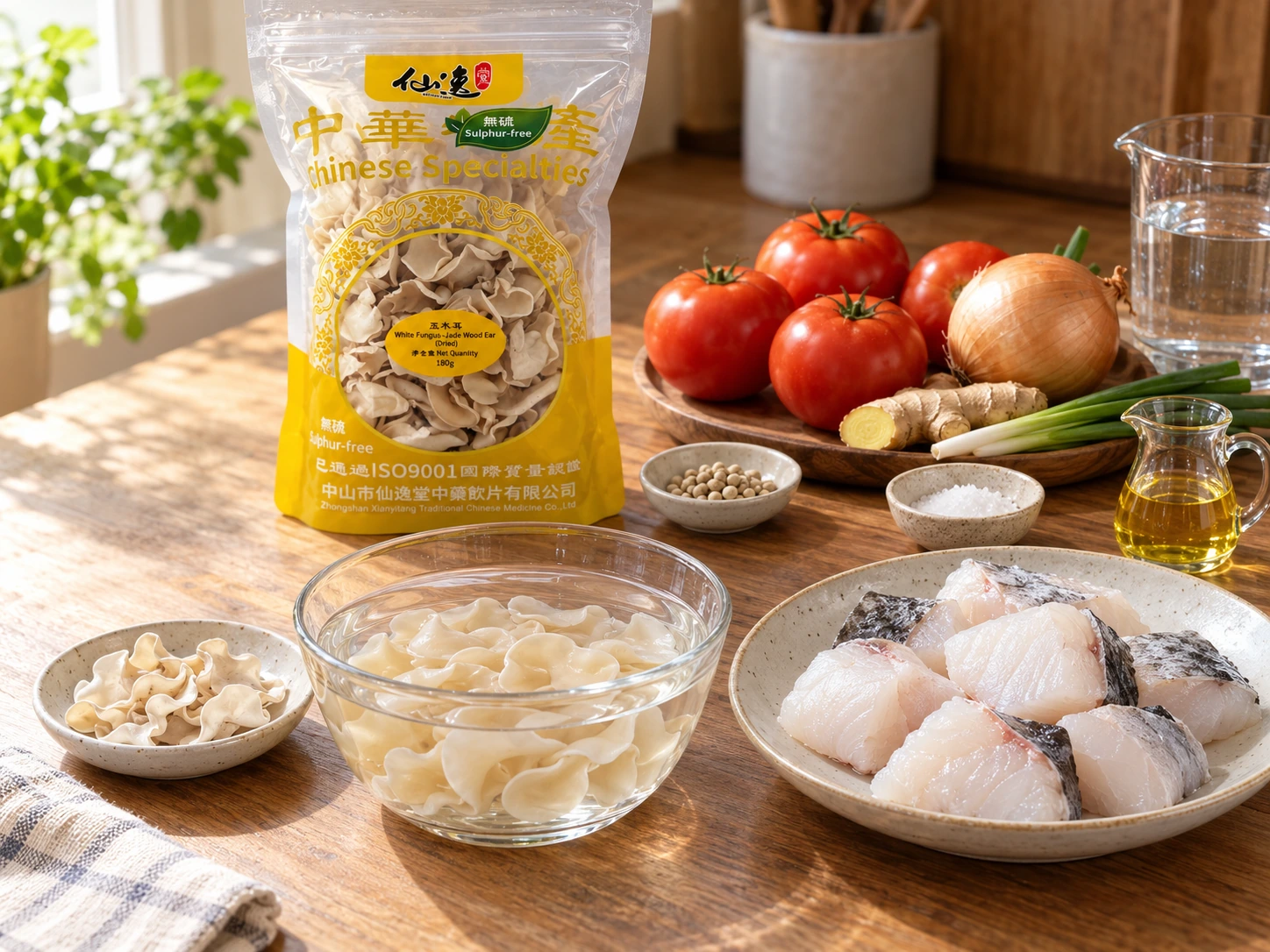
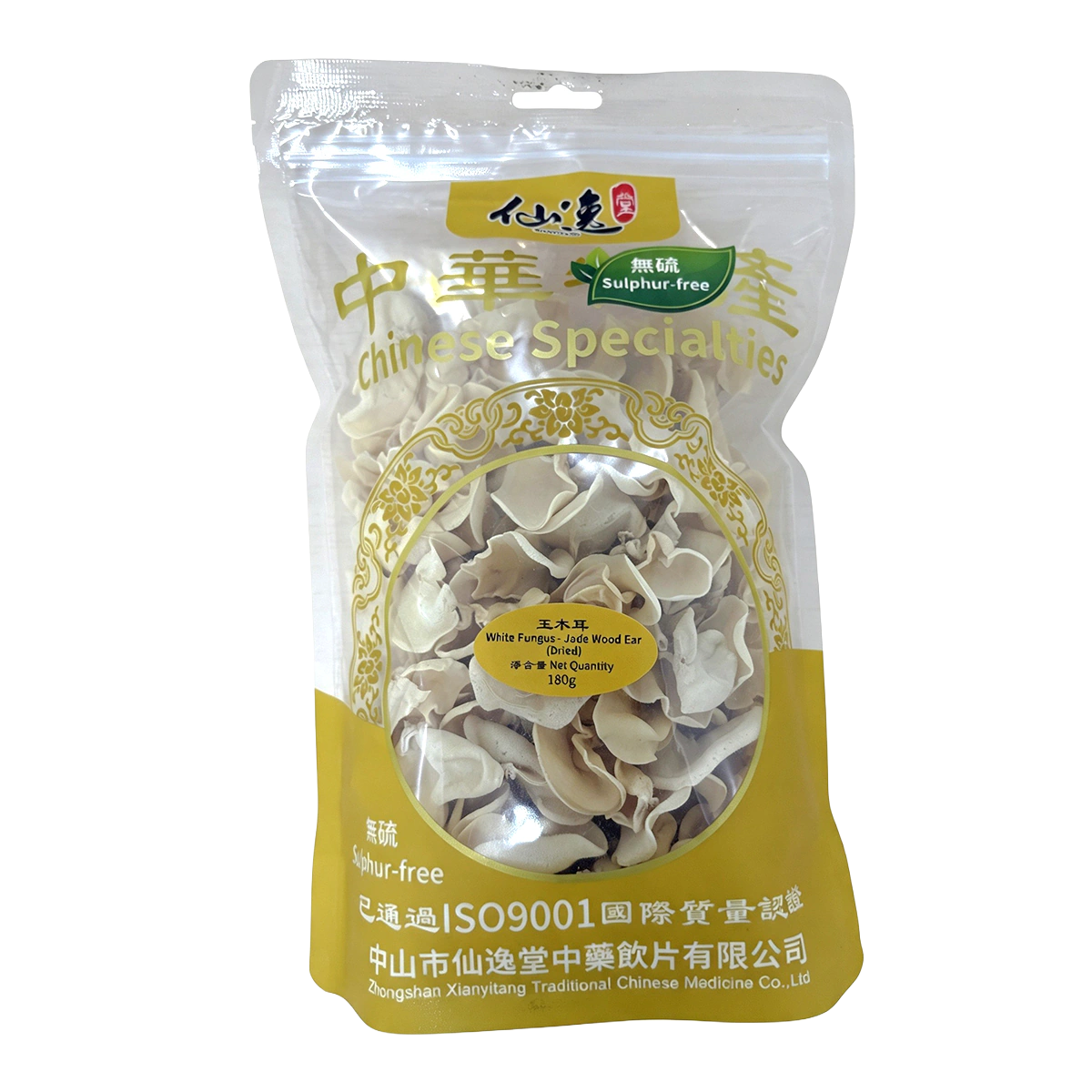
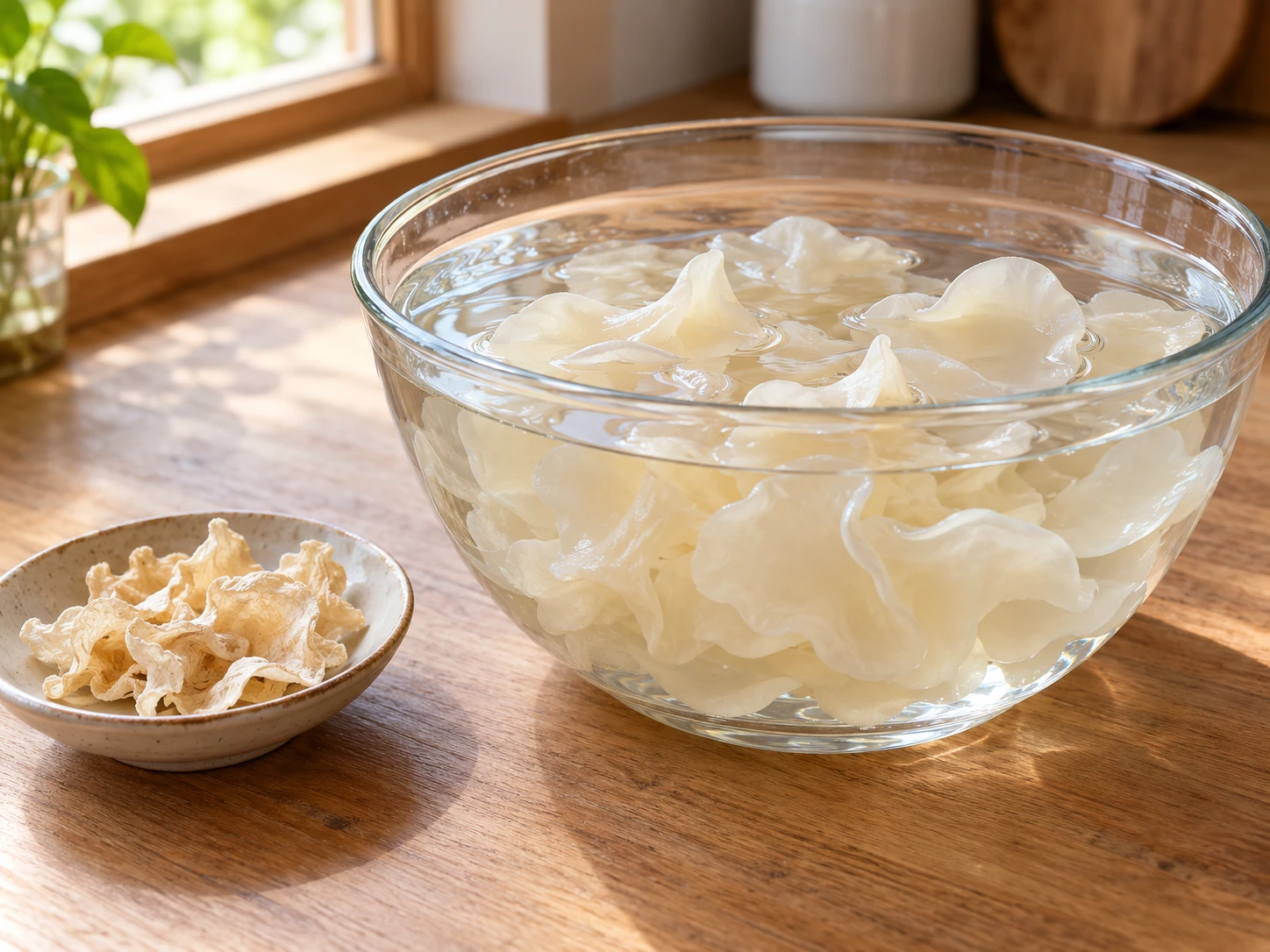
Pick over and rinse 15 g dried jade wood ear. Cover with about 600 ml warm drinking water and soak for the pack’s 15–30 minutes until soft throughout. Discard the water, rinse folds and roots, trim tough roots and tear into 3–4 cm pieces. Recheck firm pieces without leaving them indefinitely in warm water; cover and refrigerate if cooking is delayed.
2
Prepare fish and vegetables
Thaw fish in the fridge as labelled, cut into thick pieces and carefully check for bones. Keep covered at 5°C or below until needed. Separate raw-fish utensils from ready-to-eat ingredients and clean hands and surfaces afterwards. Prepare the tomato, onion, ginger and spring onion; crush pepper just before use.
3
Cook the soup base and fungi first
Gently cook onion, ginger and tomato in the oil for about 5–8 minutes until the tomatoes release some juice without scorching. Add 1.5 litres water and the cleaned hydrated jade wood ear. Bring to the boil and maintain a gentle simmer for 40–60 minutes until the ears are thoroughly cooked and tender to bite. Maintain sufficient broth with hot-water top-ups. Do not add the fish yet.
4
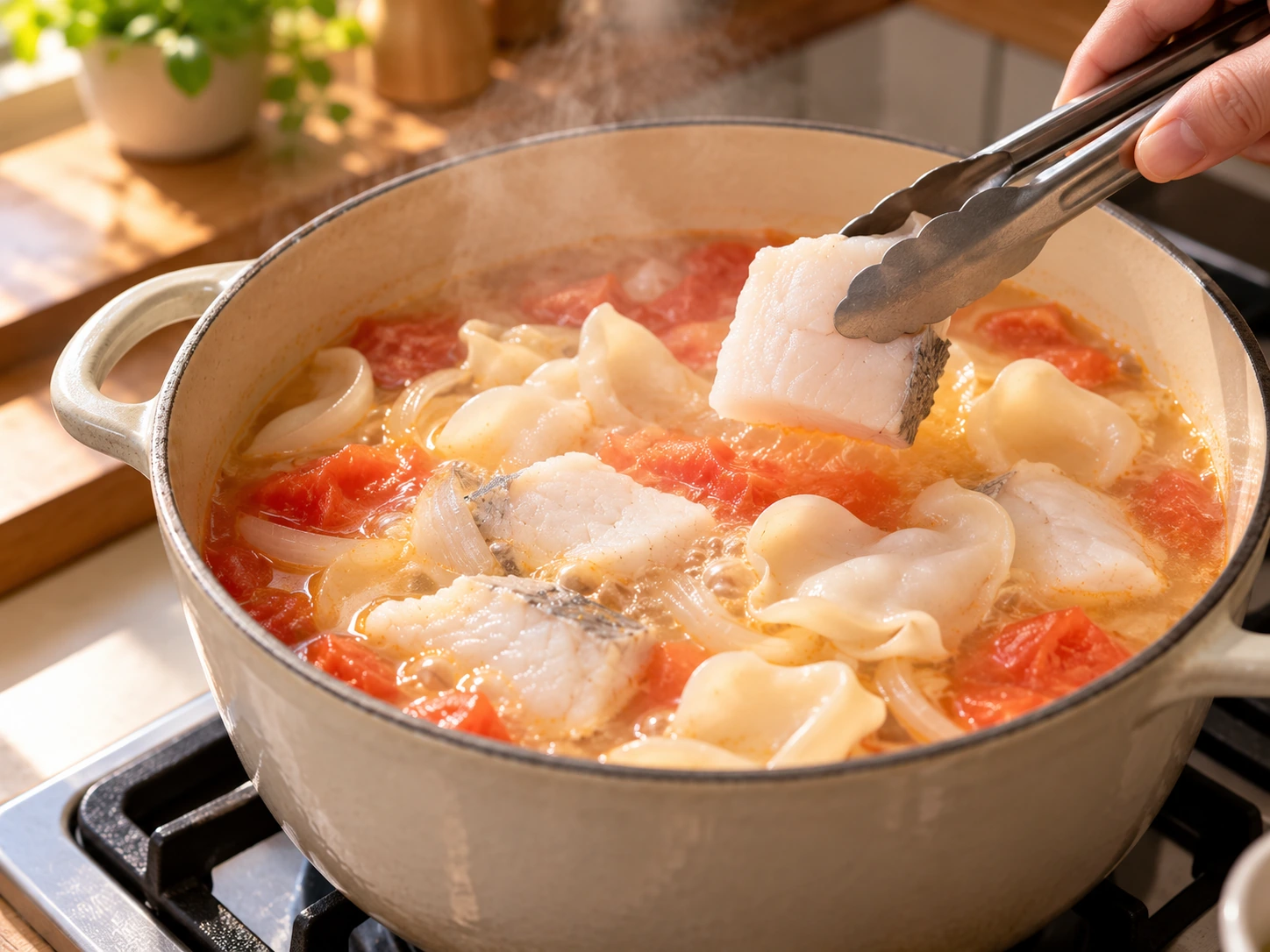
Add the fish last
Once the wood ear is fully cooked, bring the broth back to the boil and gently add the fish. Keep a gentle simmer for roughly 6–8 minutes, adjusting to thickness. Check that the centre of the thickest piece reaches 75°C for 30 seconds; the flesh should also be opaque and flake easily. Boiling broth or a white surface alone is insufficient. Move pieces gently rather than stirring vigorously.
5
Season and serve
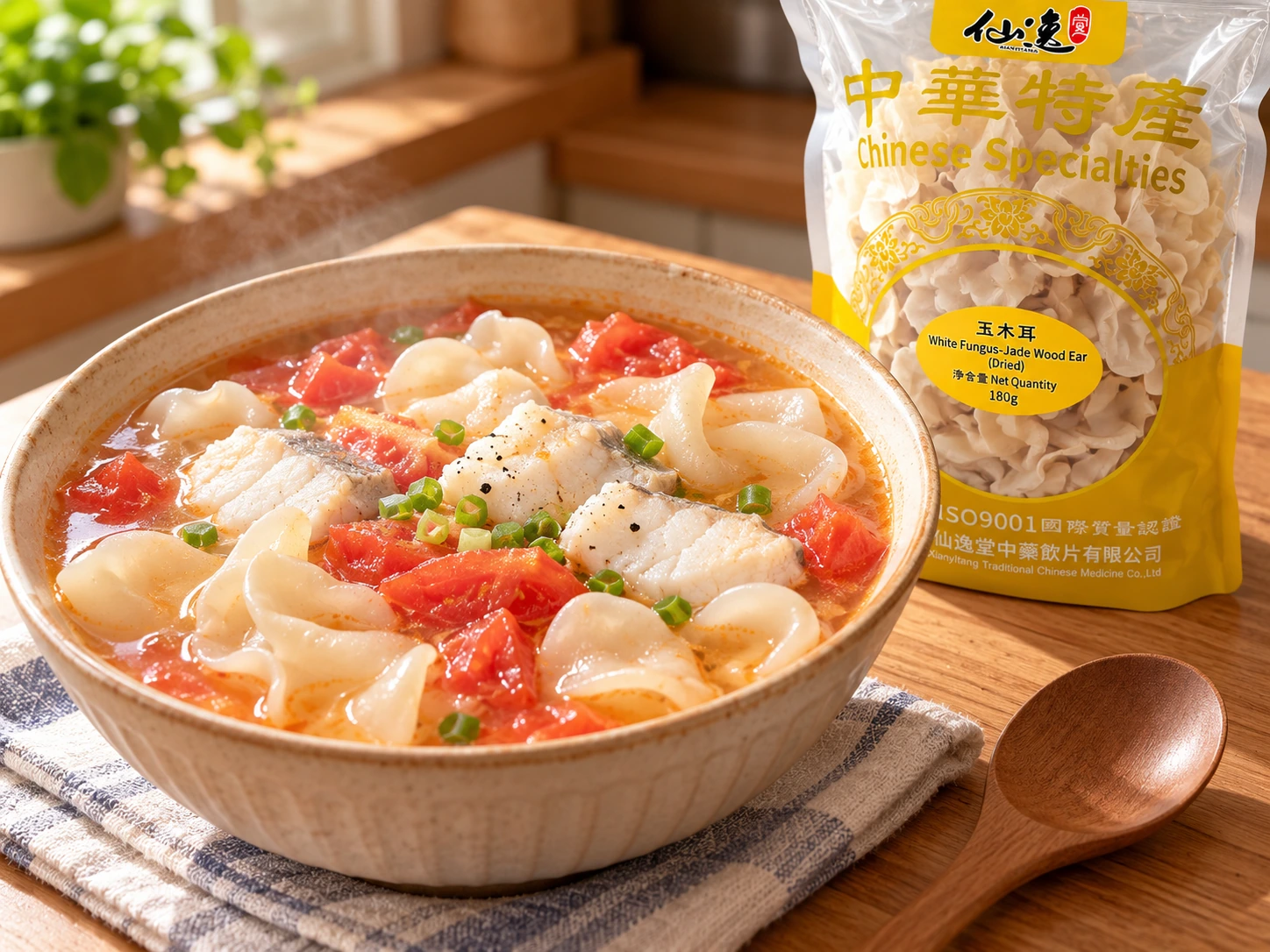
Add spring onion and crushed white pepper and heat briefly. Start with a little salt, taste and adjust. Divide among four bowls and serve hot. Follow any longer cooking requirement on the fish label and check the centre rather than shortening cooking to match an estimate.
Cooking tips
- Difficulty: Easy to intermediate.
- The hob method lets the wood ear cook thoroughly before the more delicate fish is added.
- The pack’s 40–60 minute simmer has not been converted into an unverified short pressure cycle.
- This broth uses water rather than fish sauce, shrimp paste or stock; follow the ingredient list.
Allergens
Contains fish. Check the seasonings and packaging for cross-contact information. The Xianyitang dried-ingredient packs state that they are packed in a facility also handling peanuts, tree nuts, sesame and soya. Check the actual labels of every brand used.
Storage and reheating
Use raw fish within its labelled refrigerated limit. Cool cooked soup promptly in shallow containers and refrigerate within 2 hours. Eat within 24 hours, or sooner if the fish label requires. Reheat only once until the fish is hot throughout; do not leave the pot out overnight.